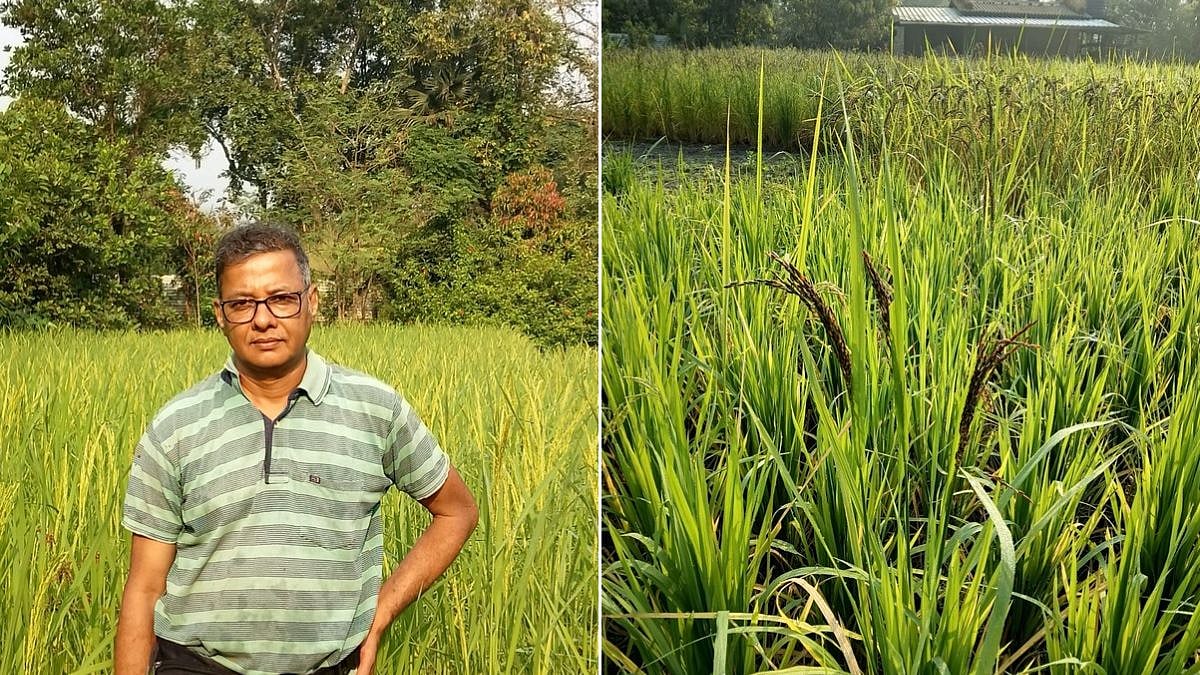
Panvel, November 11, 2026: In an effort to introduce exotic rice varieties to local agriculture and encourage farmers to explore alternative crops, progressive farmer Minesh Gadgil from Gulsunde village in Panvel taluka has successfully cultivated Thai jasmine rice, considered one of the world's most aromatic rice varieties, on his farm.
Gadgil has sourced the seeds from Thailand and claims to be the first farmer in Maharashtra to cultivate this particular variety. What began with just a few grams of seeds has taken three years of careful multiplication. This year, he has grown the aromatic rice on approximately six gunthas of land.
Thai Jasmine Rice Cultivation
Known for its distinctive fragrance and culinary appeal, jasmine rice is widely used in Thai and Mexican restaurants. Such establishments in India often depend on imported supplies, making the variety relatively expensive.
Recognising its potential demand, Gadgil has taken up its cultivation with the intention of making the seeds available to other farmers and encouraging wider adoption.
"I received only a few grams of seeds from Thailand. Instead of cultivating them on a large scale immediately, I spent the last three years multiplying the seeds. I have now managed to cultivate the variety on around six gunthas of land. My aim is to introduce it to more farmers so that they can explore its commercial potential," said Gadgil.
Experimenting With Pigmented Rice Varieties
Apart from jasmine rice, the farmer has cultivated several pigmented rice varieties, including purple, blue, green, black and red rice, alongside traditional varieties.
These have been grown across approximately 13 gunthas of agricultural land this season, primarily with the objective of preserving their seeds and promoting agricultural diversity.
Gadgil believes that introducing such varieties could open up new opportunities for farmers, particularly as speciality restaurants and consumers increasingly seek distinctive rice varieties.
"Many of these varieties are currently brought into India from countries such as Thailand, adding to their cost. If local farmers can cultivate them successfully, it could reduce dependence on imports while creating a niche market for Indian-grown speciality rice. I want more farmers to experiment with these seeds and benefit from their demand," he said.
Aim To Promote Speciality Rice Farming
Thai jasmine rice is valued for its characteristic floral aroma and culinary qualities. Rice varieties also differ in their nutritional composition, with pigmented rice varieties often attracting interest for their naturally occurring antioxidants and other beneficial plant compounds.
Also Watch:

Through his cultivation experiments, Gadgil hopes to demonstrate that farmers in the Panvel region can move beyond conventional paddy varieties, preserve indigenous and exotic seeds, and explore crops with specialised market demand.
To get details on exclusive and budget-friendly property deals in Mumbai & surrounding regions, do visit: https://budgetproperties.in/

