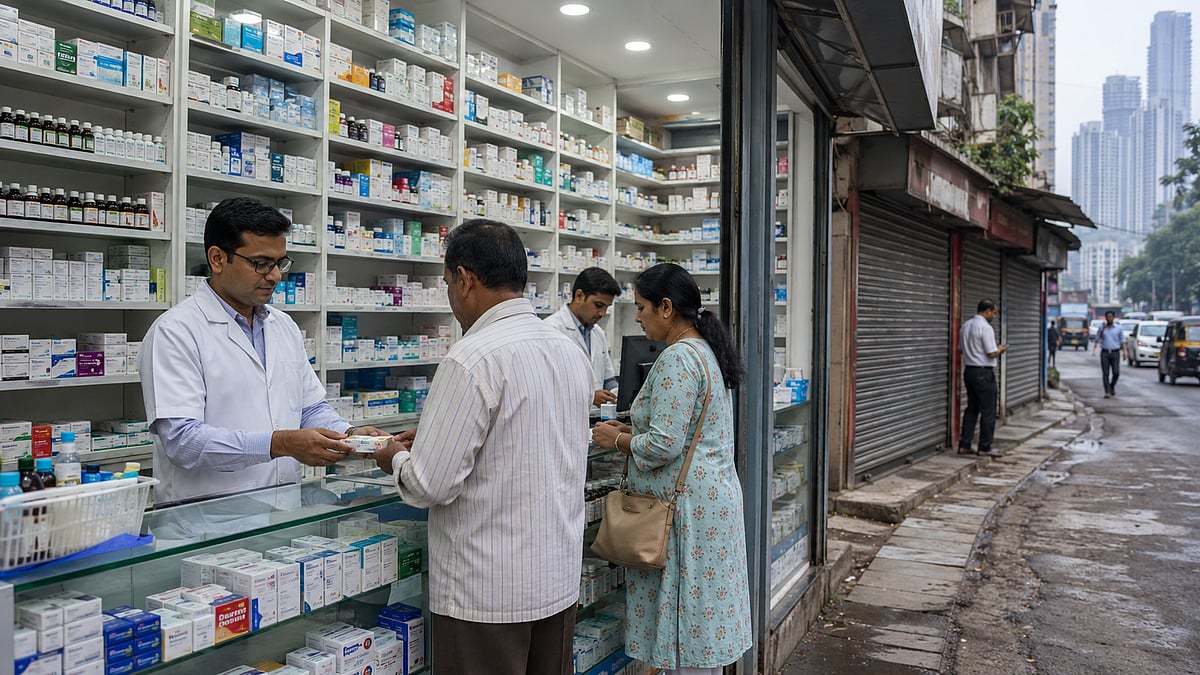
Mumbai: More than 7,000 retail chemist shops across the Mumbai Metropolitan Region (MMR) joined the one-day nationwide bandh on May 20 to protest against the growing threat posed by illegal e-pharmacy operations and predatory pricing practices by large corporate entities.
AIOCD's reach
The bandh was called by the All India Organisation of Chemists and Druggists (AIOCD), which represents over 12.40 lakh chemists and distributors across the country.
Various retail chemists’ associations from the MMR participated in the protest and claimed that the bandh was “100 percent successful”.
Emergency exemptions & FDA response
However, select chemist shops, especially those near hospitals, remained operational for emergency cases. “All chemist shops inside hospitals, Jan Aushadhi Kendras, and generic medicine stores remained open across the city,” said an official from the Food and Drug Administration (FDA). The official added that contact persons had also been appointed in different areas to assist patients facing difficulties in obtaining medicines.
Anil Navandar, General Secretary of the Maharashtra State Chemists and Druggists Association (MSCDA), said that all chemist shops, except those permitted to remain open for emergency services, stayed shut in protest against the growing threat from online pharmacies.
Economic impact warning
“We assembled at Azad Maidan to show our strength. AIOCD has already submitted its demands to the Central Government and sought immediate intervention,” said Navandar.
Navandar said that in its representation to the Prime Minister and concerned authorities, AIOCD alleged that unchecked online sale of medicines and unfair discounting practices are disrupting the pharmaceutical distribution system and threatening the livelihood of nearly 4 to 5 crore people dependent on the sector.
The organisation expressed concern over the alleged misuse of regulatory relaxations by online medicine delivery platforms, claiming that unregulated sale of prescription drugs has led to repeated use of prescriptions, sale of antibiotics and habit-forming drugs without proper checks, fake prescriptions, and inadequate pharmacist-patient interaction.
AIOCD also warned that medicines cannot be treated as ordinary commodities, as improper dispensing could compromise patient safety and contribute to anti-microbial resistance. The association further alleged that even Schedule H1 drugs are being sold using AI-generated prescriptions.
The organisation has also demanded the withdrawal of Notifications G.S.R. 220(E) dated March 26, 2020, and G.S.R. 817(E) dated August 28, 2018, alleging that their continuation is weakening regulatory safeguards in the sale of medicines.
To get details on exclusive and budget-friendly property deals in Mumbai & surrounding regions, do visit: https://budgetproperties.in/

