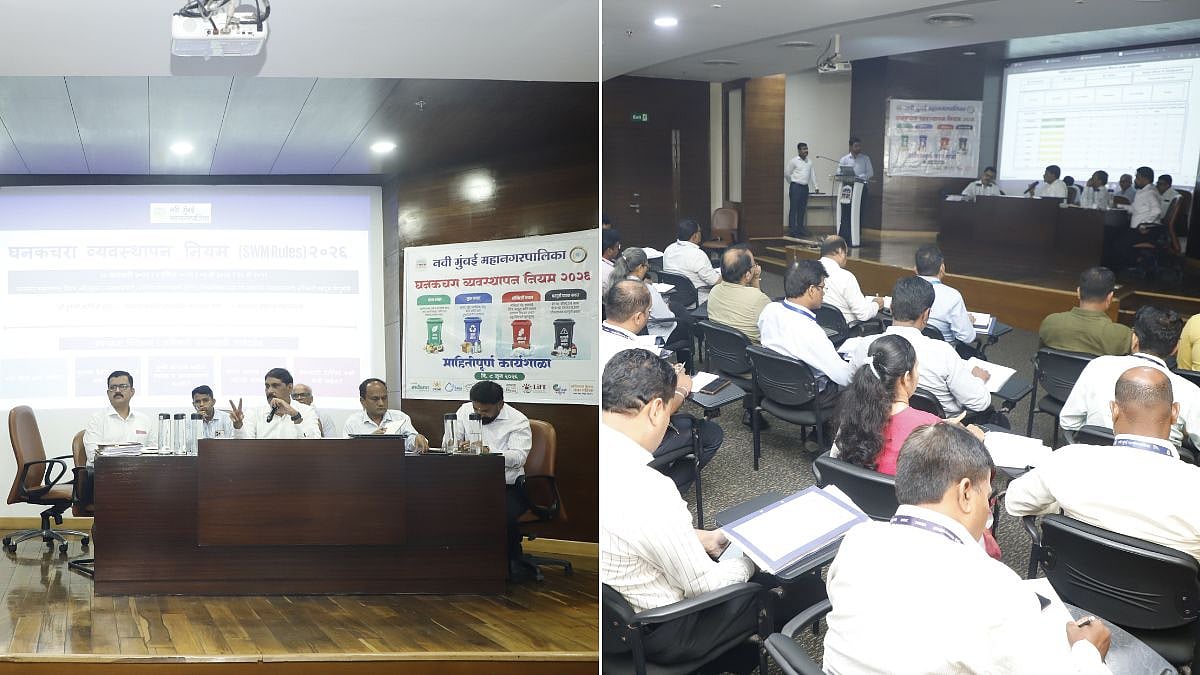
Navi Mumbai, June 9: The Navi Mumbai Municipal Corporation (NMMC) has initiated preparations for the implementation of the Solid Waste Management Rules 2026, which came into force across the country on April 1, 2026.
As part of these efforts, Municipal Commissioner Dr. Kailas Shinde chaired a special workshop at the civic headquarters to review the city's waste management and sanitation systems and outline measures for effective implementation of the new regulations.
Workshop and review of sanitation systems
During the workshop, attended by Additional Commissioner Sunil Pawar, Deputy Commissioner (Solid Waste Management) Dr. Ajay Gadde, Additional City Engineer Arvind Shinde, sanitation officers, inspectors and supervisors, the commissioner conducted a detailed review of cleanliness operations across all wards. Discussions focused on the deployment of sanitation workers, supervisory mechanisms, work schedules and responsibilities assigned to field staff.
The commissioner also reviewed the city's waste collection and transportation system. NMMC currently monitors daily waste collection and transport through an Integrated Command and Control Centre (ICCC)-based system.
Dr. Shinde directed officials to provide the waste transportation dashboard to all sanitation officers and inspectors on their mobile devices and ensure immediate training on its use.
Focus on cleanliness and monitoring
Officials were instructed to pay special attention to cleaning areas beneath parked vehicles, where waste often remains unattended. The commissioner emphasized improving the quality of daily cleaning of roads, footpaths, medians and identified litter-prone locations, warning that negligence in sanitation work would invite action against responsible personnel.
The civic administration was also directed to coordinate with ward offices to take action against unauthorized street vendors found contributing to littering and unhygienic conditions in public spaces.
To strengthen monitoring, Dr. Shinde proposed an online reporting system for sanitation inspections. He directed that daily reviews be conducted at the sanitation officer and inspector level, bi-weekly reviews by the Deputy Commissioner of Solid Waste Management, weekly reviews by the Additional Commissioner, and fortnightly reviews at the commissioner level.
Public toilet management and infrastructure
The commissioner also reviewed public toilet management across the city. Following a recent inspection of 384 public and community toilets in the municipal area, the Public Health Engineering Department was instructed to immediately address deficiencies identified during the survey. Sanitation inspectors were directed to regularly monitor toilet cleanliness and ensure facilities remain usable and hygienic.
To improve oversight, NMMC plans to develop a dedicated "Toilet Cleaning App" for real-time monitoring. The commissioner also suggested constructing public toilets near the Vishwanath Maharaj Samadhi Temple on Parsik Hill in CBD Belapur and near the CIDCO Guest House at Belapur Fort for the convenience of visitors.
Segregation and waste management rules
Under the new Solid Waste Management Rules 2026, waste must be segregated into four categories at the source — wet waste, dry waste, domestic hazardous waste and sanitary waste.
The civic body has been directed to make available green and blue bins for wet and dry waste respectively, along with smaller black and pink bins for hazardous and sanitary waste.
Wet waste includes biodegradable material such as leftover food, vegetable peels, tea residue and similar organic matter. Dry waste consists of recyclable materials including paper, cardboard, plastic, metal and glass.
Domestic hazardous waste covers batteries, medicines, bulbs, paint containers and syringes, while sanitary waste includes sanitary pads, diapers, bandages and related materials.
The municipal administration has launched an awareness drive to educate residents about mandatory waste segregation. Officials have been instructed to ensure separate collection and transportation of each waste category. Housing societies and institutions will be informed that unsegregated waste will not be collected.
Large waste generators and compliance
The new rules also mandate on-site wet waste processing for large waste generators, including housing societies with a built-up area exceeding 20,000 square feet, establishments consuming more than 40,000 litres of water per day, or those generating over 100 kilograms of waste daily.
Hotels, malls, hospitals, markets, educational institutions, commercial complexes and other large establishments must register their waste-processing facilities on the Central Pollution Control Board (CPCB) portal and submit annual returns by June 30. Non-compliance could attract penalties and legal action.
Also Watch:

Citizen participation appeal
Appealing for public participation, Dr. Shinde said Navi Mumbai has consistently ranked among India's cleanest cities due to the active cooperation of its residents. He urged citizens to continue supporting civic efforts by ensuring waste is segregated into the prescribed four categories at the point of generation, facilitating effective implementation of the new rules.
To get details on exclusive and budget-friendly property deals in Mumbai & surrounding regions, do visit: https://budgetproperties.in/

