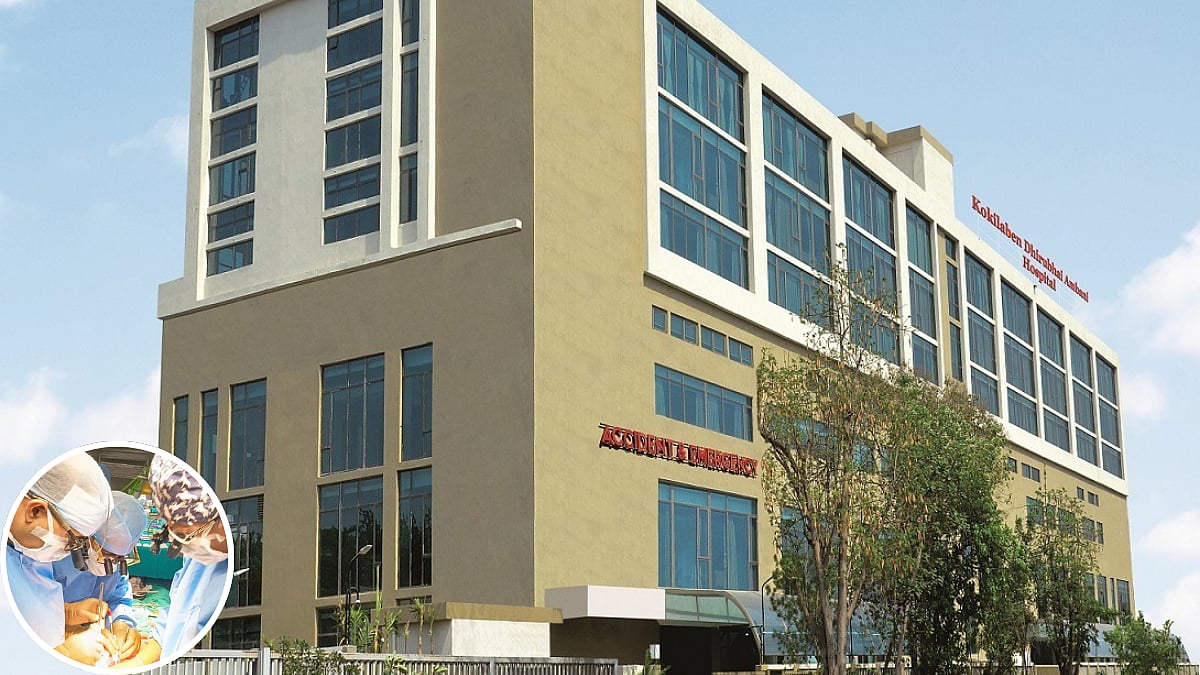
Navi Mumbai, Jan 09: A 60-year-old man from Bihar who had suffered a major heart attack and was living with severely reduced heart function successfully underwent a complex percutaneous coronary intervention (PCI) supported by an Intra-Aortic Balloon Pump (IABP), a form of mechanical circulatory support used in high-risk cardiac procedures, at a hospital in Navi Mumbai.
Severe cardiac condition diagnosed
The high-risk angioplasty was performed at Kokilaben Dhirubhai Ambani Hospital, Navi Mumbai, on a patient diagnosed with severe multi-vessel coronary artery disease and a critically low ejection fraction of around 20 per cent, far below the normal range of 55 to 70 per cent.
The patient had long, critical blockages in two major coronary arteries, while the third artery was completely blocked, a condition that typically warrants bypass surgery.
Bypass ruled out due to high risk
However, due to the patient’s fragile condition and a cardiac MRI showing severely compromised heart function, bypass surgery was deemed extremely high risk. He was subsequently evaluated by Dr. Amit Singh, Consultant Cardiologist at the hospital, following which the medical team opted for a carefully planned, complex PCI supported by mechanical circulatory assistance.
Use of IABP explained
Dr. Amit Singh said, “The patient had come to us with great hope after his condition was deemed too high-risk for a bypass. After detailed assessment and risk planning, we decided to go in for a complex percutaneous coronary intervention (PCI) supported by mechanical circulatory support using an Intra-Aortic Balloon Pump (IABP).”
Explaining the role of the device, Dr. Singh added, “The IABP is designed to inflate during diastole when the heart muscle relaxes and the heart fills with blood, and deflate just before systole when the heart contracts and pumps blood out into the body. This helps to improve coronary blood flow while reducing the workload on the heart. This is a critical support during high-risk interventions when blood pressure becomes unstable.”
Meticulous planning during procedure
The patient was admitted a day prior to the procedure for haemodynamic optimisation, including stabilisation of blood pressure, improving oxygen delivery to tissues and managing breathlessness caused by heart failure-related fluid overload.
During the angioplasty, the IABP was inserted via an arterial route to provide circulatory support, while medications were administered to maintain perfusion pressure and support organ function.
Given the high risk of contrast-induced kidney injury, doctors adopted an ultra-low contrast strategy to minimise dye usage during the procedure.
Despite episodes of critical hypotension, a known complication in patients with severely reduced heart function, the mechanical support helped maintain circulation, enabling successful revascularisation of the blocked arteries with stent placement as clinically indicated.
Recovery and discharge
“High-risk angioplasty in patients with such severely reduced heart function is never a routine decision. It requires meticulous planning, the right mechanical support, and a team that can respond instantly when pressures fall during the most critical steps,” Dr. Singh said.
“In this case, the IABP support, careful haemodynamic optimisation, and an ultra-low contrast strategy allowed us to restore blood flow across multiple severely diseased vessels while protecting other organs, especially the kidneys, and helping the patient avoid open-heart surgery.”
Also Watch:

Following the procedure, the patient was monitored in the intensive care unit, with IABP support continued for two days until haemodynamic stability was achieved.
Within 48 hours, the patient showed significant clinical improvement, including stabilised blood pressure and preserved kidney function. He was later shifted to the general ward and discharged within four days in a stable condition.
To get details on exclusive and budget-friendly property deals in Mumbai & surrounding regions, do visit: https://budgetproperties.in/

