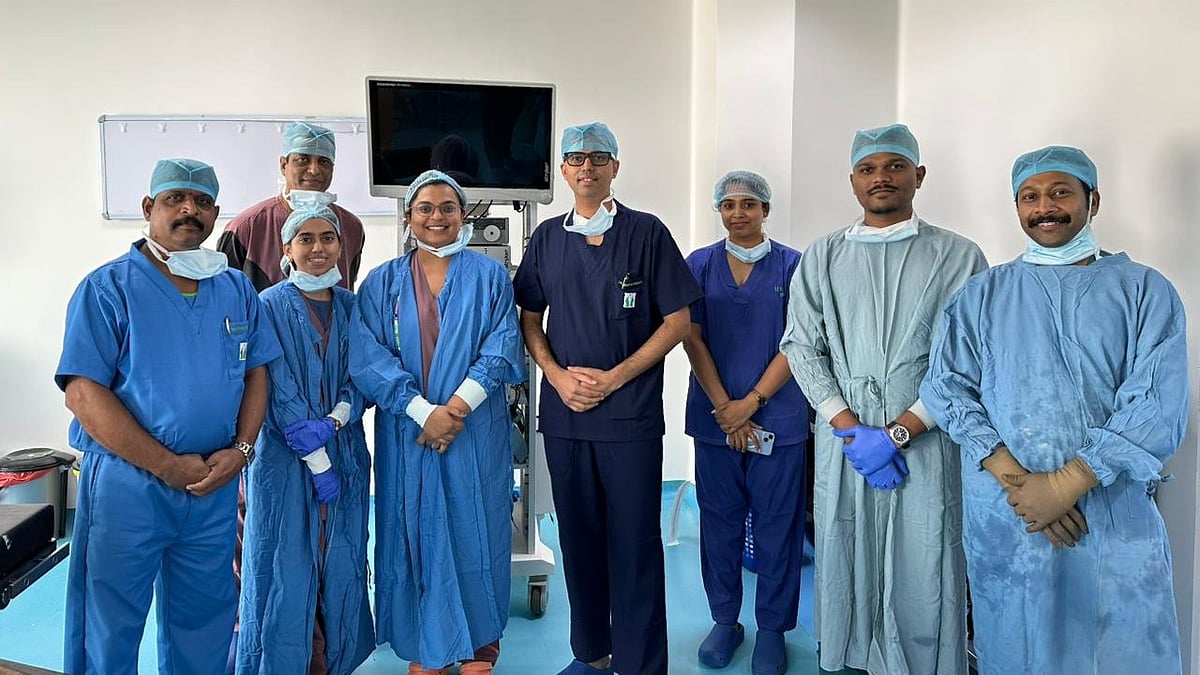
Navi Mumbai: The first ever minimally invasive regenerative procedure for urethral stricture in Navi Mumbai was successfully performed on a 77-year-old patient at a Vashi-based hospital, marking a significant breakthrough in advanced urological care. The procedure was carried out at Fortis Hiranandani Hospital by Dr Gaurav Kasat, and the patient was discharged within a day with significant improvement in urinary flow and no complications.
The innovative treatment involved Autologous Adult Live Cultured Buccal Epithelial Cells (AALBEC) therapy combined with cystoscopy and Visual Internal Urethrotomy (VIU), offering a minimally invasive alternative to conventional open reconstructive surgery. The patient had been suffering from slow urinary flow, frequent urination, and episodes of urinary retention for nearly a year before seeking specialised care.
Following evaluation, doctors diagnosed him with urethral stricture — a condition where narrowing of the urethra due to scarring or inflammation obstructs urine flow, causing discomfort and repeated complications. Considering his age and medical history, the medical team opted for a regenerative approach to avoid major surgery and reduce the chances of recurrence.

Also Watch:
On February 4, a cystoscope was used to identify the narrowed segment, after which a precise internal incision was made to restore urine flow. This was followed by implantation of cultured buccal epithelial cells, which had been harvested earlier from the patient’s inner cheek and grown in a specialised laboratory over 18 days before being introduced into the affected area to regenerate the urethral lining.
“This approach uses the patient’s own cells to naturally repair the damaged urethral lining while avoiding major surgery,” said Dr Kasat. “It helps reduce complications, shortens recovery time, and lowers recurrence rates, especially benefiting elderly patients.”
The patient was discharged on February 5 and follow-up reports showed no post-procedural complications.
To get details on exclusive and budget-friendly property deals in Mumbai & surrounding regions, do visit: https://budgetproperties.in/

