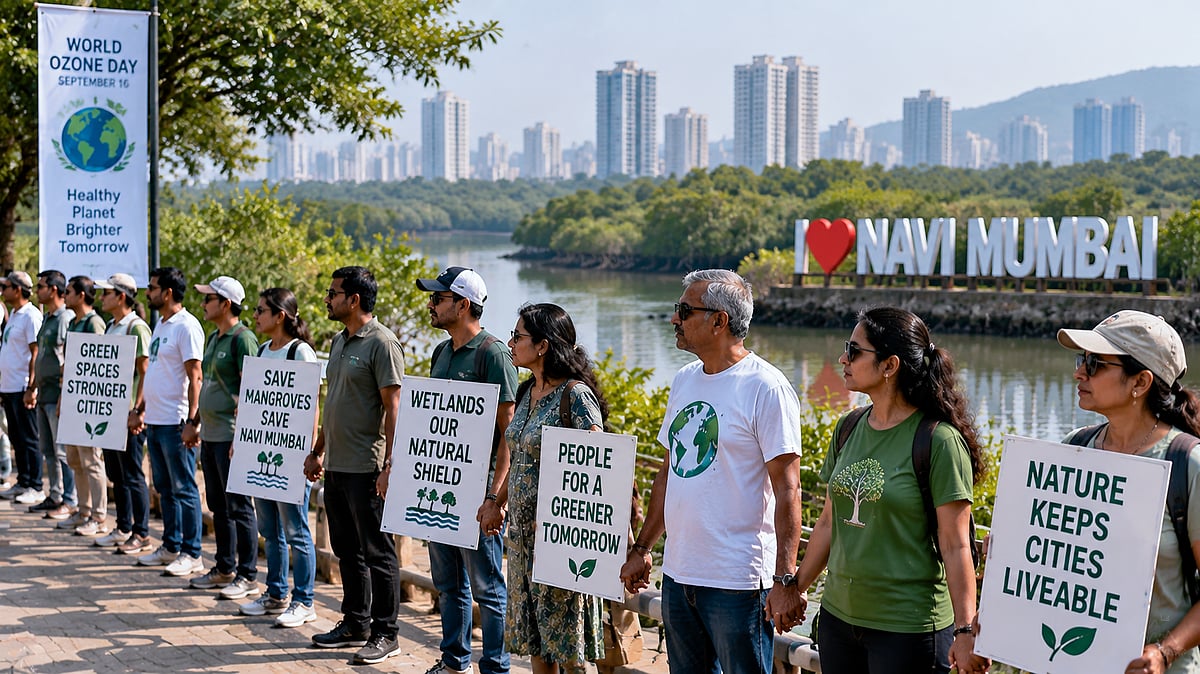
Ahead of World Ozone Day on September 16, environmentalists and citizen groups will form a silent human chain in Sanpada on September 12 to highlight the need to protect Navi Mumbai’s shrinking open spaces, mangroves, wetlands and green cover.
Initiative Links Ozone Protection With Urban Climate Resilience
The initiative aims to draw attention to the link between environmental protection and urban resilience. While the recovery of the ozone layer, aided by the Montreal Protocol’s phase-out of ozone-depleting substances, is regarded as a major global environmental success, activists say cities must also protect their own natural systems that help mitigate the effects of climate change.
In Navi Mumbai and the wider Mumbai Metropolitan Region (MMR), mangroves, wetlands, trees and open spaces are facing increasing pressure from construction, infrastructure projects, reclamation and redevelopment.
Rapid Redevelopment Raises Concerns Over Urban Infrastructure Stress
Citizens have raised particular concerns over the rapid redevelopment of established neighbourhoods, where low-rise structures are increasingly being replaced by taller buildings. Activists said this was adding pressure on roads, drainage, water supply, parking and the city’s already diminishing open spaces.
They also pointed to the environmental cost of demolition and construction, which involve significant consumption of cement, steel, energy and water while generating large quantities of construction and demolition waste. The resulting increase in built-up area also contributes to long-term energy consumption, particularly for cooling as urban temperatures rise.
Data Centre Expansion Raises Questions Over Resource Consumption
The region’s growing data-centre sector has emerged as another concern. Environmentalists said large data centres require substantial quantities of electricity and water, apart from extensive backup infrastructure, and their resource requirements need to be assessed alongside their economic benefits.
Activists said the loss of mangroves and wetlands was especially worrying as these ecosystems act as natural buffers against flooding, store carbon, moderate temperatures and help cities cope with climate-related stresses.
‘Natural Climate Shields Cannot Be Replaced By Concrete’
“We cannot celebrate the ozone layer while destroying our own natural climate shield. Mangroves, wetlands, trees and open spaces are not decorative assets—they are essential infrastructure that protects us from heat, flooding and an ever-growing carbon footprint,” said B N Kumar, director of NatConnect Foundation.
The September 12 human chain will focus on preserving open spaces and green cover as essential components of urban planning, rather than treating them as vacant land available for construction.
Shrikant Patki, convenor of Palm Beach Greens, said the initiative would underline the need to balance development with environmental protection.
“A city cannot become liveable by becoming entirely concrete. Sanpada needs breathing spaces, trees and open land. Development must not come at the cost of the very green infrastructure that keeps Navi Mumbai cool, resilient and healthy,” he said.
Organisers said the human chain would remain silent, but its message would be clear: Navi Mumbai needs development, but it also needs the natural green shield that makes such development sustainable.
To get details on exclusive and budget-friendly property deals in Mumbai & surrounding regions, do visit: https://budgetproperties.in/

