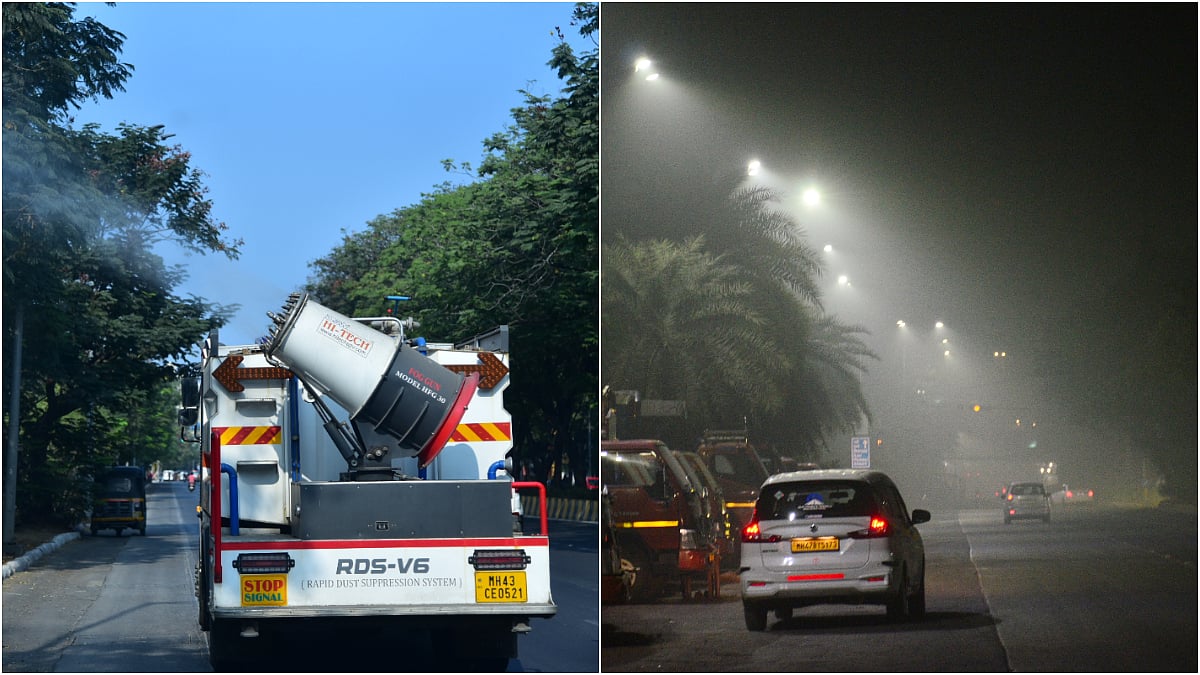
Navi Mumbai, Jan 06: Sanpada woke up choking on Tuesday as the Air Quality Index (AQI) shot to a staggering 647, categorised as hazardous — a level that experts say makes the air equivalent to smoking more than seven cigarettes a day. The civic administration, however, has negated the findings.
Residents describe visible and frightening deterioration
Residents, however, say the deterioration is visible, tangible and frightening. In Sector 4, Sanpada, night-time streetlights now appear dim and blurred through a film of dust.
Nilesh Kachare, a resident of Datta Guru Society, described how “even standing outside for a few minutes feels suffocating.” He blamed the condition on massive redevelopment projects surrounding the locality, where dust from demolitions and construction is left unchecked.
Dust-control norms allegedly flouted
For Srikant Patli, who lives in Sector 15, the problem is not just pollution — it is the blatant violation of basic dust-control norms. He said trucks transporting construction debris drive through lanes uncovered, and no water is sprayed to suppress dust. The result, he observed, is a persistent grey layer that coats balconies, cars and even lungs. “It’s not the weather — it’s negligence,” he said.
Homes sealed as air turns toxic
Inside homes, the situation is no better. Divya Banda Pogaru, a resident of Sector 4, said the air has turned so heavy that families are forced to keep their windows shut throughout the day.
“We can’t even enjoy sunlight anymore,” she said, describing mornings when the sun appears dim behind a toxic haze. “You step out, and your throat starts burning.” For many parents, the daily fear is for their children, who are coughing constantly despite medication.
Daily routines disrupted
The crisis has also robbed residents of their everyday routines. K. Rajesh, who lives in Parth Magnus, said most morning walkers have stopped going out entirely. “We used to meet at the park every morning. Now it’s deserted. When breathing itself feels risky, what else can you do?” he asked.
Health and fitness activities affected
Even health experts and fitness enthusiasts are feeling the effects. Yogesh Chavan, a yoga instructor from Vashi, said he recently fell ill after a short jog. Outdoor breathing exercises, he said, have become “completely unsafe”, and visibility on roads is so poor that even short drives feel hazardous.
Anger over lack of enforcement
For some, frustration has turned into helpless anger. Sanjay Nair, another Sanpada resident, said construction sites continue to operate in violation of every standard operating procedure.
“The corporation keeps talking about dust-control measures and SOPs, but they mean nothing if no one enforces them,” he said. “What we’re breathing today is the cost of official indifference.”
Citizens demand urgent intervention
With the city’s air having reached crisis levels, citizens are urging immediate intervention from agencies including NMMC, CIDCO, MMRDA and MPCB.
Activists from the Parsik Hills Greens Forum and the Kharghar Hill and Wetland Forum also called for strict regulation of construction and quarrying, arguing that piecemeal measures have failed to protect residents.
Clean air emerges as election issue
With municipal elections due on January 15, citizens and activists are demanding that clean air be treated as a civic right and political priority. As one resident put it, “We’re not asking for luxury — just the right to breathe.”
Right to clean air under Article 21
Under Article 21 of the Indian Constitution, the right to life includes the right to breathe clean air. For thousands in Navi Mumbai, that right is now literally hanging in the air.
Authorities question AQI readings
While repeated attempts to get in touch with the regional office of the Pollution Control Board went unanswered, officials from NMMC stated that they were checking the authenticity of the readings.
Even as authorities remained sceptical about the severity of the air quality crisis, environmentalists warned that pollution levels across Navi Mumbai were equally disturbing. NatConnect Foundation director B N Kumar said the problem was not confined to a single location. “At Owe village, located near the Kharghar Hills and surrounded by quarry activity, the AQI touched a hazardous 514 early in the morning, while the overall Navi Mumbai AQI stood at a severe 297,” Kumar said.
Air quality monitoring data also showed hazardous levels at Palm Beach Road, severe pollution in Kharghar and Seawoods, and unhealthy air in parts of Vashi, indicating that the pollution episode was widespread across multiple nodes of the planned city.
“The situation reflects a failure to treat air pollution as a public health emergency. Poor implementation of standard operating procedures for builders and infrastructure agencies, especially for dust control at construction sites, continues to play a crucial role. Authorities needs to take note of this and act accordingly ,” Kumar added.
Also Watch:
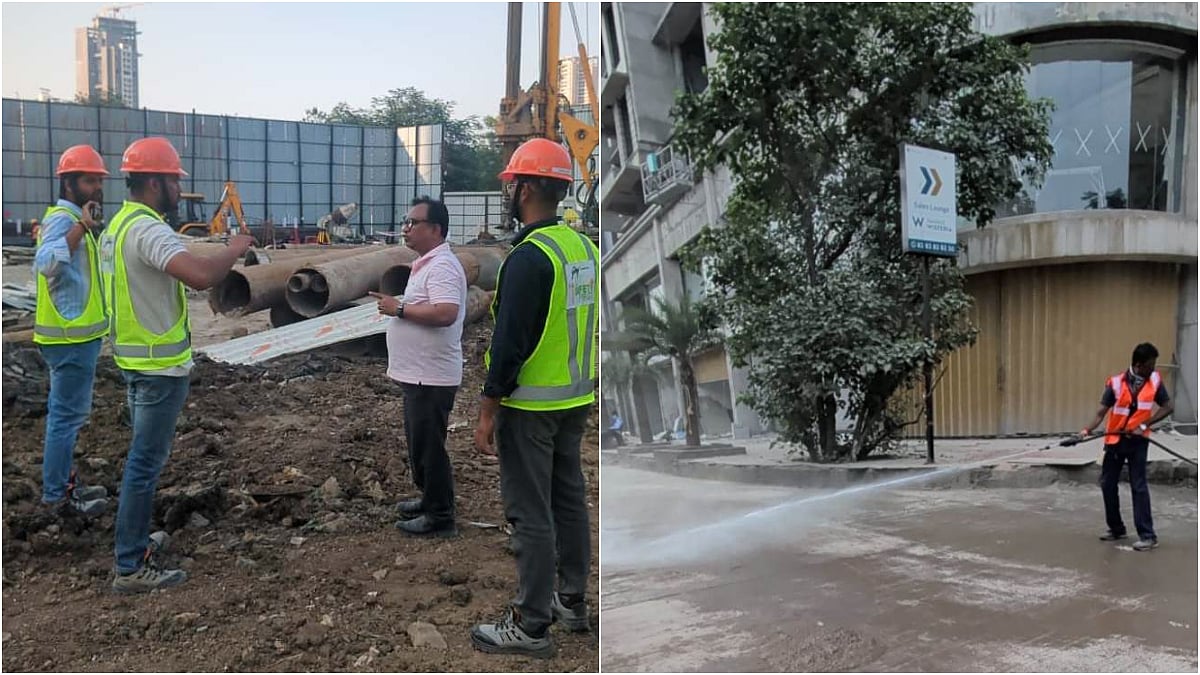
“As per official monitoring stations, the AQI, which is calibrated with the centralised system, is between 150 and 200. In fact, even on Tuesday the reading was 227, so we need to verify the authenticity of the exaggerated readings being circulated,” said city engineer Shirish Aradhwad.
To get details on exclusive and budget-friendly property deals in Mumbai & surrounding regions, do visit: https://budgetproperties.in/

