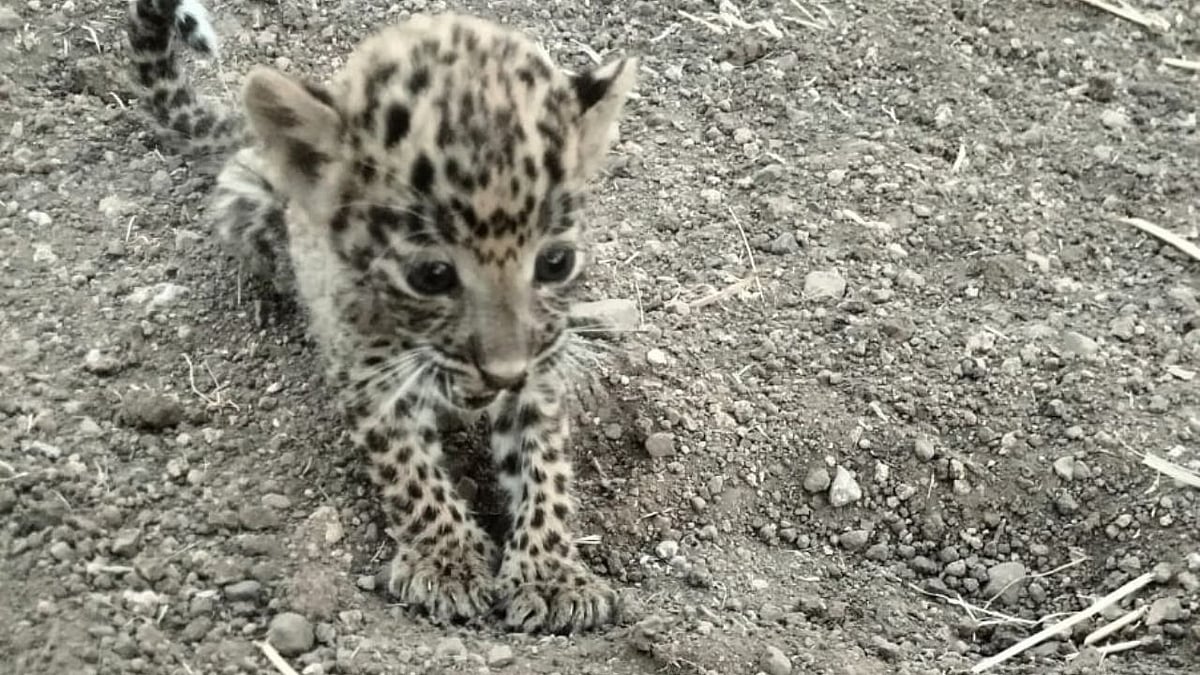
Murbad, June 11: In a heartwarming wildlife conservation success story, a newborn leopard cub that had strayed away from its mother and narrowly escaped an attack by stray dogs was finally reunited with the female leopard after an intense 72-hour rescue and monitoring operation carried out jointly by the Forest Department and wildlife rescue organisation RAWW (Resqink Association for Wildlife Welfare).
Operation and monitoring details
The painstaking operation, which involved the use of thermal cameras, advanced drones, trap cameras and sound recorders, concluded successfully late on Wednesday night, bringing relief to wildlife rescuers and forest officials who had been working almost continuously for three days with minimal rest.
The rescue began on the morning of June 8 when local residents spotted a lone newborn leopard cub in dense vegetation near an Adivasi settlement in the Vyapari-Manivali area close to Saralgaon in Murbad taluka. Shortly after the cub was discovered, a pack of stray dogs attempted to attack it.
Displaying remarkable presence of mind, local tribal youths intervened and drove away the dogs before safely rescuing the vulnerable cub. The incident was immediately brought to the attention of the Forest Department following the alertness of village sarpanch Mukne and vigilant resident Naresh Vyapari.
Medical care and veterinary assessment
Forest officials promptly took custody of the cub and shifted it to the RAWW-Ashwamedh Transit Treatment Centre at Masale Belpada in Murbad for medical evaluation.
The cub was examined by Honorary Wildlife Wardens of Thane district, Avinash Hardas and Pawan Sharma, along with forest officials and veterinary experts. Under the guidance of veterinarians Dr Shravan Singh and Dr Suryarao, the cub underwent a detailed health assessment and received necessary treatment.
Recognising that prolonged separation from its mother could significantly reduce its chances of survival in the wild, the Forest Department initiated efforts to reunite the cub with the female leopard on the very first night.
Reunion strategy and tracking
Acting under the guidance of Deputy Conservator of Forests Repal and after consultations with experts from the Manikdoh Leopard Rescue Centre in Junnar, officials carefully placed the cub at a secure location within its natural habitat. Extensive precautions were taken to ensure the safety of both the cub and the rescue team.
The first night's efforts yielded encouraging signs when the female leopard was captured on trap cameras visiting the designated site. However, after briefly assessing the surroundings, she left without taking the cub. With the area frequented by stray dogs, foxes and hyenas, officials retrieved the cub before daybreak and returned it to safety.
The second day was devoted to continuous veterinary care and close monitoring. Forest officials also appealed for complete confidentiality regarding the operation to prevent disturbance from curious onlookers. Adverse weather conditions and rainfall during the second night, however, prevented the female leopard from returning to the site.
Final successful reunion
Determined to give the reunion the best possible chance of success, the rescue team intensified efforts on the third day. RAWW volunteers deployed advanced thermal imaging equipment, high-resolution drones, trap cameras and sound-recording devices to track movement in the area while maintaining a safe distance from the mother leopard.
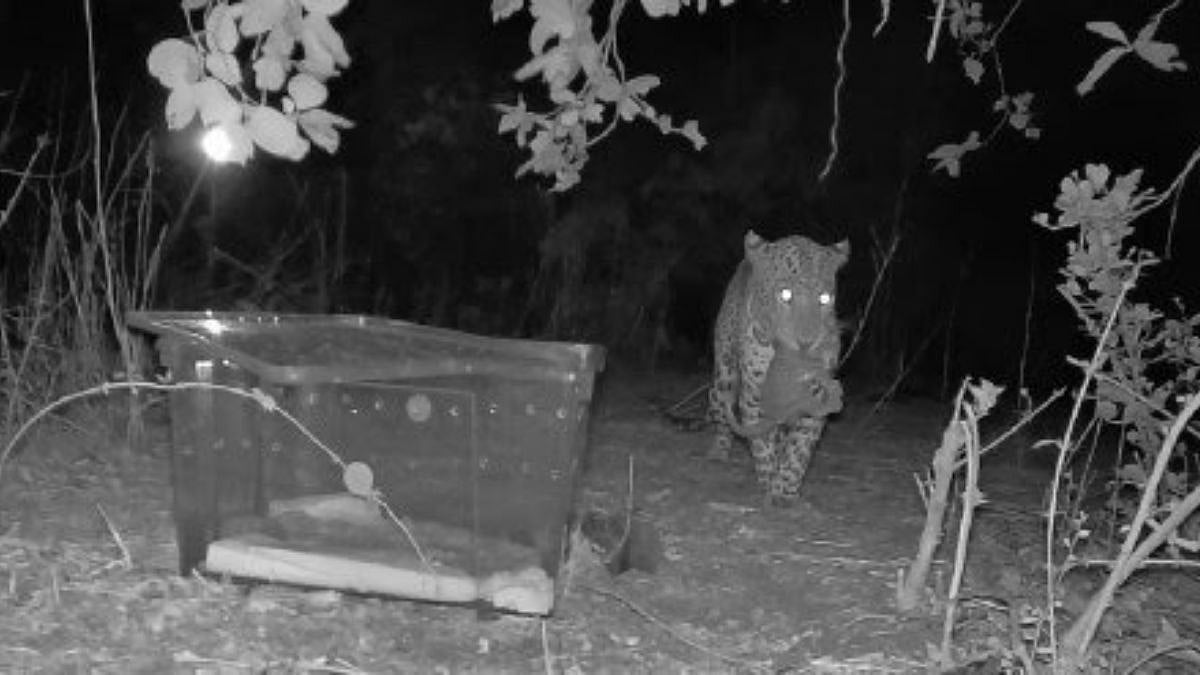
Late on the third night, the female leopard returned to the designated location and approached the protective enclosure where the cub had been placed.
In an extraordinary scene captured on camera, the mother carefully removed the cub, inspected it thoroughly and appeared to assess its physical condition. Once satisfied that the cub was healthy and capable of movement, she gently lifted it in her mouth and disappeared into the forest.
The successful reunion sparked celebrations among exhausted forest personnel and volunteers who had spent the previous 72 hours working tirelessly to ensure the cub's survival.
Post-reunion monitoring and precautionary measures
Although the operation has concluded successfully, forest officials said precautionary monitoring will continue to ensure that the mother and cub are not disturbed by overenthusiastic photographers, social media content creators or wildlife enthusiasts.
Murbad East Range Forest Officer Mahesh Shinde said all necessary measures are being taken to safeguard the animals from human interference during the critical post-reunion period.
The highly sensitive operation witnessed significant contributions from Forest Round Officer Mahendra Sable of Saralgaon, Forest Guards Alpana Gholap, Gajanan Musale, Lakhan Rahade and Digambar Shingole, driver Sandesh Gholap, forest worker Arjun Phodse, Forester Ravindra Ghude of Dehri, Forest Guard Mithu Ghodke of Shirvali and forest worker Dharma Khune.
The RAWW team, including volunteers Chinmay, Mahesh, Rahul, Sahil, Aman, Jokhim and Meet, also played a vital role by working round the clock alongside forest authorities. Gram Sevak Ubale and Murbad West Range Forest Officer Sanjudas Rathod extended crucial support throughout the mission.
Also Watch:
The successful reunion stands as a shining example of coordinated wildlife conservation efforts, community vigilance and the effective use of modern technology in protecting India's rich biodiversity.
To get details on exclusive and budget-friendly property deals in Mumbai & surrounding regions, do visit: https://budgetproperties.in/

