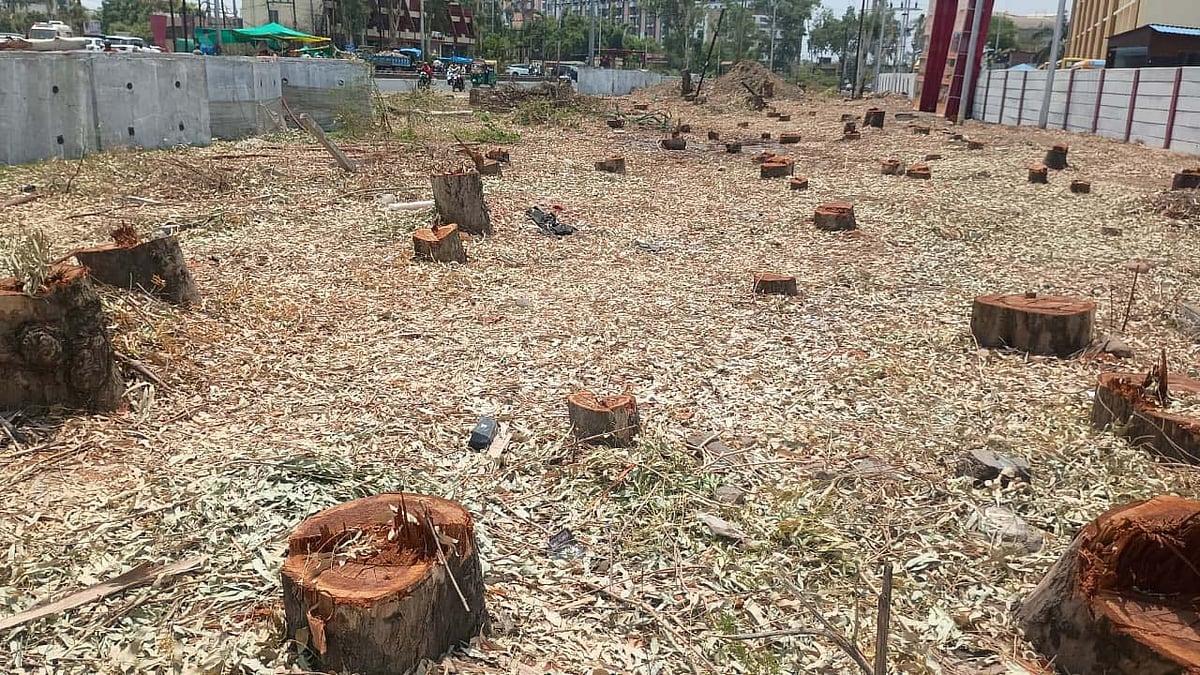
Mumbai: Gorai residents have questioned the proposed felling of trees at the site of the Manori desalination plant, alleging major discrepancies in the project's land records, tree inventory and environmental safeguards. At a public hearing held at Byculla on November 3, activists said the meeting focused only on tree felling, without addressing questions about the project's environmental impact and economic viability.
According to the Brihanmumbai Municipal Corporation (BMC), which is constructing the plant to produce 200 million litres of water per day (MLD) in its first phase, 971 trees have been identified across approximately 12 acres of the project site. Of these, 28 are proposed to be felled permanently, 939 to be transplanted and four retained. Compensatory afforestation involving 9,610 trees has been proposed in Palghar, although the plot for the plantation has reportedly not yet been identified.
Residents Question Land Records And Permissions
During the hearing before the BMC Tree Authority, residents opposing the project on environmental grounds questioned the discrepancies in the land records. They pointed out that the BMC has been granted only advance possession of the land, while the final handover is still pending. They also noted that project permissions refer to 20 acres, whereas the tree-felling proposal covers 29 acres.
According to the Gorai Villagers Welfare Association (GVWA), the minutes of the 195th meeting of the Maharashtra Coastal Zone Management Authority (MCZMA), held on March 25, 2026, describe approximately 20 acres of the land as barren.
Documents reportedly submitted to the Union Ministry of Environment, Forest and Climate Change for Coastal Regulation Zone (CRZ) clearance referred to only 25 trees, with compensatory afforestation proposed within the same plot, said Switsy Henriques, president of the GVWA.
"The project has been presented to authorities on the basis of a barren 20-acre plot and only 25 trees. Today, the BMC identifies 971 trees, while the tree-felling proposal covers 29 acres," said Henriques. She questioned how the civic body, which has only advance possession of the land, could intervene in the project without first reconciling these discrepancies.
Association Demands Independent Tree Census
The association also alleged that several trees on the ground had neither been numbered nor included in the inventory. Local villagers estimate that the actual number of trees across the land exceeds 4,000. The GVWA has demanded a comprehensive, independent tree census and a joint physical inspection.
"The authorities owe the public a complete and transparent explanation," said Henriques.
Activists Challenge Project Cost And Viability
Residents also questioned the decision to spend Rs 3,200 crore on the first phase of the project, arguing that the city's water deficit could be partly addressed by reducing losses during transportation.
Sambhaji Masulkar of the BMC's Water Supply Projects Department explained the need for the desalination project and the civic body's plans for another such plant at Versova.
However, activists questioned the rationale for investing thousands of crores in desalination when a substantial quantity of water was being lost through leakages and theft. Gaurang Vora of Save Mumbai Mangroves pointed out that approximately 34% of the BMC's water supply was lost through these means.
Vora also questioned the civic body's decision to remove mandatory rainwater-harvesting requirements for obtaining Occupation Certificates (OCs).
"In 2010, the BMC said Occupation Certificates would not be given to buildings that did not have rainwater-harvesting facilities," he said.
Desmond Paul, secretary of the Gorai Shetkari Vikas Sanstha, urged the BMC to consider alternatives such as reducing leakages and exploring the Gargai and Kalu dam projects, rather than felling thousands of trees, threatening fishermen's livelihoods and spending substantial public funds on desalination.

Marine Impact And Environmental Safeguards Questioned
Superintendent of the Garden and Tree Authority Jitendra Pardeshi told the gathering that a decision would be taken only after the concerns raised at the hearing had been verified.
Participants also questioned claims that the intake of seawater and discharge of concentrated brine would not affect marine life. They sought the scientific basis for these assurances and demanded the disclosure of a credible, independent assessment, including a study by the Central Marine Fisheries Research Institute on the impact of concentrated brine discharge on fish and marine ecosystems.
Other concerns raised included the absence of a public hearing, the status of consultations with the Fisheries Department, discrepancies in land ownership records and the project's overall feasibility.
Also Watch:
"Our concern is that the municipal authorities who proposed the project were not at the hearing. Apart from tree cutting, there are other issues such as fishing and pollution. We have told them that they cannot go ahead with the project until these questions are also heard," said Vora.
Manori Water Desalination Plant
Capacity: 200 million litres per day (MLD) in the first phase.
Project cost: Rs 3,200 crore for the first phase.
Trees affected: 971 identified — 28 proposed to be felled, 939 transplanted and four retained.
Compensatory plantation: 9,610 trees proposed in Palghar; the plantation site is yet to be identified.
To get details on exclusive and budget-friendly property deals in Mumbai & surrounding regions, do visit: https://budgetproperties.in/

