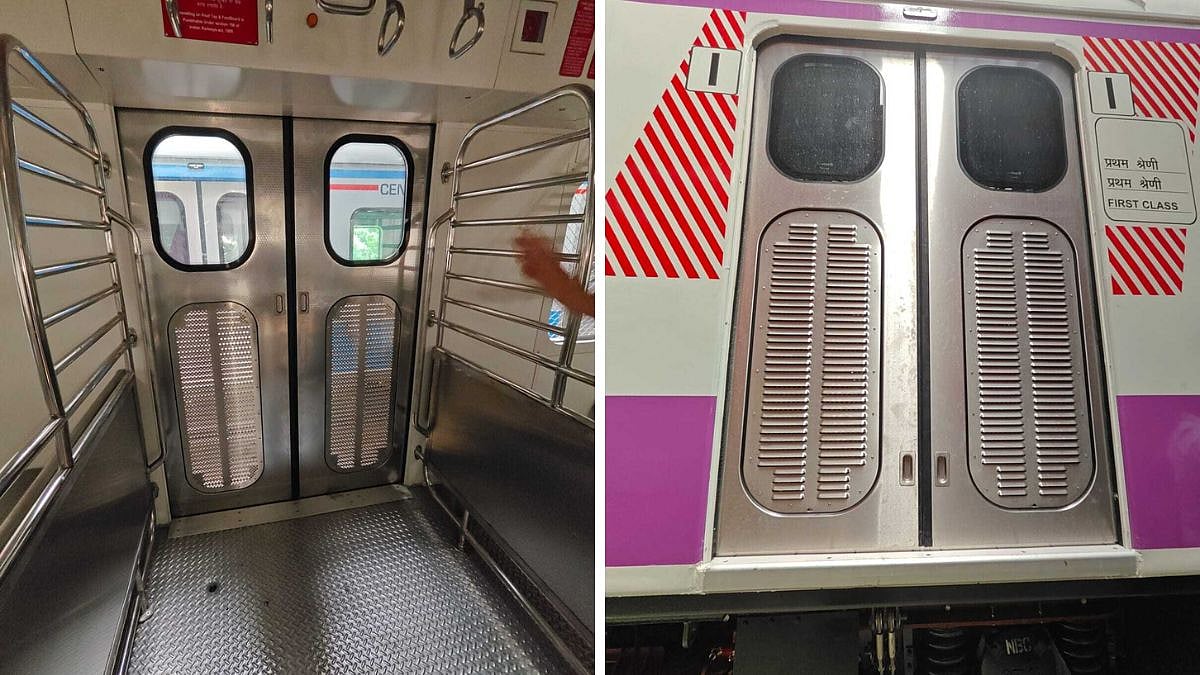
Mumbai, April 16: Mumbai’s lifeline is stepping into a new era with its first non-AC local featuring automatic doors, but the real question isn’t just about safety—it’s about whether commuters can breathe comfortably inside.
Ventilation improvements under scrutiny
The new 12-coach rake, which recently arrived at Kurla carshed, promises a major upgrade in ventilation. Railway officials say airflow capacity has been increased by nearly 65%, supported by roof-mounted blowers and dual air intake systems. Wider sliding windows and louvred doors are designed to maintain circulation even when doors remain shut.
On paper, the improvements look promising. But Mumbai’s suburban reality is far from ideal conditions. Packed peak-hour trains, humidity, and long travel durations mean even small ventilation gaps can turn coaches into suffocating spaces. Commuters, who are used to relying on open doors for fresh air, remain cautious.
Capacity trade-off and challenges
There’s also a noticeable trade-off. Seating capacity has slightly reduced, while standing space has increased significantly—clearly designed to accommodate more passengers. While this may ease movement inside, it also means more bodies generating heat in enclosed coaches, putting additional pressure on the ventilation system.
Safety vs comfort debate
Safety, of course, is the driving force behind this transition. Automatic doors with anti-drag features aim to prevent fatal falls—a long-standing issue in Mumbai locals. But if ventilation fails to match expectations, passenger acceptance could become a challenge.
Railways have acknowledged that the true test will come during trials, including load simulations and real passenger runs. Until then, the success of this ambitious upgrade remains uncertain.
In the end, Mumbai’s commuters are practical—they will judge this train not by design or intent, but by one simple factor: does it feel breathable during a crowded rush-hour journey?
Commuter voices

Somesh Mishra, daily commuter (Virar) |
"If doors are going to remain closed, then the airflow inside has to be really strong and well-designed. Otherwise, the train will feel like a sealed moving box during peak hours. In Mumbai’s humidity, even a small ventilation failure can make the journey extremely uncomfortable."

Abhishek Dange, office-goer (Parel) |
"Right now, even in crowded trains, we get some relief from the open doors and natural air. With automatic doors, that advantage completely disappears. The system will only work if the ventilation inside is powerful enough to compensate for that loss."

Nishant Patil, regular traveller (Currey Road) |
"Safety is important, no doubt, but ventilation will ultimately decide whether this train succeeds or fails. Daily commuters spend long hours inside these coaches, especially in peak time. If the air circulation isn’t adequate, people will reject the system despite the safety benefits."
Expert views

Subodh Jain, Former General Manager, Central Railway |
"The design looks good and quite imaginative. While the impact on ventilation may be limited, it is likely to be offset by the relief commuters will feel during the monsoon. However, the real concern is the door mechanism—if it fails during a run, it could lead to a far bigger disaster than the open-door accidents we see today."

Samir Zaveri Railway Activist |
"Implementing a non-AC train system with automatic closed doors in Mumbai's suburban railways is the perfect solution to prevent passenger injuries and deaths from falling off overcrowded running trains. In 2025 alone, 525 deaths and 1,185 injuries were reported due to such falls. With automatic door systems fitted on all suburban trains, we could achieve zero injuries and deaths. Moreover, AC suburban train tickets are 600% costlier than non-AC ones. I suggest replacing first-class coaches with just three AC coaches per non-AC train to make rail travel safer and more equitable."
Also Watch:

Vandana Sonawane President, Maharashtra Women’s Passenger Association |
"We welcome the closed-door trains; it’s a necessary safety step, especially for women. But just shutting doors won’t control the crowd; people may still hang outside or block entry. Initially, there should be police deployment at doors to manage boarding. Despite challenges, women commuters strongly support this move as it can prevent fatal falls."
To get details on exclusive and budget-friendly property deals in Mumbai & surrounding regions, do visit: https://budgetproperties.in/

