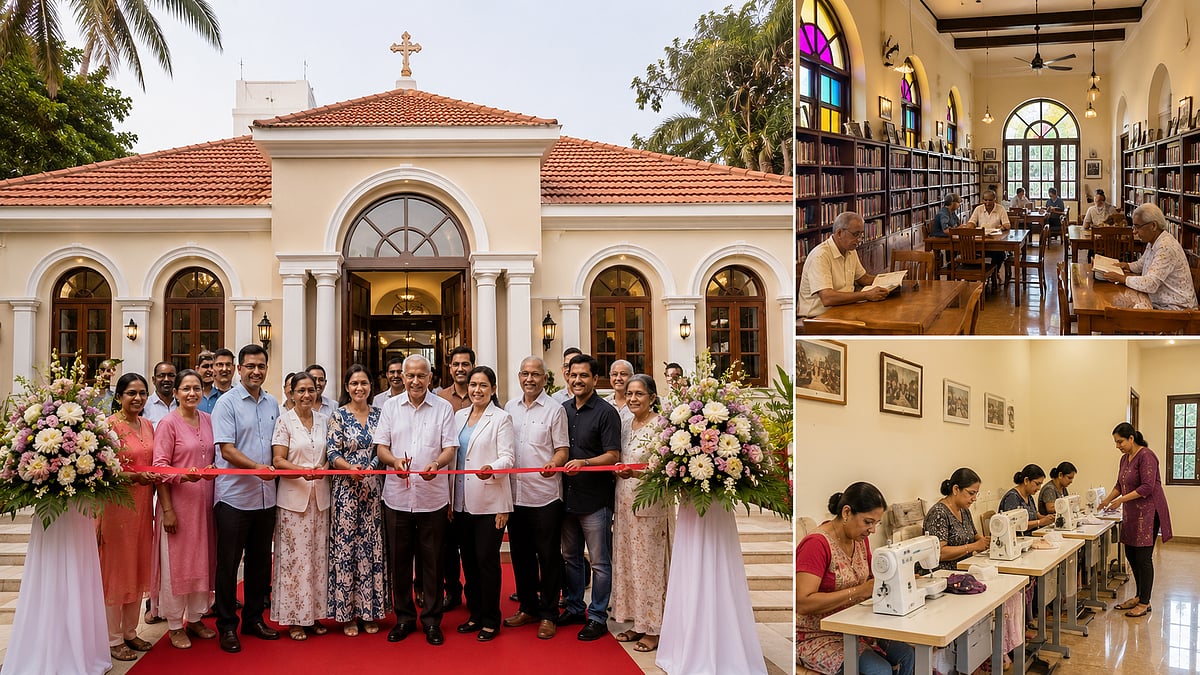
Mumbai: A new cultural landmark dedicated to preserving the history and traditions of Mumbai’s East Indian community will be inaugurated on May 17 at Juhu.
Kaka Baptista museum to display over 200 artefacts
The East Indian Bhavan, featuring the Kaka Baptista East Indian Museum, will open its doors on the occasion of East Indian Day, observed annually on the third Sunday of May.
Named after freedom fighter Joseph 'Kaka' Baptista, the museum will house more than 200 exhibits tracing the community’s social, religious, culinary, occupational and sartorial heritage. Initial displays include artefacts being relocated from an earlier museum in Manori, where the collection had been built over the years through community contributions.
Museum highlights farming, fishing and salt pan traditions
The project is spearheaded by the Mobai Gaothan Panchayat (MGP), established in 2010 to safeguard the heritage of Mumbai’s indigenous East Indian population. According to MGP member Gleasan Baretto, the Manori museum, set up in 2013, operates from private property, whereas the new facility will benefit from a more permanent and accessible location. The 25,000 sq ft garden housing the Bhavan has been developed on land provided by the Maharashtra Housing and Area Development Authority, though management will remain with the MGP.
The East Indian community traces its origins to local groups converted to Roman Catholicism during Portuguese rule. Reflecting this history, the museum will highlight traditional occupations such as farming by Kulbis, fishing by Kolis, and salt pan work by Agris, offering a comprehensive view of the community’s evolution.
Statue, library, AV facility and research centre planned
Arun Singh, assistant professor of history at St Xavier's College Mumbai and a contributor to the project, said the earlier Manori museum developed organically through donations from community members. “Our role now is to interpret these artefacts and present them in a more structured manner,” he noted.
Beyond the museum, the Bhavan complex will include a life-size statue of Baptista, a library, and a skill development centre. Plans are also underway to establish an audio-visual facility, while the library is expected to evolve into a research centre.
The skill centre, being developed with support from Dr Albin Alphonso of R D National College Mumbai, will focus on soft skills and employability training in line with the National Education Policy, aiming to equip youth with confidence and workplace readiness.
Your voice matters. If you have a community story, issue, or inspiring local experience to share, send it to community@fpj.co.in and be a part of the conversation.
To get details on exclusive and budget-friendly property deals in Mumbai & surrounding regions, do visit: https://budgetproperties.in/
