Mumbai: There is something revealing about the way Mumbai builds public space. We create it, invoke the world’s best and then decide how much of it the public must pay to enter.
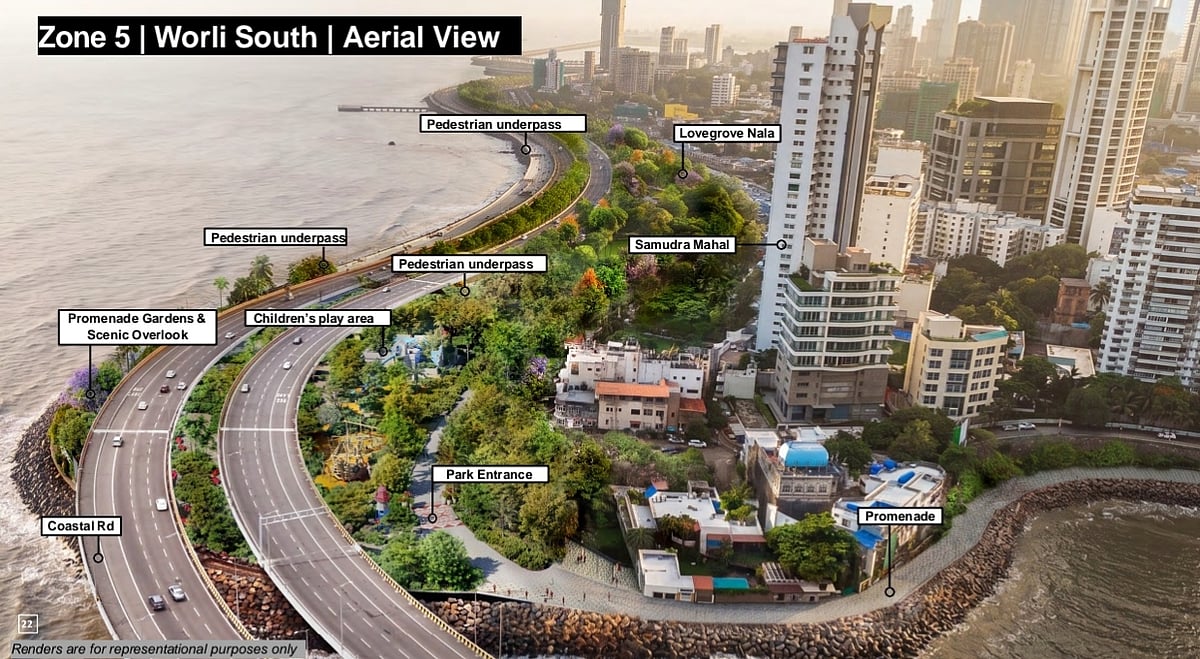
The coastal gardens, from Priyadarshini Park to Worli, are envisaged as a green necklace on land reclaimed for the city. They are compared with Hyde Park, Central Park and the Singapore Botanic Gardens, and those are the right comparisons. If these are the parks Mumbai is looking to, why is so much more of this landscape ticketed?
Also Watch:
Hyde Park is 350 acres and free to enter. Year-round, the paid ground is limited to a few courts and a summer lido, a sliver of the park, well under 1% by any reasonable estimate. For roughly six weeks each year, a Christmas fair takes over more than 40 acres, or about 11% to 12%. The rest remains open. Then the fair comes down, the fences disappear and the park returns to the public.
Central Park is 843 acres. Walking in is free. Its zoo occupies 6.5 acres. Even with the skating rinks, roughly 1% of the park is ticketed. The Singapore Botanic Gardens cover 82 hectares. The National Orchid Garden, the principal paid attraction, occupies three hectares, about 3.7%. The rest is free.
The coastal plan sits at 15%, all year and in every zone: 11 ticketed zones and 18 attractions. The civic figure for that landscape is 70 hectares, of which 53 hectares are given for the Coastal Gardens project. So, 15% of it is 7.95 hectares, about 19.63 acres. Set beside that, 15% is roughly four times the share taken by Singapore’s Orchid Garden. It is also a larger share than what Hyde Park gives to its Christmas fair.
On June 11, 2026, the Supreme Court recorded an undertaking that recreational activities and ticketed access control would not exceed 15%. The master plan meets that ceiling, including 15% of each zone. But a cap is not a target. The court did not say that 15% was the international model, or that Mumbai should use the entire allowance. The undertaking covers access control as well as tickets. Both withdraw land from open use.
There is a difference between a legal ceiling and a planning principle. If the principle is to follow the parks we have chosen as our benchmarks, the number should come down to something closer to their model: a small attraction within a free landscape rather than a significant portion of the landscape itself becoming an attraction.
The coastal gardens are an opportunity to establish a new standard for Mumbai’s public spaces. The city does not have to choose between attractions and access. It simply has to decide which is primary.
Ankieta Kothari is the founder of The Bombay Blueprint, a public platform chronicling Mumbai’s architecture, heritage and evolving urban landscape

