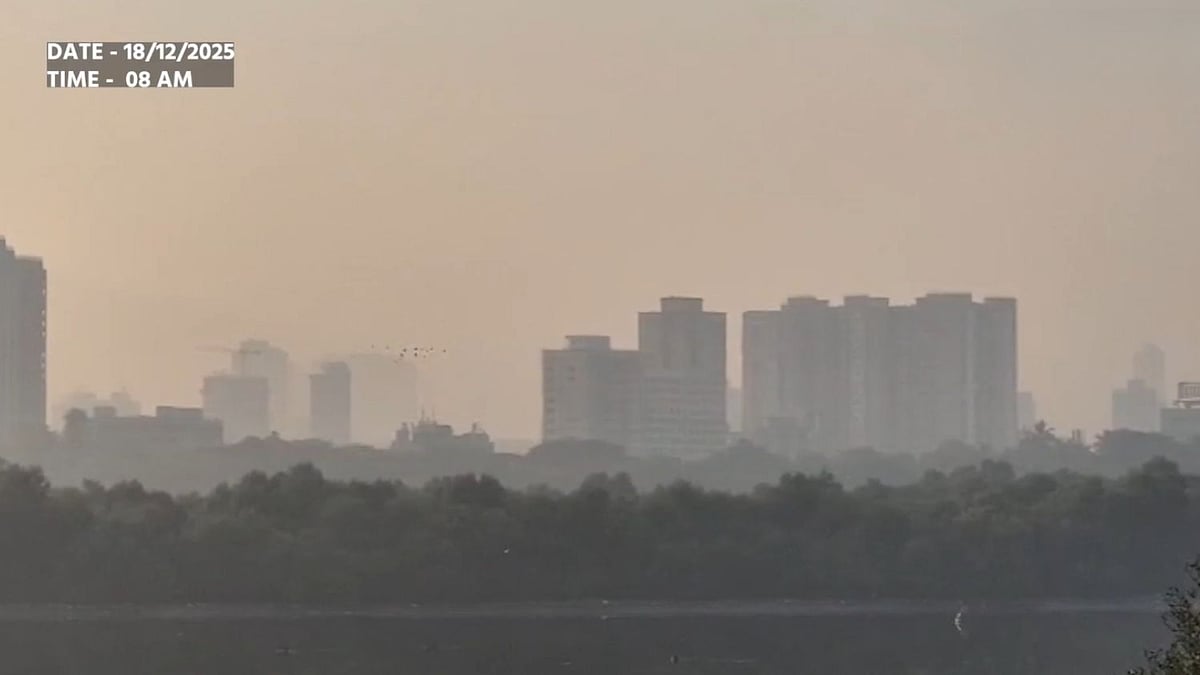
Mumbai: Mumbai began Thursday on a relatively cool and crisp note, offering residents a brief glimpse of winter-like comfort. Clear skies, light winds and lower humidity made for a pleasant early morning. However, the relief was short-lived as a visible layer of smog soon settled over the city, reducing visibility and once again underscoring Mumbai’s worsening air pollution crisis.
Despite favourable weather conditions forecast by the India Meteorological Department (IMD), air quality quickly emerged as the city’s biggest concern. The IMD had predicted a bright and comfortable day, with temperatures expected to hover between 17°C and 34°C. Yet, commuters, morning walkers and schoolchildren stepping out early were greeted by hazy surroundings and an acrid smell in the air, particularly in traffic-heavy corridors and low-lying areas.
According to data from air quality monitoring platform AQI.in, Mumbai’s overall Air Quality Index (AQI) stood at 254 during the early hours, placing it in the ‘unhealthy’ category. After showing signs of improvement over the past few weeks, pollution levels have once again deteriorated. Such AQI levels pose health risks to all residents, with children, senior citizens and those suffering from respiratory or cardiac ailments being especially vulnerable.
The renewed spike in pollution is largely being attributed to construction dust and fine particulate matter. Massive government-led infrastructure projects, including metro rail corridors, flyovers, coastal road extensions and extensive road-widening works, continue across the city. These, coupled with aggressive private real estate development, are releasing large volumes of dust into the atmosphere. Vehicular emissions during peak traffic hours are further compounding the problem, especially at key junctions.
Several Areas Report Severe To Hazardous Air Quality
Several areas emerged as major pollution hotspots. The Wadala Truck Terminal recorded a worrying AQI of 407, categorised as ‘hazardous’, indicating conditions that can seriously impact even healthy individuals. Chembur and Colaba followed with AQI readings of 328 and 318, respectively, both falling in the ‘severe’ category. Sion registered an AQI of 317, while Worli, a prominent commercial and residential hub, recorded 308.
Suburban areas fared marginally better, though pollution remained widespread. Kandivali East logged an AQI of 107 and Goregaon East stood at 130, both categorised as ‘poor’. Other areas such as Parel-Bhoiwada (153), Borivali West (177) and Charkop (187) also slipped into the poor range, reflecting the citywide spread of pollution.
For context, AQI levels between 0–50 are considered good, 51–100 moderate, 101–150 poor, 151–200 unhealthy and anything above 200 hazardous. With large parts of Mumbai hovering at or above unhealthy levels, concerns are growing over the long-term health implications as winter progresses and pollution episodes become more frequent.
To get details on exclusive and budget-friendly property deals in Mumbai & surrounding regions, do visit: https://budgetproperties.in/
