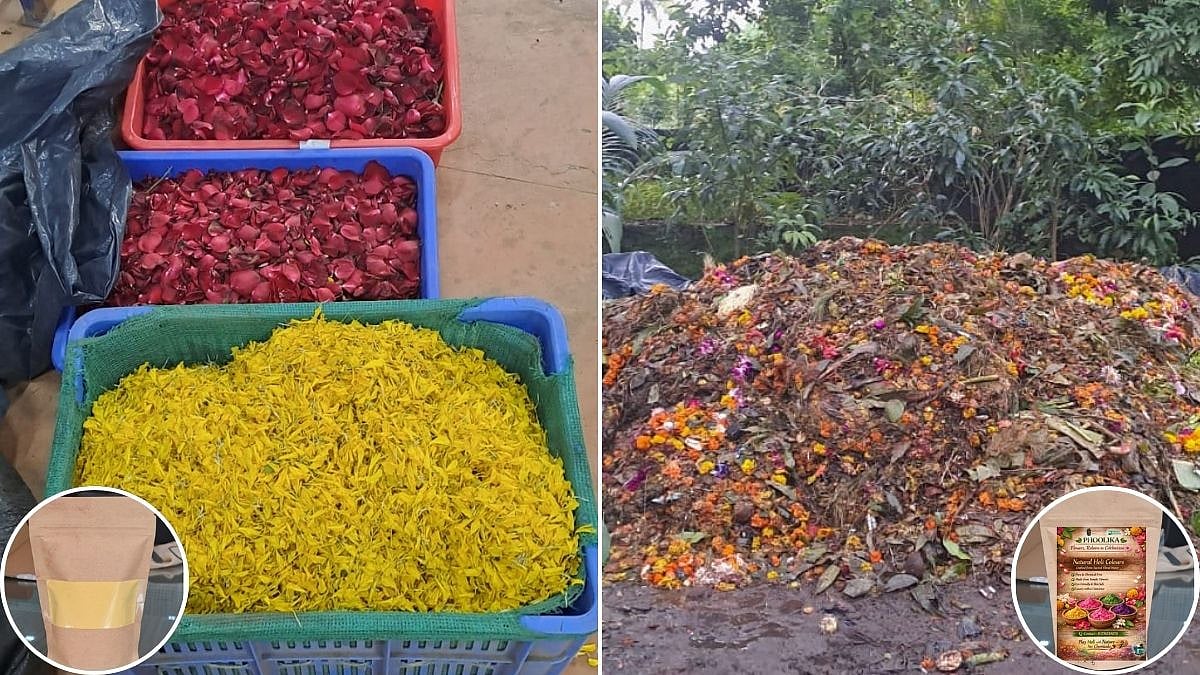
As part of the Environment Avenue initiative, Rotary International District 3141 undertook a flower collection activity during the Ganeshostav in association with NGOs Keshav Srushti and My Green Society. The objective was twofold: to inculcate the habit of waste segregation and also create the Rotary Connect with Society. Besides ensuring that the floral waste does not go to already over-stressed landfills in Mumbai. Three avenues were targeted: Community Pandals, Housing Societies and Visarjan sites, of which involvement of Rotarians was restricted to the first two.
Though the collected bags were not weighed individually, considering the number of bags and transport vehicles used, it is estimated that the total recovery of flowers was over 25 tons.
Of the total collection, about 3-4 tons was collected from five Community Pandals, five Housing Societies Pandals and over 30 large housing societies that Rotarians could engage with across Mumbai, from Kandivli to Mulund to Chembur to Worli to Nepean Sea Road and to Cuffe Parade. The two NGOs with their volunteers collected the flowers from Visarjan sites.
Processing and utilisation of flowers
Flowers are aggregated and then good petals are sun-dried to make agarbatti powder. Thereafter, this powder combined with gobar and guar gum is hand-rolled by tribal women at Uttan Village into Kumudini Agarbattis.
The balance flowers are composted by mixing bagasse and gobar to make high-carbon fertilisers. A total of 25 tons of compost was prepared and largely distributed to farmers in Palghar and Jalna.
Impact
1. Sensitisation: The citizens and Rotarians involved took it upon themselves to collect flowers during the Navratri festival as well as during Maha Shivaratri.
2. Women empowerment: Six tribal women in Uttan are engaged in agarbatti-making and earning 4000+ per month through the activity.
3. High-carbon compost: The compost made organically using gobar slurry has a very high carbon content, making it three times as effective as regular fertiliser. This compost is not only used in farmland but also for Miyawaki plantation.
Also Watch:
4. Additional scope of upcycling: With over 1 ton of flower collection during Maha Shivaratri and with Holi round the corner, it was prudently thought of making organic colours from the petals of the flowers. From the collection, about 10-15 kgs of organic gulal is being produced for use during Holi in substitution for chemical colours.
To get details on exclusive and budget-friendly property deals in Mumbai & surrounding regions, do visit: https://budgetproperties.in/

