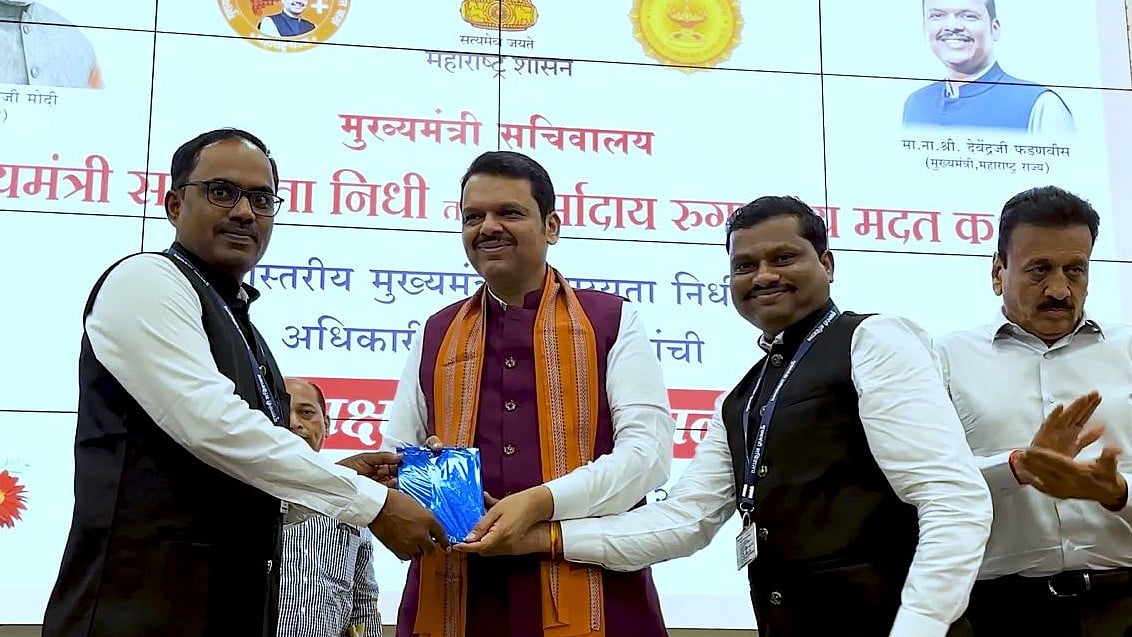
Mumbai: The Maharashtra government's Public Health Department, Medical Education Department, and the Chief Minister's Medical Assistance Fund Cell are actively implementing a range of initiatives and policies to enhance healthcare services for Mumbai's residents.
Under the guidance of CM Devendra Fadnavis, several reforms have been introduced in the Chief Minister's Medical Assistance Fund Cell over the past year. These include expediting aid delivery to patients and simplifying the application process. As a result of these positive changes, needy patients are receiving timely medical assistance. In the Mumbai region alone, approximately 5,000 underprivileged patients have been provided with financial aid amounting to Rs 39.56 crore in the last year.
Across the state, 35,362 needy patients received Rs 299.44 crore in medical financial assistance during the same period. Thanks to Chief Minister Devendra Fadnavis's visionary leadership, the reforms in the fund cell have directly benefited patients. Simplified online procedures and other innovative measures are ensuring that thousands of patients get help on time. This aligns with the CM's resolve that no one's treatment should be halted due to financial constraints, which is now being fully realized.
Looking ahead, efforts are underway to assist even more patients through tripartite agreements and the integration of all government health insurance schemes, making aid pathways more accessible. A significant milestone is the FCRA (Foreign Contribution Regulation Act) certification granted to the Chief Minister's Assistance Fund Cell, making it the first such entity in India to receive this approval from Maharashtra. This allows the cell to accept direct donations from abroad.
To provide expensive medical treatments to economically weaker and needy patients, tripartite agreements will soon be formalized under the fund's umbrella. These will involve the Chief Minister's Assistance Fund Cell, corporate companies, hospitals, and partial contributions from patients where applicable.
Soaring Reforms in Mumbai's Public Health Sector
The state government has taken several crucial citizen-centric decisions in the Public Health Department, giving a new direction to the healthcare system in the state and Mumbai. The Mahatma Phule Jan Arogya Yojana has seen a massive expansion in coverage, now offering free treatment up to Rs 10 lakh for serious and high-cost illnesses. This benefit is available at registered hospitals in Mumbai. The number of procedures covered has increased from 1,356 to 2,399, including critical conditions like heart disease, kidney ailments, cancer, orthopedics, obstetrics, pediatrics, and mental health.
Urban Health Commissionerate for City Needs
To address the growing urban population's health requirements, the Public Health Department has made a historic decision to establish an "Urban Health Commissionerate." This will enable better management, rapid services, and effective implementation of urban health facilities at the local level, including in Mumbai. As a result, urban health services will become more organized, systematic, and accessible to citizens.
Strengthening Cancer Services
Considering the rising number of cancer patients in the state, approval has been granted for a one-year "Post Basic Diploma in Oncology Nursing" course at Mumbai's Kama and Albless Hospital to train specialized "Oncology Nurses." This will improve the quality and efficiency of chemotherapy, radiotherapy, and day-care services.

Additionally, dialysis treatments will now be funded through reserves in all charity hospitals across the state. The Pradhan Mantri Jan Arogya Yojana and Mahatma Phule Jan Arogya Yojana have been made mandatory in these facilities. A mechanical laundry service project has been implemented in 593 government hospitals statewide to enhance cleanliness and safety, including major hospitals in Mumbai, ensuring cleaner and higher-quality health services for residents.
Hospitals under the Brihanmumbai Municipal Corporation (BMC), all municipal corporations in the state, and the Maharashtra State Workers' Welfare Society have also been included in the Mahatma Phule Jan Arogya Yojana. An awareness campaign on cervical cancer is being run for girls aged 9 to 14.
Tiered Structure for Cancer Treatment with Mumbai Centers
The Tata Cancer Hospital (Mumbai) operates as the state's apex cancer institution at L1 level, providing overall guidance to the system. Mumbai's J.J. Hospital, affiliated with a government medical college, will function as an L2 center, offering advanced diagnostics, surgery, chemotherapy, radiotherapy, pain management, and emergency services. The Kama and Albless Hospital in Mumbai will serve as an L3 center, providing day-care chemotherapy, basic diagnostics, psychological support, and awareness services.
In collaboration with the International Finance Corporation (IFC), MRI, CT Scan, and PET-CT equipment will be installed in 19 institutions across the state. Mumbai is included as one of two clusters (along with Nagpur), which will make diagnostic services faster and more accurate.
Cardiac cath labs and related equipment will be set up through public-private partnerships (PPP) in 11 government medical colleges, including those in Mumbai and surrounding areas, strengthening heart treatment facilities. These decisions are expected to bring significant advancements in cancer, heart disease, and advanced diagnostic services in Mumbai.
Emphasis on Digital Systems to Curb Food Adulteration
In a bid to protect public health, extensive measures are being taken in Mumbai to prevent food adulteration. Under the "Festival of Maharashtra, Resolve for Food Safety" initiative, 1,100 workshops have been organized and implemented on a large scale in the Greater Mumbai area. The Food and Drug Administration (FDA) Department has taken important steps toward transparent, efficient, and technology-driven governance. The entire process—from food and drug license registration, establishment inspections, sample collection, to lab analysis—has been made fully online.
To ensure citizens receive pure and safe food items, regular campaigns against adulterated products are ongoing. So far, 5,000 food samples have been collected and analyzed for testing.

