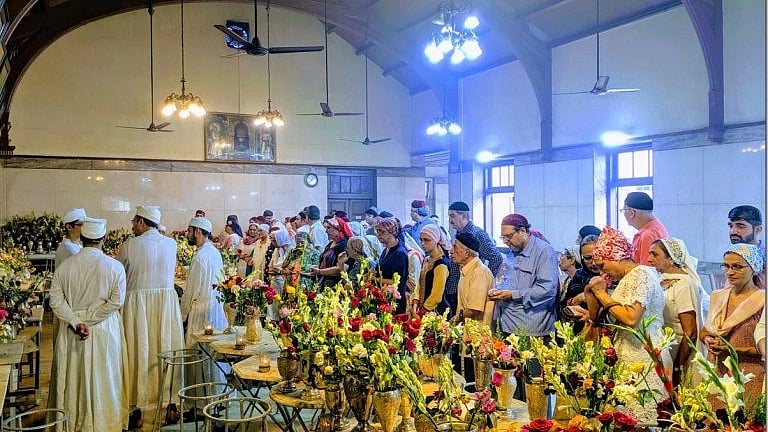
The Muktad festival, a significant observance for Parsis, is underway from August 6 to August 15. Parsis across the city are engaging in various observances to honour departed souls during this period, which extends until Navroz (New Year).
Muktad is a 10-day festival, often misunderstood as a period of mourning, explains Ervad Dr. Ramiyar Karanjia, a Parsi Scholar. It marks the concluding days of the religious calendar, including five additional days called Gathas. “In our religious text, it is mentioned that souls (Ravaan) and guardian souls (Ashofarohar), which look after the soul during life and death, come to the material world during this period. They stay with their family and enjoy being with them. So we do what they like best,” he said.
Preparing Homes for Visiting Souls
To welcome these visiting souls, homes are prepared with prayers, fragrant flowers, and oil lamps. A symbolic metallic vase with flowers is a common sight in homes during Muktad. "Departed souls like cleanliness, harmony, and charity. People clean their homes for the departed ones, do charities, and help people around since it keeps them happy,” Karanjia explains.

Rituals and Offerings
“We also offer food and fruits during this period,” said Bomi Hansotia, who faithfully visits the Fire Temple near his residence in Cusrow Baug in Colaba, before heading for work. While some choose to remain at home during this period to welcome home the departed ones, certain fire temples conduct prayer services beyond the 10 days, even for up to 18 days.
Concern Amidst Celebration
This year's Muktad period coincided with an incident involving the seizure of sandalwood stock from a Parsi Trust office in Gujarat. While it had limited impact in the city, some community members expressed concern regarding the timing of the action.
“We don’t know the details of the action taken or the sandalwood seized, but people were worried that the action took place before the festival.This is something that has never happened in the past and there was no restriction of burning sandalwood," said Dr Viraf Kapadia, a Parsi from the city.

