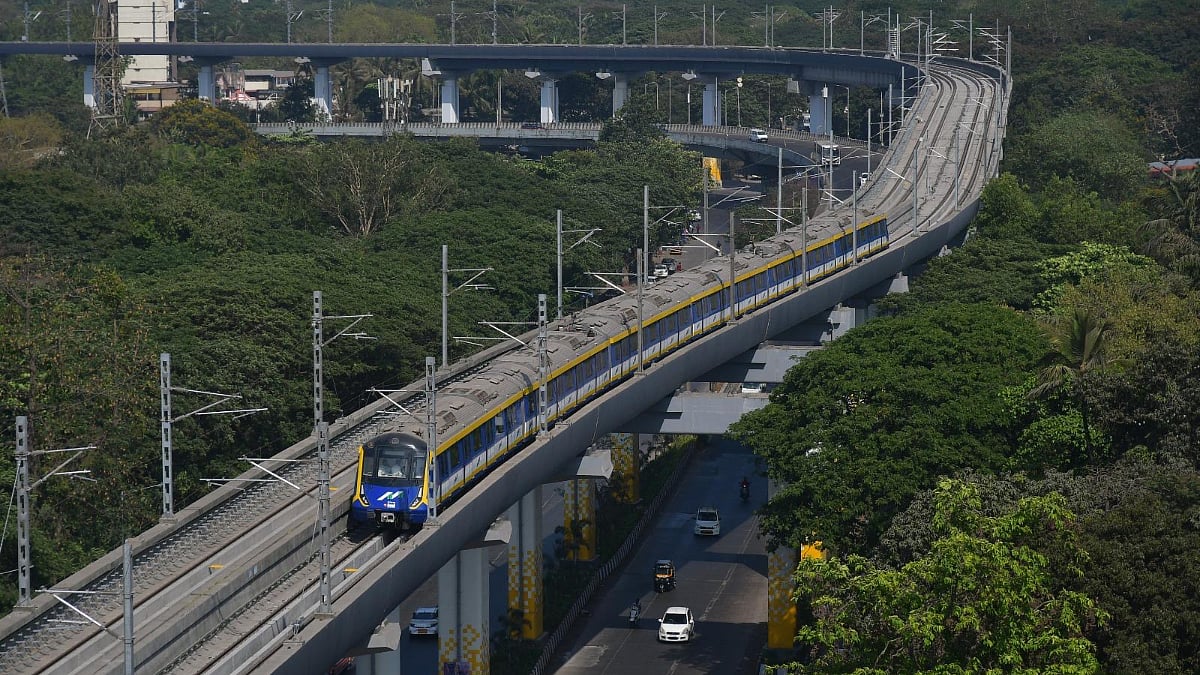
Mumbai's expanding elevated Metro network has emerged as a significant revenue source for the Mumbai Metropolitan Region Development Authority (MMRDA), generating more than Rs 1,000 crore through a combination of ticket sales and non-fare revenue so far from the start of its services as per the officials.
Four Metro Corridors Contribute To Revenue Generation
The earnings come from four corridors — Metro Lines 2A, 7, 9 Phase-I and 2B Phase-I — which have strengthened connectivity across Mumbai's western and eastern suburbs while creating additional revenue opportunities for the authority.
Apart from passenger fares, non-fare income includes revenue from commercial activities and other monetisation opportunities associated with Metro infrastructure.
The three operational corridors, Lines 2A, 7 and 9 Phase-I, have improved connectivity across the western suburbs and towards Mira-Bhayandar. Metro Line 2B's first phase, connecting Chembur to Mandale, adds to the expanding network in the eastern suburbs.
The four corridors at a glance:
- Metro Line 2A: The 18.6-km elevated corridor between Andheri West and Dahisar West has 17 stations. It provides connectivity across the western suburbs and links passengers with other Metro corridors and suburban railway stations.

- Metro Line 7: Stretching 16.5 km between Dahisar East and Andheri East, the corridor has 13 stations and runs largely along the Western Express Highway, offering an alternative to road-based travel.
- Metro Line 9 Phase-I: The 4.4-km stretch between Dahisar East and Kashigaon has four stations. It extends Metro connectivity towards Mira-Bhayandar.
- Metro Line 2B Phase-I: The Chembur-Mandale stretch marks the expansion of the Metro network in the eastern suburbs, improving connectivity in the Chembur-Mankhurd belt.
To get details on exclusive and budget-friendly property deals in Mumbai & surrounding regions, do visit: https://budgetproperties.in/

