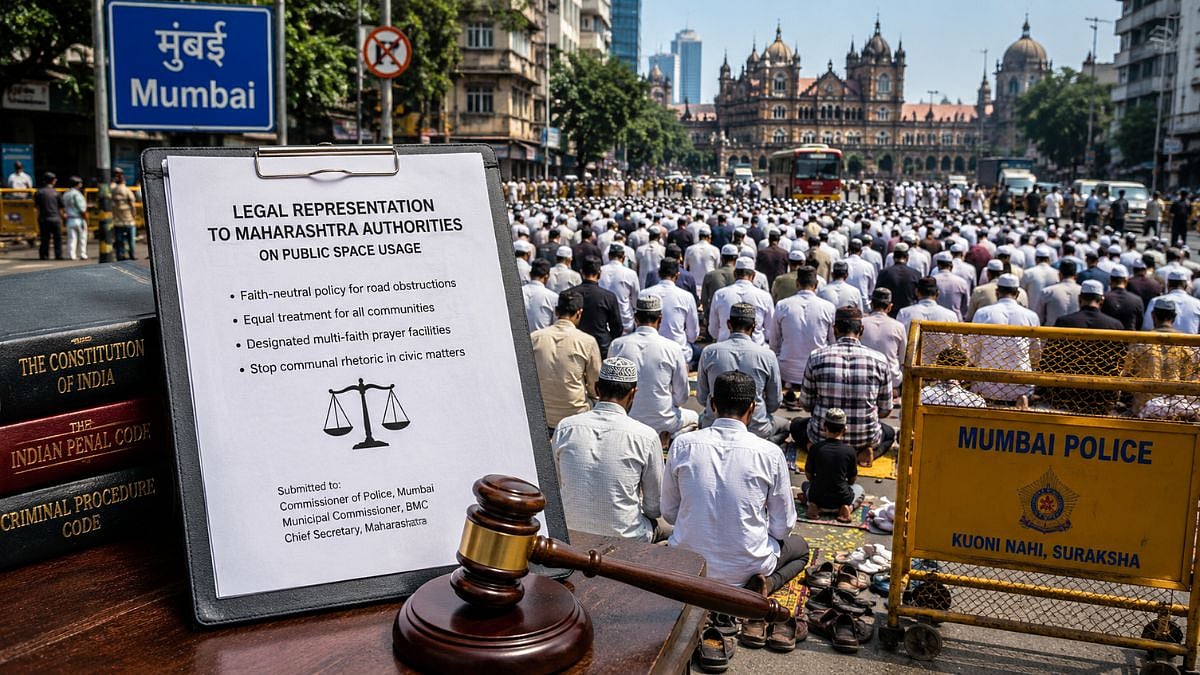
Mumbai, June 4: A legal representation to Maharashtra’s police and the municipal corporation has questioned what is being described as a “polarising and selective” approach towards the Muslim community in matters relating to the use of public spaces.
The representation from advocate Faiyaz Alam Shaikh, a lawyer at the Bombay High Court, was addressed to the Commissioner of Police, Mumbai, the Municipal Commissioner of the Brihanmumbai Municipal Corporation (BMC), and the Chief Secretary of Maharashtra, with copies to senior Home Department officials and the Director General of Police.
Objection to complaint language
The move follows complaints that namaz on roads was leading to traffic congestion and blockages in Mumbai. Shaikh’s memorandum objects to the language used in the complaints, alleging that references to terms such as “Jihadi tendencies”, “Bangladeshis”, “Rohingyas” and “Dadagiri” were inflammatory and risked fuelling communal tensions.
In his representation, Shaikh argued that if traffic disruption is the primary concern, enforcement measures must be applied uniformly across all communities and events.
He maintained that civic authorities should not selectively target brief Friday prayer gatherings while overlooking other forms of public-space occupation linked to religious festivities.
Faith-neutral policy sought
The memorandum further distinguishes between what it describes as “static obstructions”, such as temporary structures erected on roads for extended periods, and “dynamic processions”, including religious marches and police-permitted events.
It contends that traditional processions such as Muharram observances, Ganesh Visarjan and Kanwar Yatras enjoy constitutional protection and should not be subjected to blanket restrictions.
Among the key demands raised are the formulation of a faith-neutral policy governing unauthorised road obstructions, the creation of designated multi-faith prayer facilities in densely populated areas, and the rejection of complaints that allegedly employ communal rhetoric to address civic issues.
Also Watch:
High Court warning
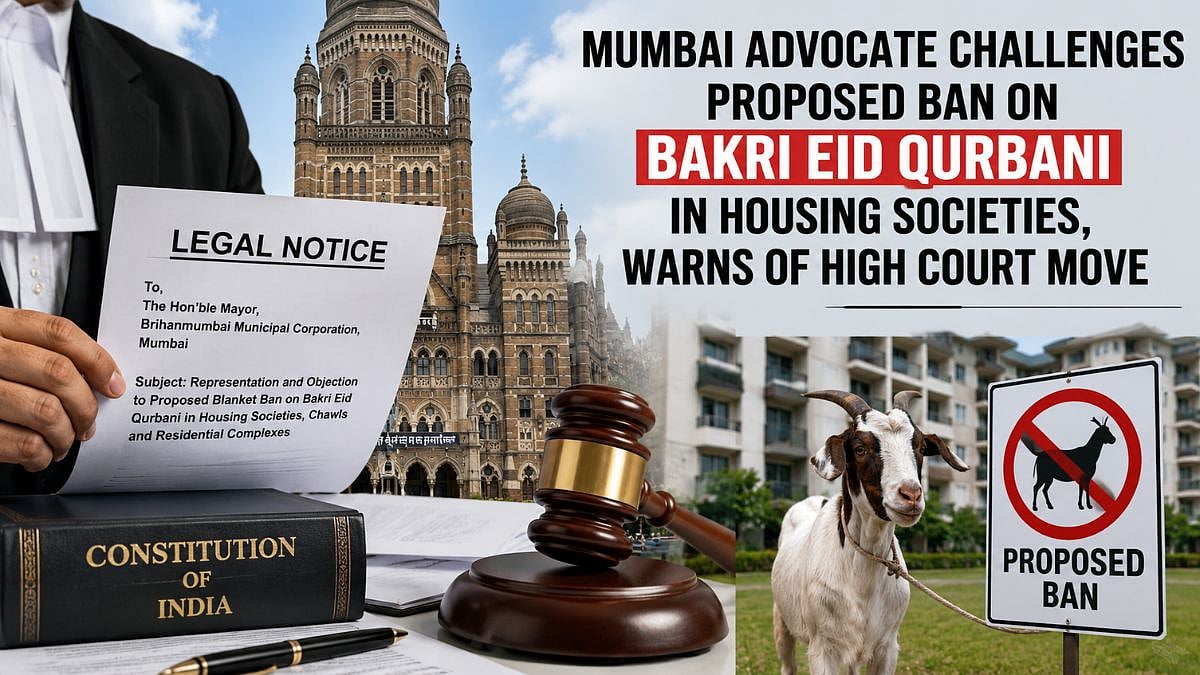
Shaikh warned that if authorities initiate what he considers discriminatory action against Muslims, he would approach the Bombay High Court under Article 226 of the Constitution seeking judicial intervention. He called for “equity, a uniform faith-neutral framework and structural administrative solutions instead of communal criminalisation.”
To get details on exclusive and budget-friendly property deals in Mumbai & surrounding regions, do visit: https://budgetproperties.in/
Your voice matters. If you have a community story, issue, or inspiring local experience to share, send it to community@fpj.co.in and be a part of the conversation.

