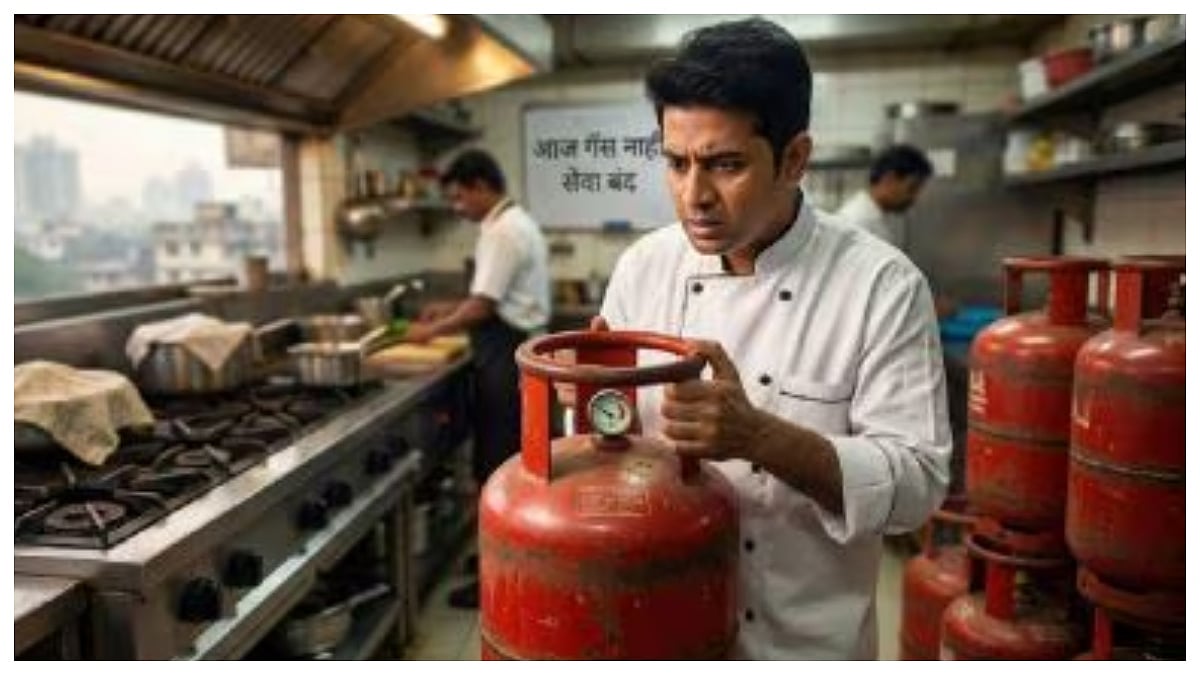
Mumbai: The already simmering tensions in Mumbai’s hospitality sector reached a boiling point as oil marketing companies (OMCs) announced a staggering Rs993 hike in the price of commercial LPG cylinder. This marks the steepest single-month increase in the city’s history, pushing the cost of a commercial cylinder in Mumbai to Rs3,024.
Third Consecutive Blow
The hike is the third such blow since the West Asia conflict escalated in late February, following a Rs115 increase in March and a Rs196 surge in April. According to Indian Oil, the prices for a 19kg commercial LPG cylinder has increased by 78% in the last three months. The price surge is being seen as a massive blow to hotels and restaurants – the largest consumers of commercial LPG – which are still struggling to overcome the loss from supply shortage started over a month ago.
Across Mumbai – from the historic Irani cafes of South Mumbai to the bustling Udupi joints in the suburbs – the reaction has been one of disbelief and frustration. For many small-scale operators, especially cloud kitchens, the cumulative increase of over Rs1,300 in just three months is being described as a death knell.
Supply Crisis Already Biting
Indian Hotel and Restaurant Association (AHAR)’s president Vijay Shetty highlighted that the industry is still struggling with only 20% supply available and the latest price hike has wiped out any hope of recovery. He stated that the industry will not be able to absorb an overnight price jump of 33% without passing it on to the customer.
“Fuel is the biggest cost for the industry and if that increases steeply, our overall operational cost increases exponentially. Therefore, we do not have any other option than to increase our charges. In the past three months, we have absorbed the surge of a few hundred and avoided passing it on to the customers but if we try to absorb a 33% hike, we will have to shut business and return to our villages,” he said.
Expected Price Hikes
A revision of menu cards is looming over the customers with the recent price hike. While some establishments had already implemented a 10% price correction and 5% ‘gas crisis charge’ in April, the sheer magnitude of the latest hike is forcing a secondary review of menu rates. According to the Hotel and Restaurant Association of Western India (HRAWI), a minimum of 10% to 15% price hike is imminent but even that may not be enough to absorb the impact, whereas AHAR's Shetty said that restaurants will have to increase prices by at least 20% to sustain the business.
Industry insiders say that customers should anticipate another hike of at least 15% at mid-range restaurants while smaller eateries and street vendors might consider reducing portion sizes to keep the price point intact. Similarly, final bills at fine dine restaurants will also see a raise due to the increasing fuel cost as well as the cascading effect on supply chain logistics.
Two-Edged Sword
National Restaurant Association of India's vice president Pranav Rungta said that the price increase by restaurants can become a two-edged sword, “There are a lot of primary and secondary price hikes as even a lot of raw material, which needs gas to be produced, will see price hike. While restaurants will have to increase their prices, it will be very difficult in the competitive market,” he added.
An HRAWI’s spokesperson called the increase as catastrophic for small and medium establishments, along with caterers and large-scale food producers. He said that while many establishments have already shut down temporarily, this latest hike will accelerate closures and job losses as rising fuel costs will inevitably affect employment, food pricing, events operations, tourism-linked services and the broader supply chain connected to hospitality.
Alternative Fuel Solutions
“The sector is facing an unprecedented escalation in operating costs at a time when businesses are already struggling with supply disruptions, reduced operational capacity and weakened cash flows. Many establishments are already operating with curtailed hours, limited menus and alternative cooking arrangements due to inconsistent supply and rising fuel costs. This latest revision will further strain margins and make operations increasingly unsustainable,” the spokesperson added.

Restaurant operators are now focusing on alternate fuel solutions like electric induction stoves for short-term and PNG pipelines for long-term. Restaurateurs noted that although the adoption of induction stoves is huge, it is slow at cooking and also impacts the taste. Therefore, the only hope for a long-term solution for the industry is the PNG pipelines, which will result as a cheaper substitute of the LPG cylinders. However, several restaurant operators complained that the PNG plan will take time as infrastructure has to be built.
The hospitality industry has urged the union government to intervene and help the businesses in this challenging time. The Federation of Hotel and Restaurants Association of India (FHRAI)’s vice president Pradeep Shetty said, “We urge the government to urgently roll back this hike and stabilise LPG prices to give the sector some breathing space. Without immediate relief, the hospitality industry, a key employment generator, faces an existential crisis.”
“We have been making representations to the government since the start of the war and here we are seeing a massive hike. Anyways, we will keep trying to convince the government because we do not have any other option,” said AHAR president.
To get details on exclusive and budget-friendly property deals in Mumbai & surrounding regions, do visit: https://budgetproperties.in/

