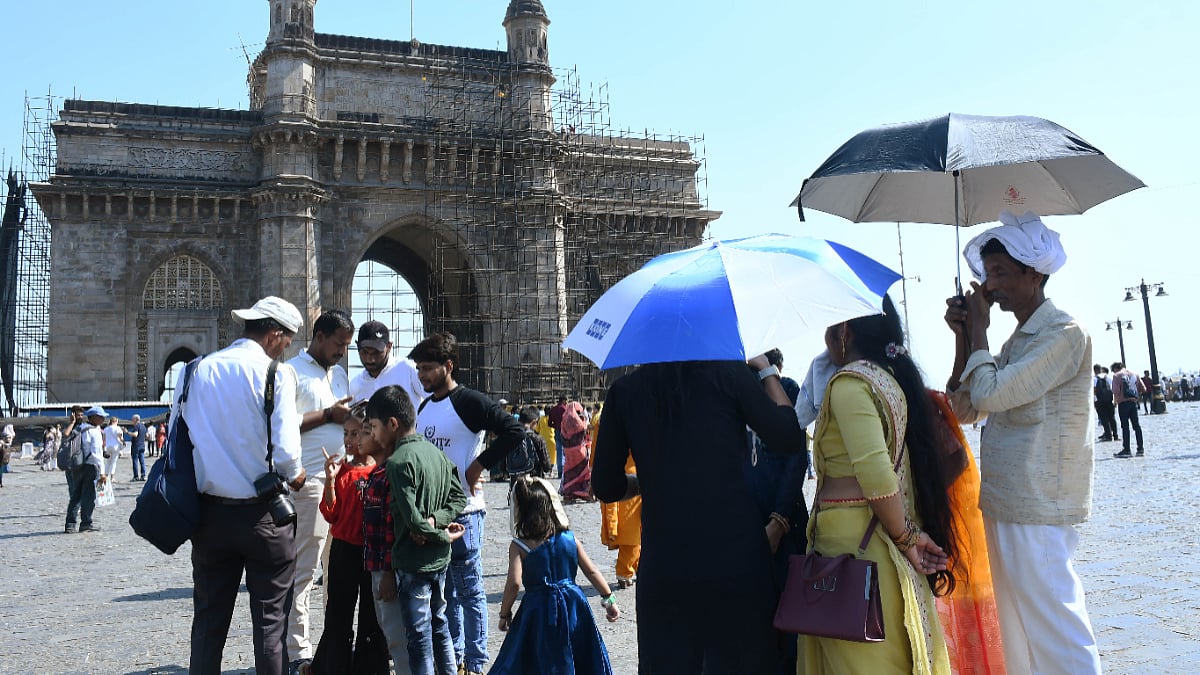
Mumbai, April 16: The rise in the heatwaves in Mumbai can certainly be attributed to the massive loss of open spaces, green cover, water bodies, and the rise in built-up area, said Dr Pradeep Awate, former State Surveillance Officer, Maharashtra Health Services.
"Mumbai lost 81 per cent of its open land, 40 per cent green cover, and approximately 30 per cent of its water bodies in the period of 27 years (1991 to 2018), while the built-up area has risen by 66 per cent. In the same period, the metropolis has also witnessed a 2-degree Celsius average temperature rise," Dr Awate said.
Call for heat action plan
Speaking at a media interaction session organised in association with the India Meteorological Department (IMD) and Asar Foundation on increased health risks due to increased heatwaves at the Mumbai Press Club on Thursday, Dr Awate said that lack of sustainable development, increased infrastructure, and cement concretisation in the last couple of years, along with climate change, is the prime reason Mumbai witnessed four heatwaves at the start of March, stressing that it is high time the government should implement a 'Heat Action Plan'.
IMD highlights forecasting improvements
IMD Mumbai Director Bikram Singh said that the weather department, over the last two years, has increased the accuracy in its forecast system, and factors like moisture are considered for a coastal city like Mumbai while sounding a heatwave alert.
Singh seconded that the rise in pollution levels, infrastructural development, and cement concretisation affects the overall environment; however, IMD's advance alerts have helped citizens to be prepared and schedule strenuous jobs during cooler hours.
Health risks and climate impact
Dr Awate added that "One Health" is the new buzzword, citing that due to climate change, human health, animal health, and environmental health go hand in hand and cannot be considered separately.
In his presentation on 'Climate Change & Heatwaves: Impacts on Human Health', he informed the media that heatwaves in India have emerged as a critical, silent, and rapidly intensifying "invisible disaster," causing significant mortality and impacting millions of lives, particularly among vulnerable outdoor workers and the urban poor. As per government data, over 11,500 people died from heat-related causes between 2011-2020.
Rising cases in Maharashtra
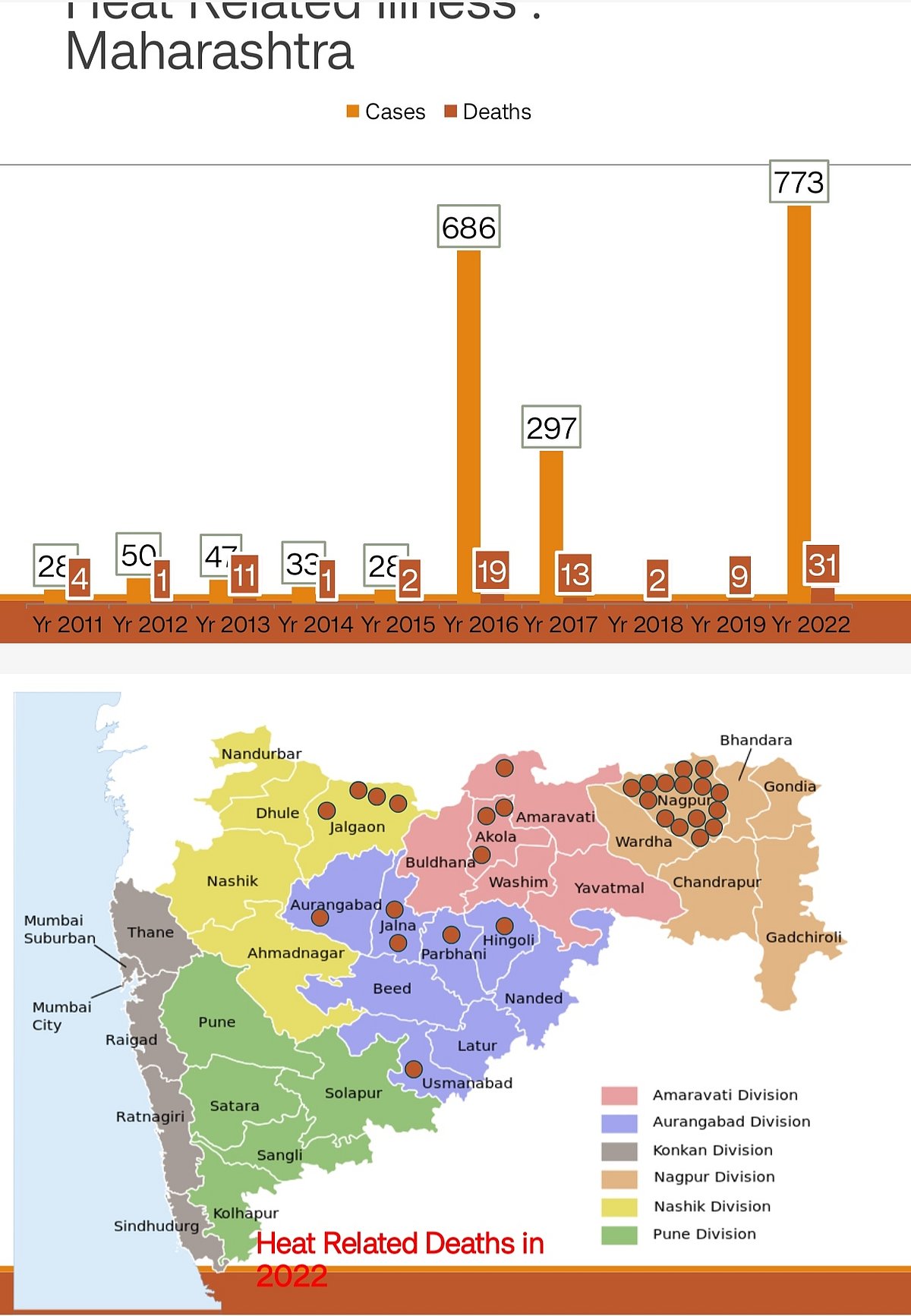
In Maharashtra, there has been a sharp rise in heat-related illnesses and deaths. In 2011, the heat-related illness cases were 28, which sharply rose to 773 in 2020. While the deaths due to heat-related causes were four in 2011, which rose to 31 in 2020. The regions where maximum heat-related deaths are recorded in the state are from Marathwada, Vidarbha, and North Maharashtra.
Hot and humid conditions persist
On Thursday too, Mumbai was under alert for hot and humid conditions. Singh said, "Although maximum temperature remains around 36°C, due to moisture and increased humidity, the body feel temperature is higher."
Experts call for awareness and long-term action
The session ended with the experts stressing that there needs to be enhanced public awareness and education about symptoms of heat exhaustion and heatstroke, disseminating action plans like change in outdoor working hours, focus on vulnerable groups, and the need for advocacy and pursuance of long-term measures on mitigation of climate change impacts, sustainable development, eco-friendly urban planning, etc.
Also Watch:
Key highlights
● Over 11,500 people died from heat-related causes between 2011-2020
● Driven by climate change, these extreme heat events are occurring earlier, lasting longer, and reaching higher temperatures, with 57% of Indian districts now at high or very high risk
● The rise in heatwaves has increased communicable and non-communicable diseases and impacts more pregnant women, children, and the elderly
● Heatwaves significantly increase cardiovascular disease (CVD) mortality, with an estimated 11.7% rise in risk during heatwaves
To get details on exclusive and budget-friendly property deals in Mumbai & surrounding regions, do visit: https://budgetproperties.in/

