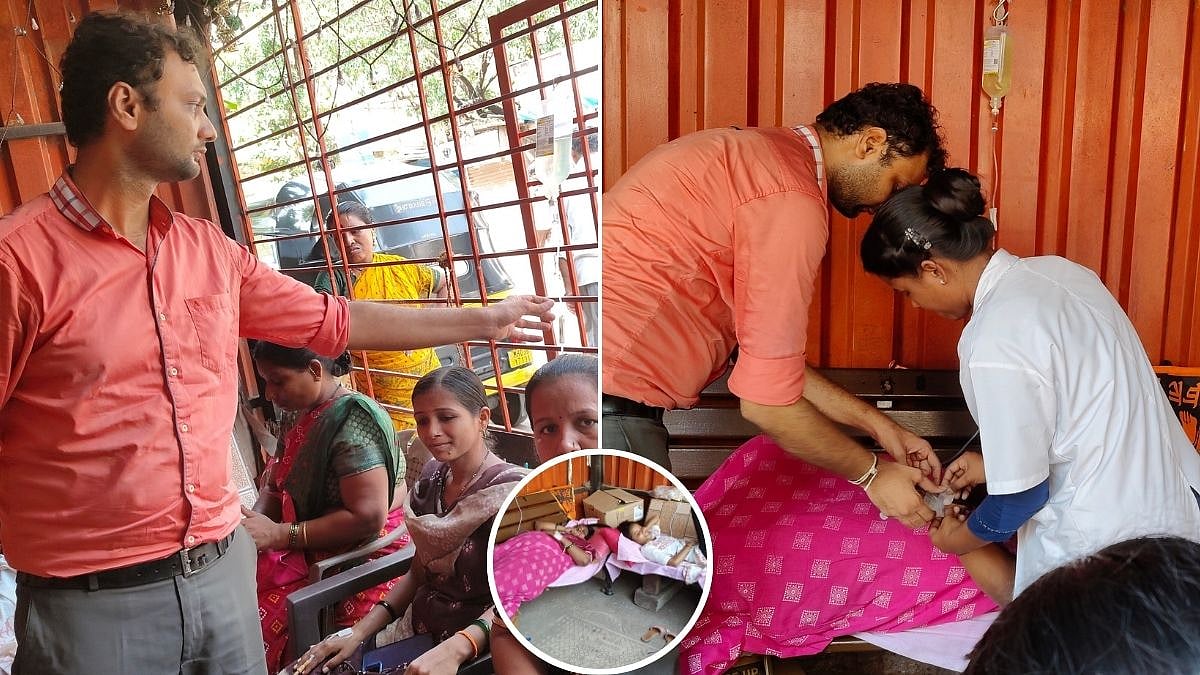
Mumbai, May 14: On Thursday afternoon, Vishranti More, a 22-year-old who works as a cook at several homes in the Kannamwar Nagar neighbourhood in Vikhroli, walked into the new makeshift clinic set up to treat heat stress. She said that travelling and working in the summer heat has strained her health.
“I lost my appetite. I consulted a doctor a few days ago but I continued to feel unwell. A friend recommended this clinic,” said More. At the clinic, she was diagnosed with heat exhaustion and given an intravenous drip. Ranjana Sarode, a 50-year-old from Tagore Nagar, too, had come there with similar complaints.
Outdoor workers vulnerable to extreme heat
With summer temperatures soaring, workers like More who work or travel during peak periods of heat are vulnerable to heat exhaustion and even heatstroke. Gig workers making parcel deliveries, construction workers, and autorickshaw drivers are among the most vulnerable. However, the city lacks emergency centres for these workers.
The clinic at Vikhroli, set up by the Kamgar Sanrakshan Samman Samiti (a trade union), Sarvodaya Friendship Trust, and Helping Hands Charitable Trust, has treated over a thousand workers since its inauguration on International Workers' Day on May 1.
Doctors warn of rising heat stress cases
Dr Bhavesh Jain, who is volunteering at the clinic, said that heat stress can take the body temperature to 103–104 degrees Fahrenheit, much above the tolerable threshold of 98 degrees.
“While there are government advisories that ask employers to avoid outdoor activity between 11:00 am and 4:00 pm, deadlines and work targets mean that the guidelines are not followed,” said Jain.
The World Health Organization says that the number of people exposed to extreme heat is growing exponentially due to climate change across all regions. Between 2000–2019, studies show approximately 489,000 heat-related deaths occur each year, with 45% of these in Asia and 36% in Europe, the organisation says.
Humidity increases physiological strain
In places like Mumbai, high relative humidity (RH) in summer worsens the physiological strain. A study by the Department of Environmental Health Engineering, Sri Ramachandra Institute of Higher Education and Research, Chennai, said that while high temperature’s effects on health are well-documented, RH’s effect on the body is less explored. The study said that the Physiological Strain Index (PSI) among outdoor workers increased as RH went up.
The study concluded that elevated PSI under high humidity conditions highlights the need for tailored protective measures, such as hydration strategies and adjusted work-rest cycles, to mitigate physiological strain in hot environments.
Workers seek rest facilities and relief measures
Jain said that most outdoor workers do not receive any such relief.
“We get gig workers who get no break between deliveries and spend their waiting time outside ‘dark stores’ because the facilities have no place where workers can take a short break,” said Jain.
Akhilesh Rao, general secretary of the Kamgar Sanrakshan Samman Samiti, said that in the past, the union had organised heat relief camps at places where daily wage workers gather to meet employment contractors.
Also Watch:
“When we distributed hydration kits, workers told us that they do not have places where they can take short breaks from the heat. Though some companies provide such facilities and stagger working hours to avoid peak afternoon heat, most do not as they have completion deadlines. We speak to these companies. Meanwhile, we hope to set up more clinics like this. The city is undergoing massive construction and workers are at risk of heat stress,” said Rao.
To get details on exclusive and budget-friendly property deals in Mumbai & surrounding regions, do visit: https://budgetproperties.in/

