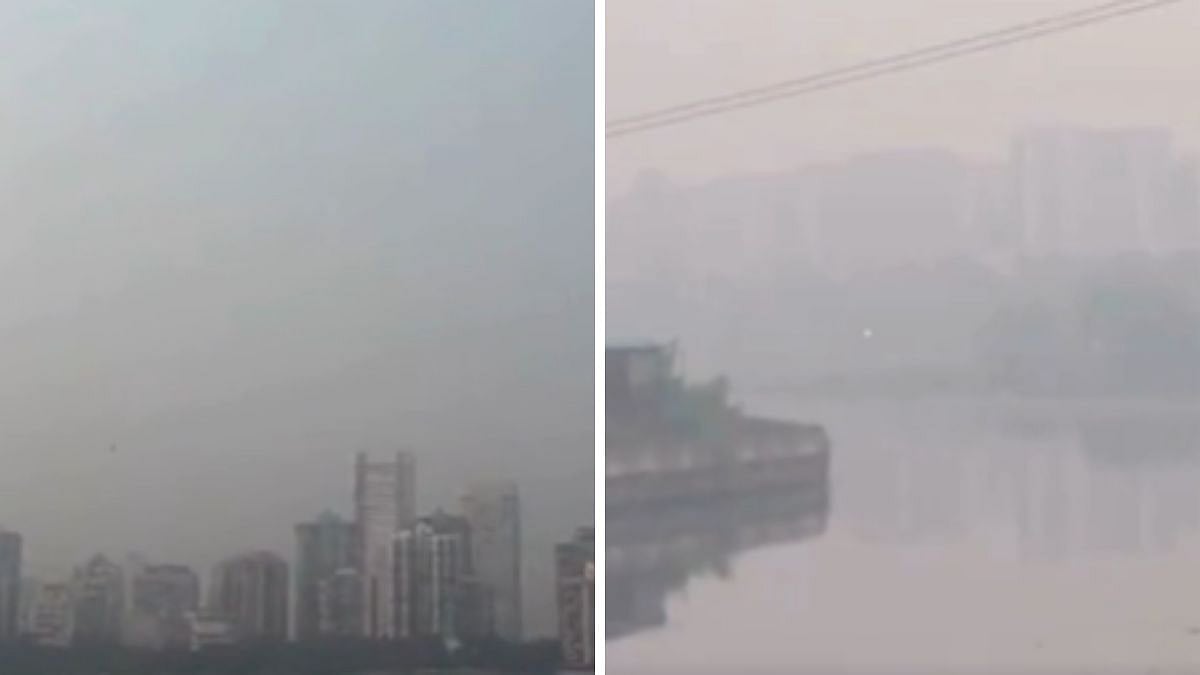
Mumbai: Mumbai’s persistent blanket of haze has brought an unexpected factor into the city’s air pollution debate, with the Brihanmumbai Municipal Corporation (BMC) identifying sodium chloride, or common sea salt, as one of the compounds contributing to the phenomenon. The finding adds a marine component to the discussion around Mumbai’s deteriorating air quality, which has remained a concern since 2022.
The presence of salt particles in the atmosphere could help explain why the city’s skyline appears hazy even as weather conditions remain largely clear. However, experts point out that sea salt is only one potential contributor, with weather patterns and emissions from vehicles and industries also influencing atmospheric conditions.
Why Is Sea Salt Present In Mumbai’s Air?
Mumbai’s proximity to the Arabian Sea makes it susceptible to marine aerosols, tiny airborne particles produced when waves break and seawater splashes into the atmosphere. These droplets can travel through the air and as their water content evaporates, salt particles remain suspended.
The particles can affect visibility by scattering light. When they accumulate under unfavourable atmospheric conditions, they may contribute to the thick, whitish haze enveloping buildings and the city’s skyline.
Weather patterns associated with El Nino have also drawn attention to changing temperatures and conditions over the Arabian Sea. Warmer waters can influence evaporation, while weak winds may prevent airborne particles from dispersing quickly, allowing haze to linger over Mumbai.
Explaining the effect of salt particles on visibility, Tuhin Banerjee, an air quality expert and former scientist at the National Environmental Engineering Research Institute (NEERI), said, “Salt or NaCl is an opaque element, therefore, it directly affects the visibility of people, leading to formation of a thick haze-like envelope around the skyline,” as quoted by The Indian Express.
The impact may extend beyond visibility. Marine aerosols can interact with nitrogen oxides and sulphur oxides released by vehicles and industrial activity. Such reactions can contribute to secondary pollutants in the atmosphere, although the extent of sea salt’s contribution to Mumbai’s overall pollution levels has not been established.
Does Sea Salt Pose A Health Risk?
The identification of sea salt as a contributor to haze does not automatically mean it is responsible for the city’s high pollution readings or poses the same risks as other pollutants. Scientists say there is no established evidence that inhaling sea-salt aerosols at typical ambient concentrations poses a significant direct health risk.
The Central Pollution Control Board (CPCB) does not treat sodium chloride as a separate indicator in its conventional AQI framework, which tracks pollutants such as particulate matter, ozone, sulphur dioxide and carbon monoxide.
Banerjee has nevertheless cautioned that salt particles may react with other substances in the atmosphere, potentially contributing to secondary pollution. Salt deposition can also corrode electronic equipment, including circuit boards and mobile phones, over prolonged exposure.
Mumbai's AQI Remains In Unhealthy Category
The haze comes amid another spell of uncomfortable weather. Mumbai recorded an overall AQI of 283 on Saturday, according to data cited by AQI.in, which placed the reading in the ‘Unhealthy’ category. The elevated reading has added to concerns over air quality as temperatures remain high.
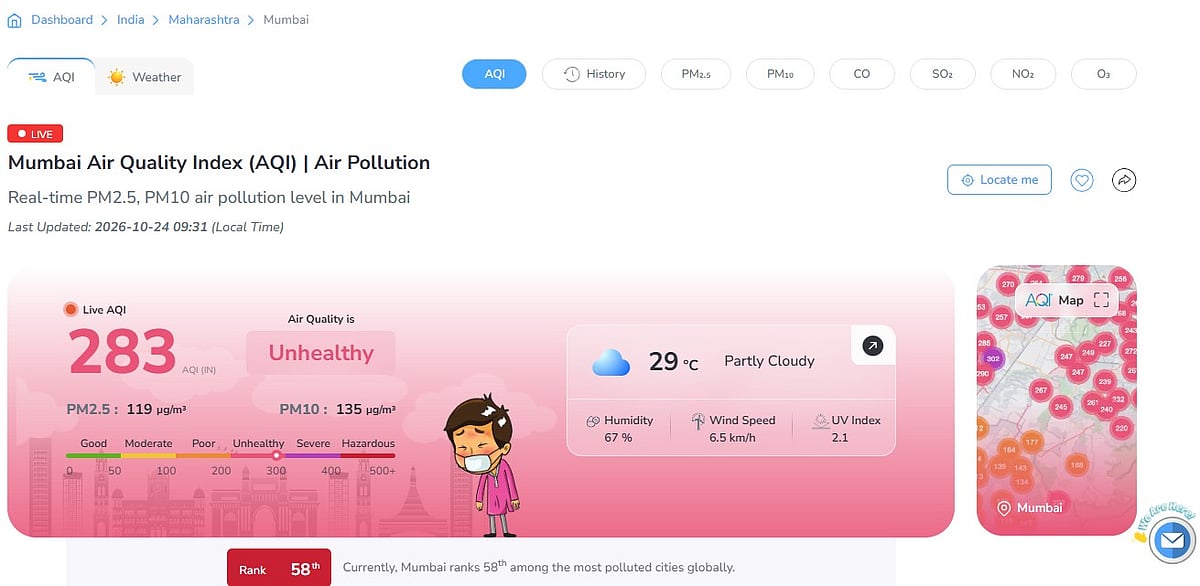
Mumbai's AQI | AQI.in
The India Meteorological Department (IMD) forecast generally clear skies for Saturday, with the maximum temperature expected to reach around 37°C. Hot and humid conditions were expected to persist across the city and its suburbs.
While the BMC’s identification of sodium chloride highlights a possible natural contributor to the haze, the AQI figure represents the combined impact of monitored pollutants and cannot be attributed to sea salt alone. Determining the relative contribution of marine aerosols, traffic emissions, industrial pollution and weather conditions remains crucial to understanding Mumbai’s persistent haze.
To get details on exclusive and budget-friendly property deals in Mumbai & surrounding regions, do visit: https://budgetproperties.in/

