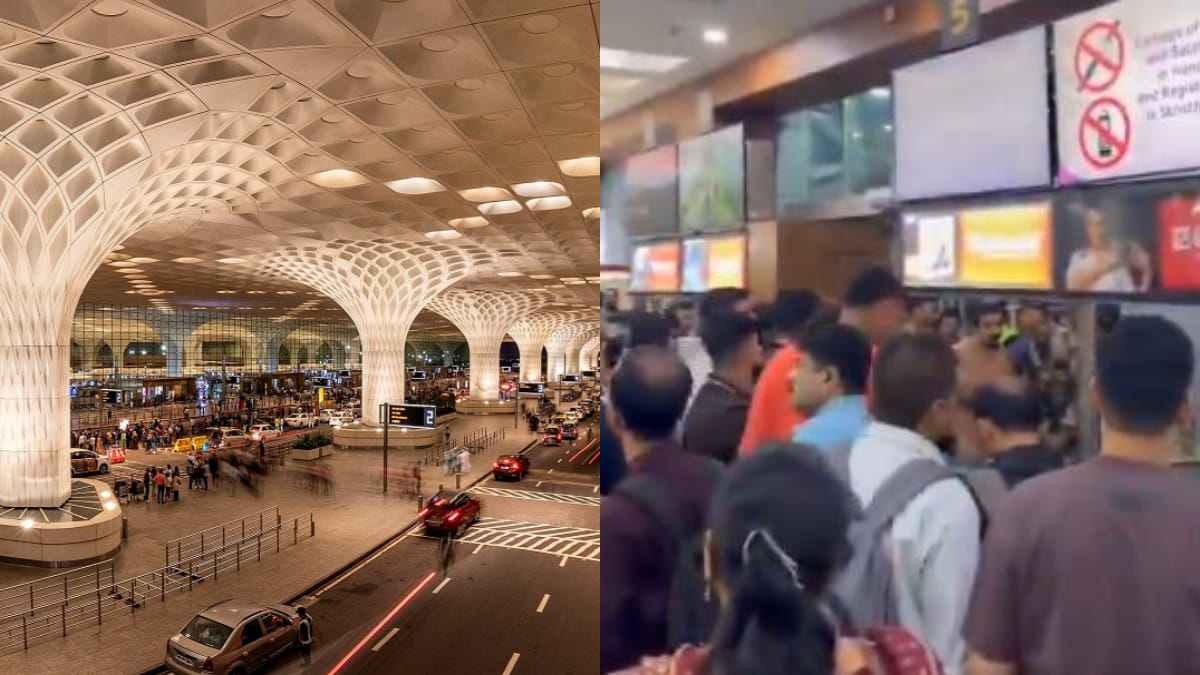
Mumbai: High drama unfolded at Chhatrapati Shivaji Maharaj International Airport’s Terminal 1 in the early hours of Thursday as prolonged delays for multiple SpiceJet flights, caused by chronic fleet shortages and operational mismanagement, triggered a massive passenger protest. The low-cost carrier, already under intense pressure for its depleting aircraft count, saw hundreds of travelers stranded for hours, leading to chaotic scenes and anti-airline sloganeering.
The unrest began in the early hours of Monday when three scheduled SpiceJet flights – scheduled for Delhi, Bengaluru and Gorakhpur on Thursday late evening – were cancelled after indefinite delays. The Mumbai-Delhi flight SG-631 has experienced long delays daily for the past week, with the longest delay of 14 hours. Passengers reported that they were onboarded on the flight after a four-hour delay but it was ultimately cancelled, forcing the passengers to deboard and wait cluelessly on the tarmac.
The Gorakhpur flight SG-553 has also faced the same issue and was cancelled for the last two consecutive days. Two more flights for the Mumbai-Ahmedabad sector also saw long delays on Wednesday and Thursday. Passengers, many of whom had checked before midnight on Thursday, were left without clear communication or refreshments as the scheduled departure times passed without updates.
As the frustration reached a breaking point, angry travelers gathered near the boarding gates and airline check-in counters, shouting slogans against SpiceJet. Videos circulating on social media showed a sea of enraged passengers demanding to speak with senior management.
"We have been waiting for six hours. First, they said it was a technical snag, then they said the crew hadn't arrived, and then they weren’t saying anything at all. It’s not just a delay; it’s a total breakdown of service,” said a passenger booked on the Delhi flight.
SpiceJet attributed the cancellations and delays to operational reasons. According to the airline spokesperson, the reasons included the grounding of one aircraft for maintenance and adverse weather conditions at the operating aircraft's previous station. These factors also led the crew to exhaust their flight duty time. The airline operated additional flights to accommodate affected passengers.

Also Watch:
The chaos at T1 is a direct symptom of SpiceJet’s thinning operational fleet. The airline has been struggling, with a significant portion of its fleet on the ground due to unpaid dues to lessors and a lack of spare parts. Legal battles with creditors and lessors have hampered the airline’s ability to maintain its full schedule, often leading to last-minute tactical cancellations or delays as planes are shuffled across the network to put out operational fires.
Moreover, Extended flight duty periods and operational uncertainty have reportedly led to intermittent crew unavailability, further compounding the delay cycles. All of these causes have worsened amid reduced international operations due to airspace closures in West Asia amid the ongoing war, rising operational costs from higher aviation turbine fuel prices, and the Rupee falling against the Dollar. These factors have financially hit the airline so hard that it has failed to pay salaries to many of its employees for more than two months.
The airline was put under enhanced surveillance by the Directorate General of Civil Aviation (DGCA) for two months in 2024 due to various deficiencies. These increasing operational issues loom over the airline, threatening to put it in the same situation. The Federation of Indian Airlines (FIA), which also includes SpiceJet as a member, warned the Indian government of a sector-wide crisis due to high fuel costs and the West Asia conflict. Meanwhile, SpiceJet’s internal struggles are creating a localised storm for the carrier.
To get details on exclusive and budget-friendly property deals in Mumbai & surrounding regions, do visit: https://budgetproperties.in/

