
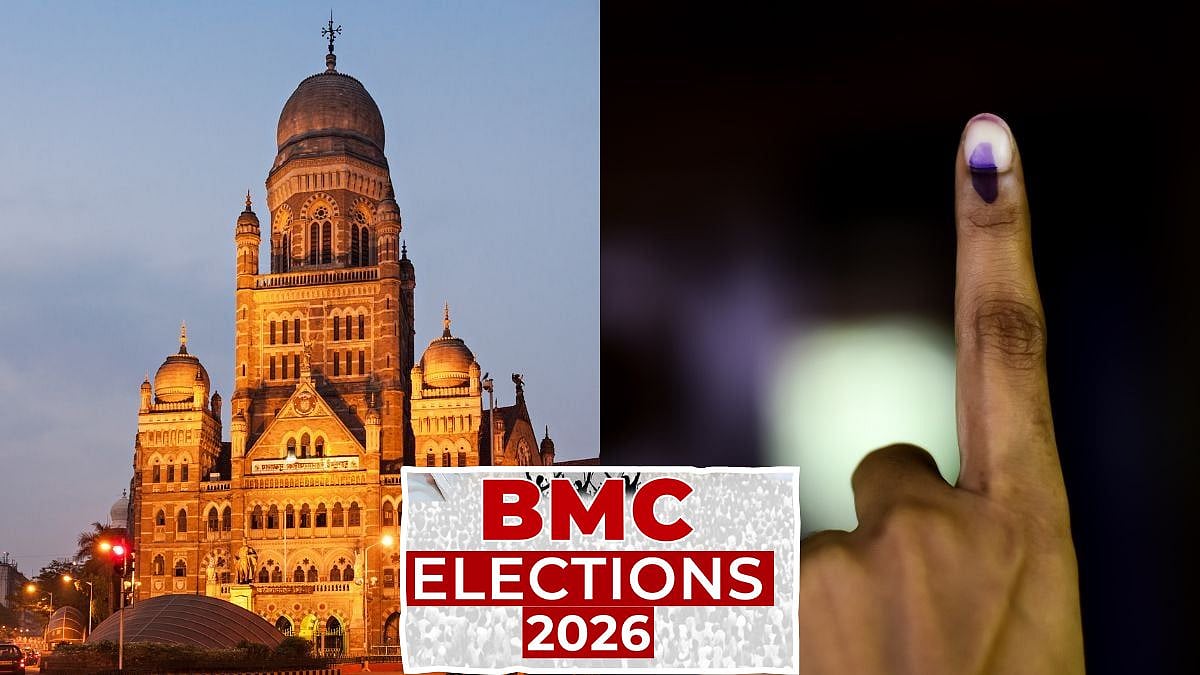
Mumbai, Jan 13: The political campaigns for the high-stakes January 15 BMC elections concluded on Tuesday at 5.30 pm on a high note. At the time, BJP leader and minister Nitesh Rane revived the ‘Vote Jihad’ narrative and appealed to Hindus in Mumbai to celebrate the Makar Sankranti festival by voting for the saffron party alliance of the BJP–Shinde Sena.
The Shiv Sena (UBT) and MNS, meanwhile, continued to strike the emotional chord of the existence of the Marathi manoos and sided with the Thackerays.
Last phase of campaigning
Since the final list of candidates was declared on January 3, the streets and neighbourhoods have witnessed a surge in political activity, with candidates and their supporters canvassing door to door, holding meetings and raising local civic issues in an effort to secure last-minute support.
Although the heightened political engagement was encouraging for some voters—who sarcastically commented that leaders had finally found time to speak on basic necessities such as drinking water, sanitation and roads—others are pinning their hopes on the new local government to be elected.
As per rules, no candidate can engage in election campaigning or any activity that can influence voters in the last 48 hours.
1,700 candidates in fray, average seven per ward
The municipal corporation of the country’s financial capital, which has a fiscal budget of Rs 75,000 crore, has been running under administrative rule for four years now, the first time in its history. The elections are being held after nine long years.
The BMC has 227 seats, for which a total of 1,700 candidates are in the fray, including independents. Of the total candidates, 822 are male and 878 are female. This is the lowest number of candidates since the 2002 BMC polls, owing to ward reservations and drastically changed political dynamics following the split in the Shiv Sena.
The average number of candidates per ward is seven to eight. At least 11 wards have one-on-one contests, with only two candidates each, while at least 51 other wards have more than 10 candidates contesting.
A total of 19 political parties are in the fray for the BMC elections, including both factions of the Shiv Sena, both factions of the NCP, BJP, Congress, MNS, VBA, AAP, Samajwadi Party, both factions of the RPI, Bahujan Samaj Party, Akhil Bhartiya Sena, Sambhaji Brigade, Communist Party, AIMIM, JD(S) and others.
1.03 crore voters, 10,231 polling booths
The BMC election department engaged in an intensive online and offline campaign, appealing to Mumbaikars to cast their votes. The voting percentage in the 2017 BMC elections was 55 per cent, and the administration has left no stone unturned in voter engagement, reminding citizens of their democratic right to vote.
The voters’ list has been prepared with a cut-off date of July 31, 2025. As per this list, Mumbai has a total of 1,03,44,315 voters, of whom 55,16,707 are male, 48,26,509 female and 1,099 others.
A total of 1.68 lakh voters were found to be duplicated within the same ward or across multiple wards. Of these, 48,628 voters have already submitted Annexure 2, indicating the ward in which they will cast their vote.
How to find your polling booth
The BMC has provided all election-related details on its official website, mcgm.gov.in, under the Elections tab. The links include comprehensive information for voters, such as the final voters’ list, booth-wise voter details, polling booth locations, lists of candidates and candidates’ affidavits. Data from the 2017 elections and by-elections has also been made available for comparison.
Citizens can also visit the BMC’s social media handles on Instagram, X, Facebook and YouTube for guidance on the voting process.
Voting timings and facilities
Voting will be held from 7.30 am to 5.30 pm on Thursday, January 15, which is one hour shorter than the state Assembly elections. Anyone who enters the polling booth premises before 5.30 pm will be issued a token and allowed to cast their vote, even if there is a queue.
The election department has set up a total of 10,231 polling booths across Mumbai, of which 4,704 are in government premises, 782 within co-operative societies and the remaining 5,125 in private premises.
Also Watch:
Facilities such as drinking water, waiting areas, clean toilets, adequate lighting, ramps and wheelchairs will be provided at polling booths. Each ward will also have a ‘Pink Sakhi’ booth managed entirely by women, including police and security staff.
To get details on exclusive and budget-friendly property deals in Mumbai & surrounding regions, do visit: https://budgetproperties.in/
