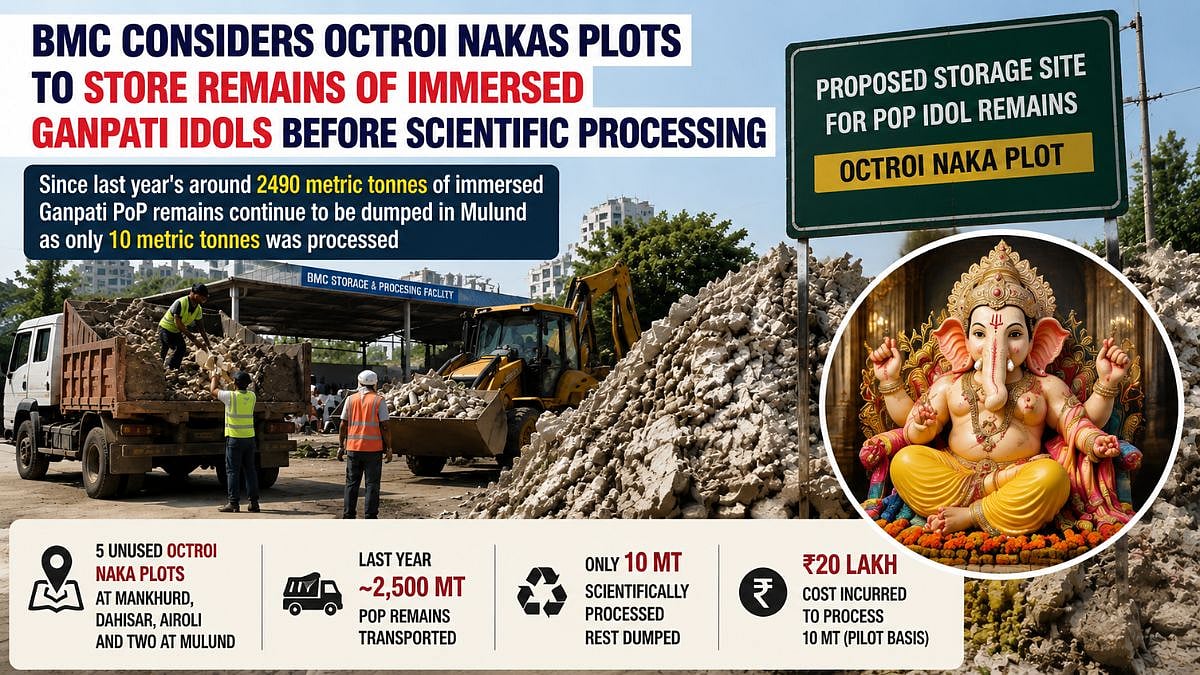
Mumbai, July 21, 2026: The BMC is considering using the city's defunct Octroi Naka plots to store the remains of Plaster of Paris (PoP) Ganesh idols collected after immersion. During last year's Ganpati festival, the BMC struggled to store the PoP remains at its construction and demolition (C&D) facility in Shil Phata, Thane district.
Since then, the remains have been stored at an open plot in Mulund, which formerly housed a dumping ground but has since been scientifically remediated and maintained.
Since the introduction of GST in 2017, Mumbai has five unused Octroi Naka plots located at Mankhurd, Dahisar, Airoli and two in Mulund.
Octroi Plots Under Consideration
On Tuesday, the Solid Waste Management (SWM) Department held a meeting on the collection, transportation and scientific recycling of PoP remains.
"Last year's transported PoP remains are stored at the Mulund plot, which has been cleaned and maintained. For this year, we are looking for open plots to store and facilitate the transportation of PoP remains, and options such as the Octroi Nakas are being considered. However, no location has been finalised yet. For scientific recycling, we will soon float tenders," said Kiran Dighavkar, Deputy Municipal Commissioner, SWM.
"Since these plots are at the city's entry points, it will be feasible to transport the PoP remains to the location identified for scientific processing," an official said.
Recycling Plans Yet To Scale Up
Last year, the BMC transported around 2,500 metric tonnes of PoP remains after Ganpati Visarjan but scientifically processed only 10 metric tonnes to make benches and other usable items.
The exercise was carried out on a pilot basis, while the remaining material continues to be stored. Processing 10 metric tonnes cost the civic body Rs 20 lakh, making it an expensive recycling exercise.
For the upcoming Ganpati festival, the BMC will soon float tenders to appoint an agency for the scientific processing of the collected, stored and transported remains of immersed Ganesh idols, in accordance with the two methods recommended by the state-appointed expert committee.
As per the committee's technical report, the biological disintegration of PoP waste is very slow and not technically feasible. It therefore recommended only two methods for PoP recycling: chemical disintegration and the calcination (wet and dry) process.
Expert Committee Recommendations
Under the calcination process, used PoP idols can be calcined at a suitable temperature (110°C to 160°C) in a furnace and, after fine grinding, the material may be used for making new idols, plaster boards, PoP sheets, medical-use plaster, ceramic products, bricks or as filler material in the cement industry.
Under the chemical disintegration process, used idols can be mixed with ammonium bicarbonate solution to form ammonium sulphate (liquid stage) and calcium carbonate.
Ammonium sulphate can be used as a micronutrient, while calcium carbonate can be used as a soil conditioner and nutrient source, primarily by raising the pH of acidic soils. However, a systematic study should be conducted to scientifically validate the process, the committee's report stated.
Meanwhile, the final hearing is underway in the Bombay High Court in the PIL filed by environmental activist Rohit Joshi, seeking strict implementation of the Central Pollution Control Board (CPCB) guidelines prohibiting the immersion of PoP idols in natural water bodies.
Also Watch:
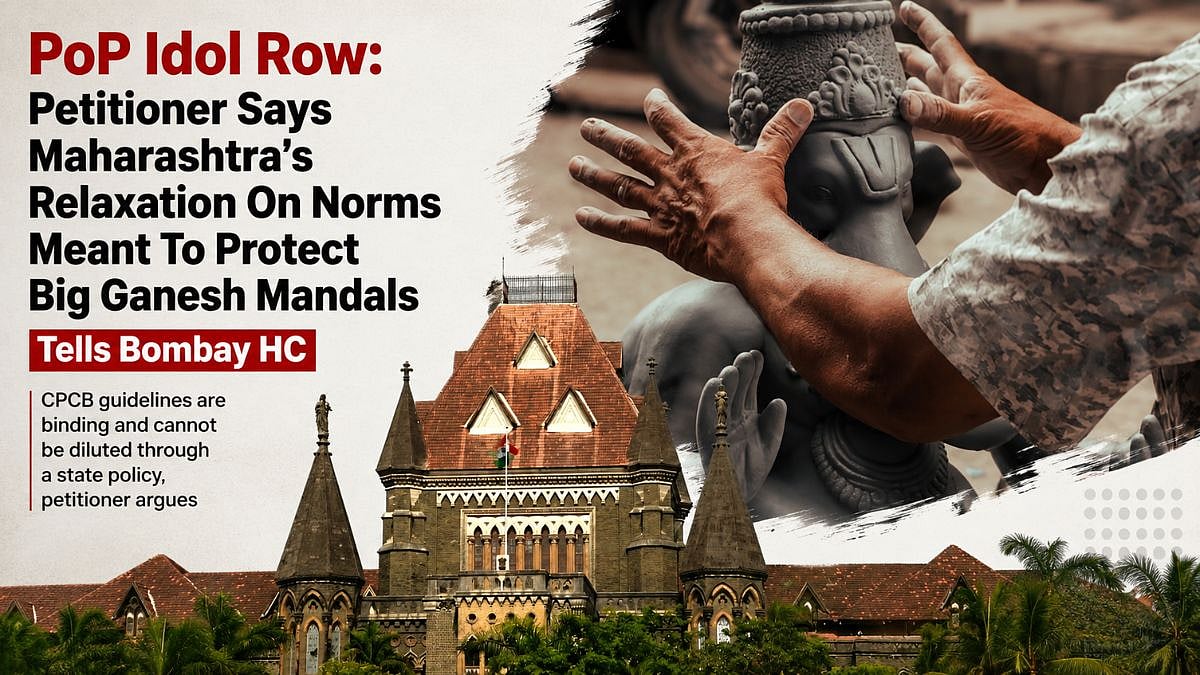
Last year, the court permitted the immersion of PoP idols taller than six feet in natural water bodies. This year too, the state has sought the court's permission to continue the practice, stating that it is experimenting on a pilot basis at select locations to collect immersed PoP remains and process them for reuse.
To get details on exclusive and budget-friendly property deals in Mumbai & surrounding regions, do visit: https://budgetproperties.in/

