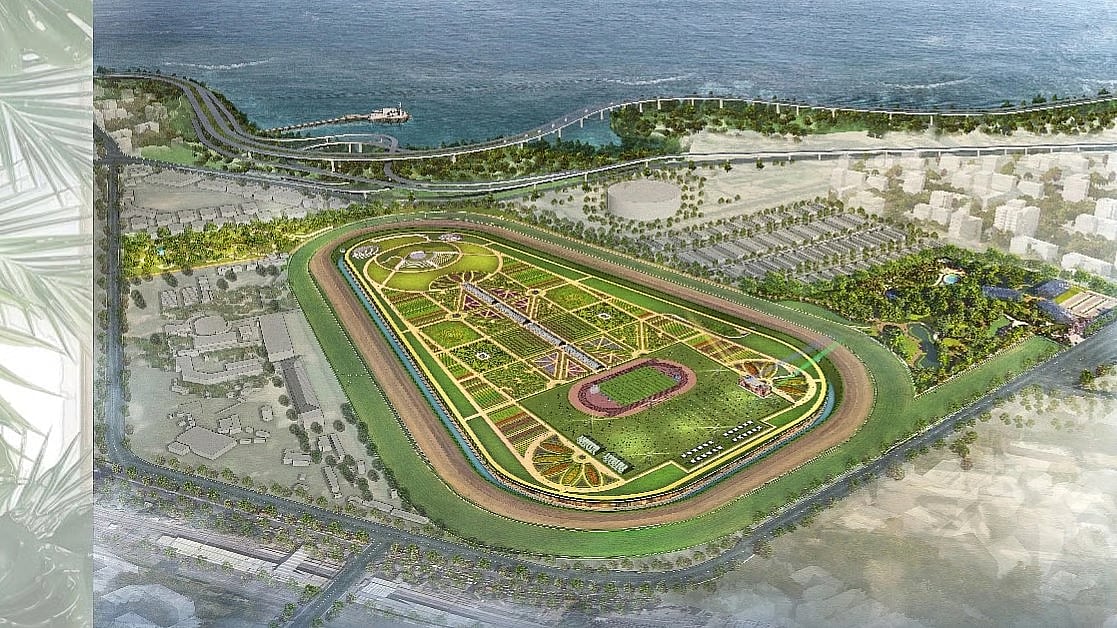
Mumbai: Around 119 members of the Mumbai Architects Collective (MCA) have written to Municipal Commissioner Bhushan Gagrani and Chief Minister Devendra Fadnavis opposing the masterplan to redevelop open spaces along the Mumbai Coastal Road Project and build a central park at Mahalaxmi Racecourse. They have warned that the 298-acre project risks cost overruns, environmental harm, weak land governance and limited public access without an integrated plan.
The members of MAC include architects, designers, and urban planners such as Alan Abraham, P.K. Das, Nitin Killawala, Rahul Kadri, and Vikas Dilawari. Earlier, MCA wrote on February 19 warning that underground construction could permanently damage one of Mumbai’s last open spaces. After Gagrani’s February 22, presentation on the coastal road and Mahalaxmi project at an South Mumbai Residents Association (SMRA) dialogue, MCA reiterated that their concerns reflect a commitment to responsible planning, prudent use of public funds, and safeguarding the city’s long-term environmental resilience.
MCA warned that the Racecourse is not vacant land but a vital natural ground that absorbs rainwater, recharges groundwater, and moderates heat. "The proposed three-level underground basements would irreversibly damage Mumbai’s “Sponge City” capacity, worsen monsoon runoff, and undermine climate resilience. Unlike natural maidans, low-carbon and low-maintenance, underground facilities demand intensive energy and infrastructure. This is not a simple park upgrade but a major concretised project imposing long-term structural and environmental risks," the letter stated.
MCA further noted that in a city adopting a progressive parking policy to curb vehicle growth and congestion, adding 6,200 new parking spaces is contradictory. "If underground parking is truly necessary, it should be beneath existing roads and impermeable surfaces—not under one of the city’s last large, flood-absorbing natural grounds. “Prioritising thousands of car bays over public transport connectivity risks reinforcing an elite-access model rather than promoting inclusive, city-wide mobility,” the members stated.
They noted that neither presentation included a public access policy. Key questions—access points, hours, fees, or memberships—remain unanswered. Unlike open maidans, underground facilities need regulated access and security. MCA stressed that a clear, enforceable access policy must precede construction.
Also Watch:
MCA has demanded a written response from civic authorities on each issue within 14 days to ensure a transparent planning process. They have requested a technical discussion and welcome a joint meeting with the State government, BMC, and MCA. They clarified that they support improving public access and creating world‑class open spaces, but oppose extensive underground infrastructure beneath one of the city’s last large natural grounds—a critical climate-resilient site in flood-prone Mumbai.
Last week during the presentation, Gagrani stated that the 70 hectares of open space along the coastal road would be transformed into an extended green corridor with civic amenities, including indigenous forest nature trails, pickleball courts, amphitheatres, and Miyawaki gardens, to offset Mumbai’s declining green cover. He also proposed converting the 112-acre Mahalaxmi Racecourse into a public botanical garden, complemented by an underground recreational hall with sporting facilities.
To get details on exclusive and budget-friendly property deals in Mumbai & surrounding regions, do visit: https://budgetproperties.in/
