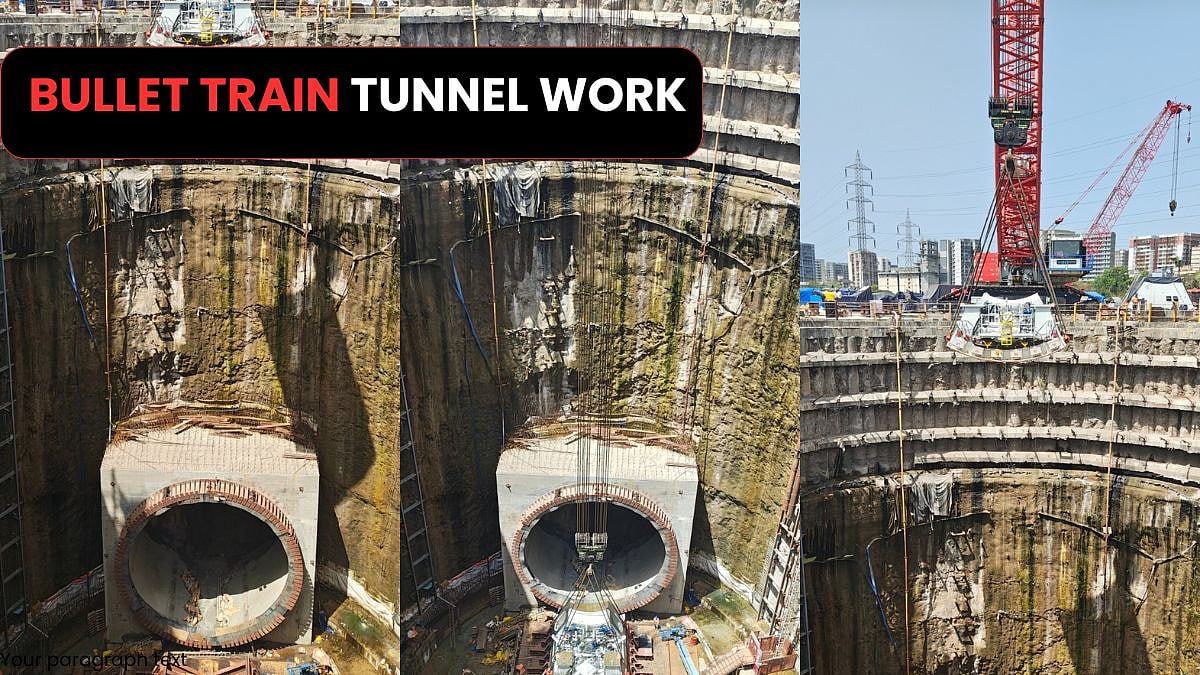
Mumbai, April 9: Work on one of India’s most ambitious infrastructure projects, the Mumbai Ahmedabad Bullet Train Project, has entered a crucial phase with the lowering and assembly of Tunnel Boring Machines at Vikhroli in Maharashtra.
The machines will be used to construct a 16 km stretch of tunnel between Bandra Kurla Complex and Sawli near Ghansoli, forming part of the larger 21 km underground corridor between BKC and Shilphata.
India’s First Undersea Tunnel Takes Shape
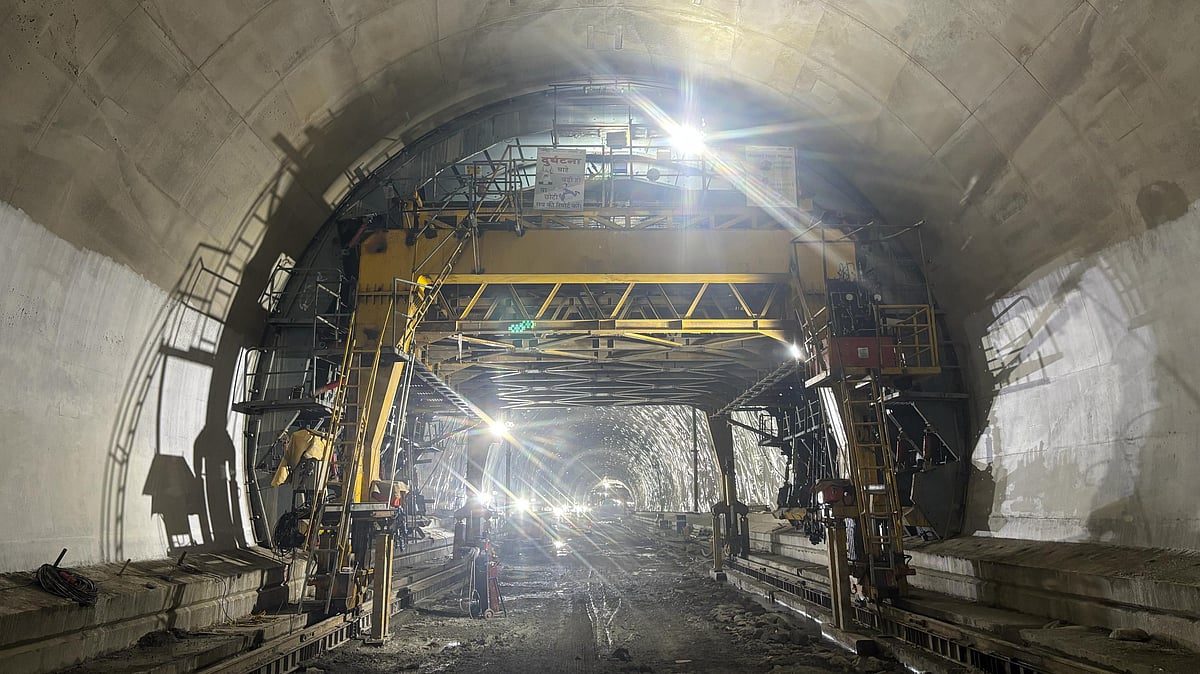
A standout feature of this corridor is the country’s first 7 km undersea tunnel beneath Thane Creek. Of the total 21 km, around 5 km has already been completed using the New Austrian Tunnelling Method, while the remaining stretch will be excavated using advanced TBMs.
The tunnel, designed as a single tube with a diameter of 13.1 metres, will accommodate twin tracks. It will run at depths ranging from 25 to 57 metres, with the deepest point reaching nearly 114 metres below Parsik hill.
Massive Machines Lowered Underground
The assembly process began with the lowering of a key segment of the TBM shield at Vikhroli. Weighing around 170 metric tonnes, the segment was lowered to a depth of 56 metres, equivalent to a 20 storey building.
Two TBMs, weighing over 3,000 tonnes each, have been brought to the site. These machines are equipped with Mix Shield and slurry technology, enabling them to function in complex geological conditions. Each machine stretches over 95 metres and includes critical components such as cutter wheels, gantries, and control systems.
Tunnelling Plan And Timeline
Three shafts have been constructed to facilitate the operation. One at BKC will serve as a retrieval shaft, while the other two at Vikhroli and Sawli will act as launching points.
The first TBM will move from Vikhroli towards BKC, while the second will tunnel from Sawli towards Vikhroli. Initial tunnelling is expected to begin by July 2026, with full scale operations likely from October.
Advanced Monitoring And Segment Casting
A dedicated casting yard in Mahape is already operational, where nearly 77,000 tunnel segments will be manufactured. These will form over 7,700 rings lining the tunnel.
Engineers are also deploying advanced monitoring systems, including sensors and seismographs, to ensure structural safety and minimal surface disruption during excavation.
Officials say the project reflects a blend of engineering precision and scale, bringing India closer to a high speed rail future.
To get details on exclusive and budget-friendly property deals in Mumbai & surrounding regions, do visit: https://budgetproperties.in/

