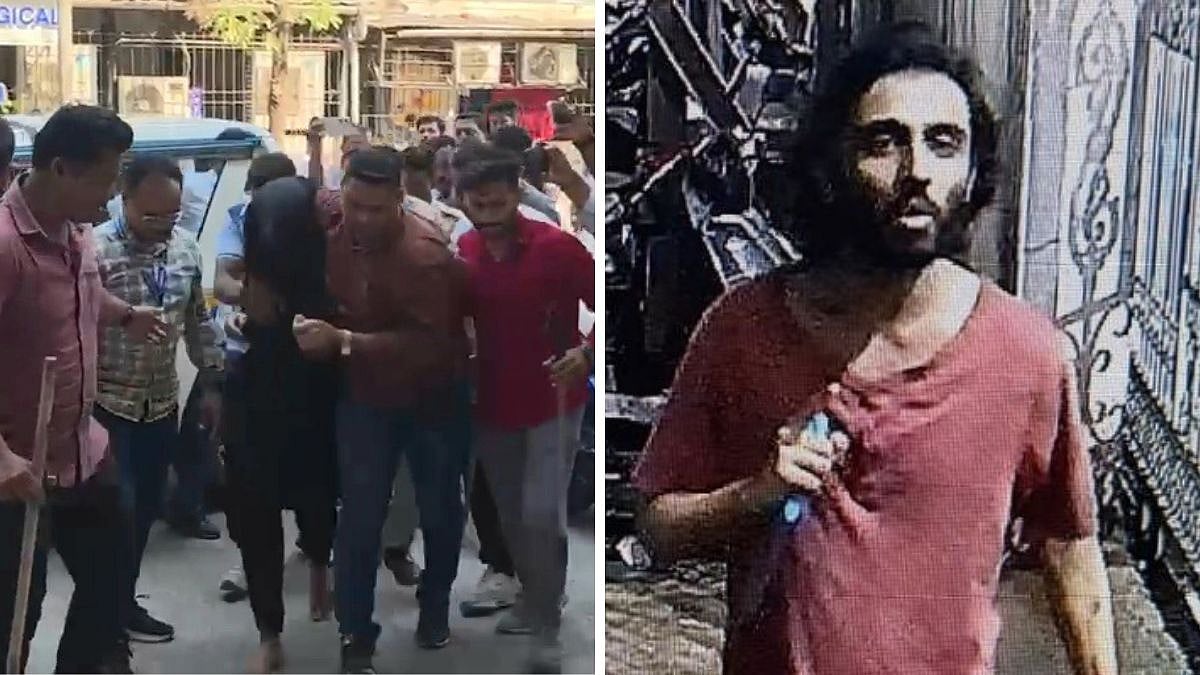
Mumbai: In the Mira Road stabbing case,the Maharashtra Anti-Terrorism Squad (ATS) has uncovered details suggesting that the accused, Zaib Zubair Ansari (31), followed a calculated post-attack pattern. According to the officials, Ansari allegedly returned to his residence after carrying out the assault instead of fleeing the area. Sources said he appeared to be preparing for further action when police tracked him down and arrested him from his residence within hours of the incident.
Sources said that at his residence, Ansari allegedly washed the knife used in the crime, changed out of his blood-stained clothes, and wore black attire. The decision to wear black clothing is being examined for possible extremist symbolism, with officials noting that black is associated with the 'Rayat al-Uqab' (Black Standard) and is commonly seen in Islamic State (ISIS) fighters' attire and in propagandist martyrdom videos released after acts of violence.
Officials believe the shift to black clothing may have been part of preparations to record and upload a video claiming responsibility, a tactic used in so-called “lone wolf” attacks to ensure the act is “branded” and integrated into a broader extremist narrative before capture or death. Officials said Ansari’s actions indicate that he may have been attempting to align himself with ISIS by mirroring established propaganda practices typically followed by the terror outfit after acts of violence.
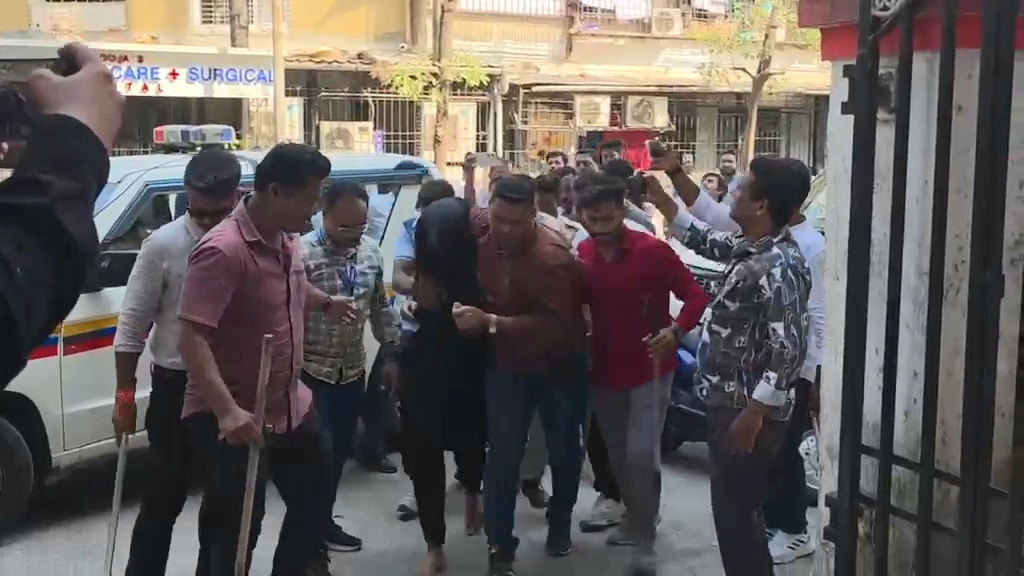
The Naya Nagar police recovered the knife and blood-stained clothes from his residence, which have now been handed over to the ATS as part of the investigation.
Sources indicated that Ansari may have attempted to record and share a claim of responsibility or a video message before his arrest. However, this remains unconfirmed, as he allegedly formatted his mobile phones shortly before they were seized,a move investigators believe was aimed at wiping out crucial evidence and preventing agencies from accessing data related to his alleged dark web activity and potential contacts.
The recovered laptop and the formatted phone from Ansari's residence have been sent for forensic analysis to retrieve deleted data. Meanwhile, efforts are underway to trace the missing device. Investigators are examining Ansari’s digital footprint and the focus remains on whether Ansari was truly a solitary “Ghuraba” (strangers) or had received real-time guidance aimed at maximising the propaganda value of a 'lone wolf' operation.
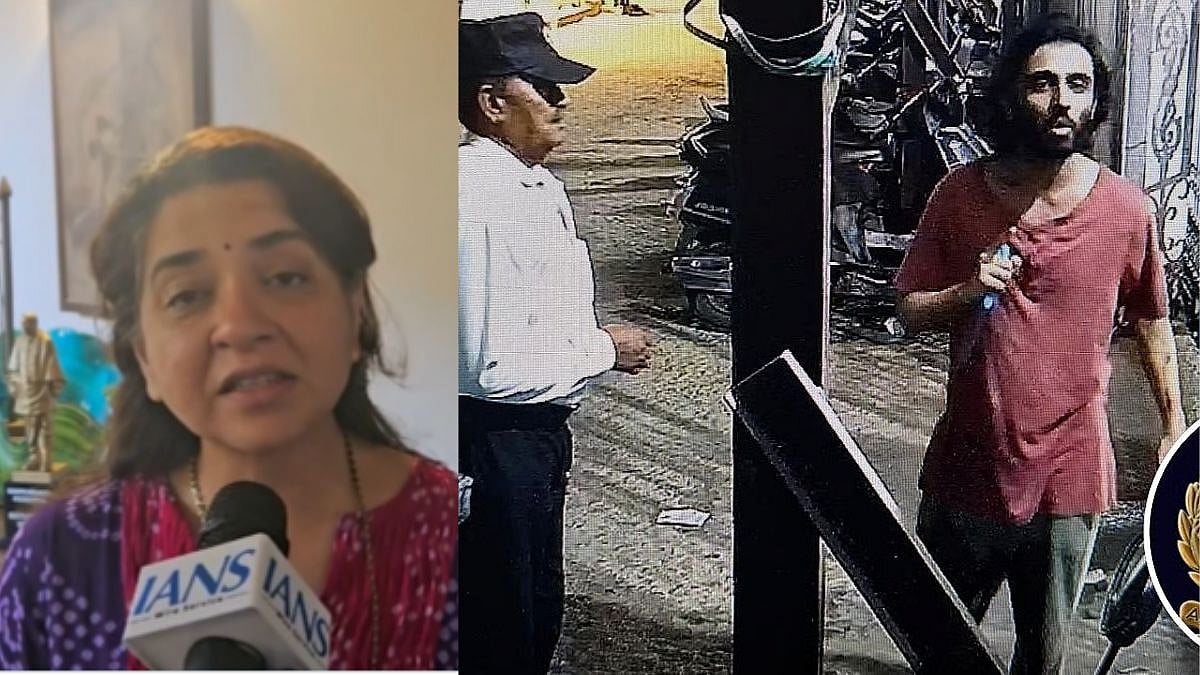
Security agencies said groups such as ISIS have historically relied on coordinated online propaganda ecosystems, where content, including videos, images and statements, is disseminated through semi-official channels and amplified by supporters across encrypted messaging platforms and mainstream social media. Such material is often rapidly circulated to claim responsibility, project ideology and sustain visibility, through hashtags and rapid re-sharing. Over time, distribution has shifted from open platforms to closed channels to evade moderation, with material quickly mirrored and reposted to sustain reach.
During questioning, officials said one of the most striking aspects has been Ansari’s current mental state. Officials have noted that the accused appears to be living in an "illusion world." He reportedly holds a firm belief that ISIS has already acknowledged his act and is convinced that the organisation will soon stage a rescue operation to liberate him from custody and officially induct him into their ranks. This detachment from reality is being analysed alongside his digital footprint to understand the depth of his radicalization.
Also Watch:
In custody, he has reportedly exhibited signs of extreme psychological distress and obsessive-compulsive behaviour, repeatedly demanding to wash his hands and bathe, claiming that his “hands are dirty” and insisting that he needed to take a bath. Despite this fragile mental state, sources said his actions on Monday morning appeared cold and calculated. He remained calm while attacking the first two watchmen, and only reacted when a third watchman intervened, at which point he allegedly remarked that he had “made a mistake.”
On Wednesday, the National Investigation Agency (NIA) joined the probe, questioning Ansari before he was taken for a crime scene reconstruction and panchnama. The involvement of the NIA, alongside the ATS, underscores the gravity of the case as agencies map the "coordinated online propaganda ecosystems" that may have fueled Ansari’s radicalisation.
To get details on exclusive and budget-friendly property deals in Mumbai & surrounding regions, do visit: https://budgetproperties.in/

