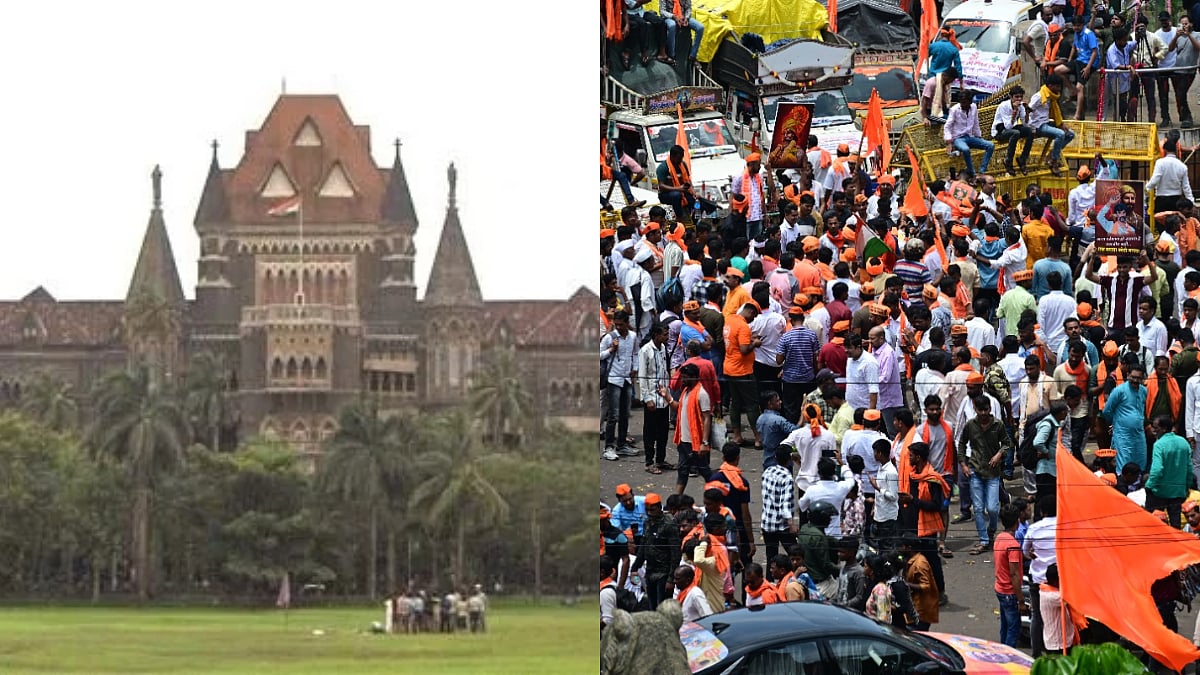
Mumbai: The Maharashtra government on Friday told the Bombay High Court that the Maratha community could potentially be considered as a sub-category within the Other Backward Classes (OBC) quota, citing the legal validity of sub-classification within reserved categories.
State Argues For Sub-Classification
Appearing for the state, Advocate General Milind Sathe argued that the Supreme Court has recognised the legality of sub-classification among Scheduled Castes, Scheduled Tribes and OBCs, as reported by Marathi news portal Pudhari. On the same basis, he submitted that the Maratha community could also be considered as a sub-category within the OBC category, subject to the applicable constitutional framework.
The state government also argued that the 50 per cent ceiling on reservations is not completely inflexible. Sathe referred to the reservation provided to Economically Weaker Sections (EWS), which takes the overall reservation beyond the 50 per cent threshold and has received constitutional recognition from the Supreme Court. He submitted that under specific constitutional circumstances, reservation beyond the 50 per cent limit could therefore be possible.

Petitions Challenge Maratha Quota
The arguments were made during the hearing of a batch of 18 petitions challenging the Maharashtra government's decision to provide 10 per cent reservation to the Maratha community under the Socially and Educationally Backward Classes (SEBC) category in education and government employment. The reservation was introduced by the then Eknath Shinde-led government through legislation.
The petitions have challenged the constitutional validity of the Maratha reservation, particularly in view of the existing 50 per cent reservation ceiling. The matters are being heard by a full bench comprising Acting Chief Justice Ravindra Ghuge, Justice Sandeep Marne and Justice Jadhav.
Historical Records Cited
During Friday's hearing, the state government also placed historical records before the court to support its contention regarding the social and educational backwardness of the Maratha community. Sathe referred to records indicating that before 1956, the Maratha community was considered backward in parts of Madhya Vidarbha and Marathwada.
The state argued that these historical records had also been considered by the Justice Shukre Commission while assessing the backwardness of the community. It maintained that the commission's findings regarding the social and educational backwardness of the Maratha community were therefore justified. After taking note of the submissions, the full bench adjourned the hearing until September 2, when arguments in the batch of petitions are expected to continue.
To get details on exclusive and budget-friendly property deals in Mumbai & surrounding regions, do visit: https://budgetproperties.in

