
Mumbai, Feb 25: From the crowded chawls of Mumbai to the parched fields of Vidarbha, a quiet revolution is underway in Maharashtra — powered by a simple but transformative promise: ₹1,500 a month. For 2.38 crore women, the Ladki Bahin Yojana is far more than a welfare payment; it is a statement of dignity, recognition, and survival.
Within social circles, the scheme has evolved into a marker of inclusion. A woman who receives her monthly transfer feels seen and valued; one who doesn’t feels invisible and excluded. This psychological divide is powerful — and politically perilous — for any government that underestimates it.
For a daily wage worker, a farmer’s wife, or a domestic helper, ₹1,500 is not charity; it is stability amid relentless inflation. Having spent years exposing corruption and misuse of taxpayer money, I find myself defending this programme — not as an election freebie, but as a rare social scheme that genuinely reaches the poor and helps them directly.
The cost of compassion
The success of the Ladki Bahin scheme, however, has brought it to a fiscal crossroads. With monthly expenditures running into thousands of crores, the government has begun tightening eligibility rules, striking lakhs of women off the rolls. Predictably, the backlash has been swift.
For many women, the payment represents not only financial support but social parity. When a neighbour continues to receive her monthly transfer while another’s stops, resentment brews. Social media has become a loud public diary of grievances — filled with posts from women alleging unfair removals and inconsistencies in disbursement.
The political stakes are enormous. In trying to reduce the beneficiary base, the state risks alienating a vast and vocal electorate — women who now view this scheme as a rightful entitlement rather than state generosity.
The changing face of politics
For decades after Independence, Indian politics operated on a cash-driven patronage system. Politicians relied on cash and party workers to mobilise votes, and those workers, in turn, depended on funded loyalty — money spent through opaque channels of influence and favouritism.
This dependency cycle became the breeding ground for rampant corruption in development work, where public funds were often diverted long before reaching citizens.
But direct benefit transfer (DBT) schemes like Ladki Bahin have quietly rewired that equation. Now, politicians can deliver benefits straight to the electorate without intermediaries. It’s a seismic shift — one that weakens the grip of local power brokers and reduces opportunities for corruption.
For perhaps the first time, both citizens and leaders gain: voters receive assured benefits directly, and politicians earn goodwill without the old machinery of graft.
In short, welfare is replacing patronage — and that could be the most revolutionary outcome of this ₹1,500-a-month scheme.
A fateful forecast
While critics call the scheme fiscally reckless, government documents reveal it was a calculated risk from the start.
Information obtained under the Right to Information Act shows that the state has paid roughly 2.40 crore women every month, disbursing a total of ₹43,045 crore between July 2024 and June 2025 — making it Maharashtra’s second-largest expenditure after education.
The Directorate of Economics and Statistics had, even before launch, forecast that 2.47 crore women would qualify under the income limit of ₹2.5 lakh per annum, with an annual cost of about ₹44,460 crore.
Despite the government’s efforts to cut costs, that projection has held true. Between May and June 2025, the number of beneficiaries dropped from 2,47,94,686 to 2,25,08,843, but by September 2025, it climbed again to 2,38,63,952 — reaffirming that the economic base of eligible women remains too large to shrink.
Corruption: The new pressure point
The government is now trapped by its own success. It cannot scale back the programme without triggering outrage, nor can it sustain this ₹40,000–₹44,000 crore annual burden without fiscal strain. The Ladki Bahin Yojana has become both a political necessity and a financial inevitability.
Ironically, this unavoidable expense may become the most effective weapon against corruption that activists like me have fought for decades to defeat. The scheme’s direct transfer mechanism has eliminated much of the leakage that traditionally plagues social welfare spending.
Now, the only way for the state to afford this massive commitment — while financing its other development promises — is to recover the billions lost to systemic corruption and inefficiency elsewhere in the budget.
What began as an election-winning populist promise could yet evolve into a structural reform tool. The Ladki Bahin scheme may do what years of agitation could not — force the government to clean up its finances, not out of morality, but out of sheer fiscal survival.
Also Watch:
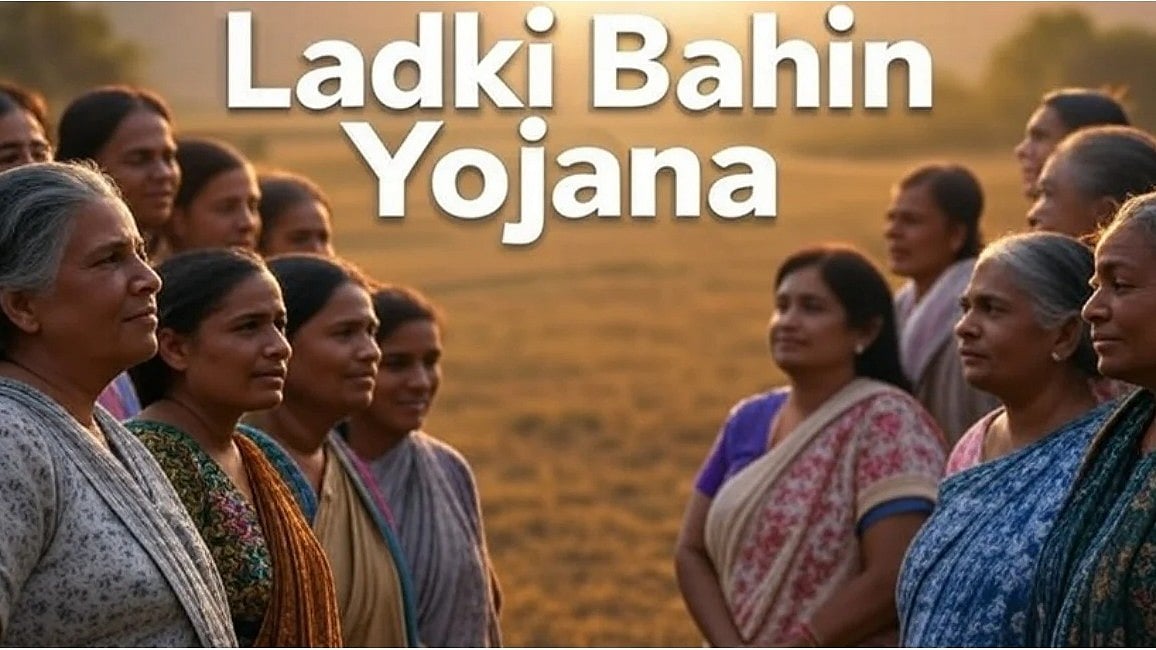
For Maharashtra’s 2.4 crore women, ₹1,500 may mean a little help in paying the bills. For the government, it is the monthly reminder that democracy’s most powerful revolution is now being led by its sisters — one direct deposit at a time.
To get details on exclusive and budget-friendly property deals in Mumbai & surrounding regions, do visit: https://budgetproperties.in/

