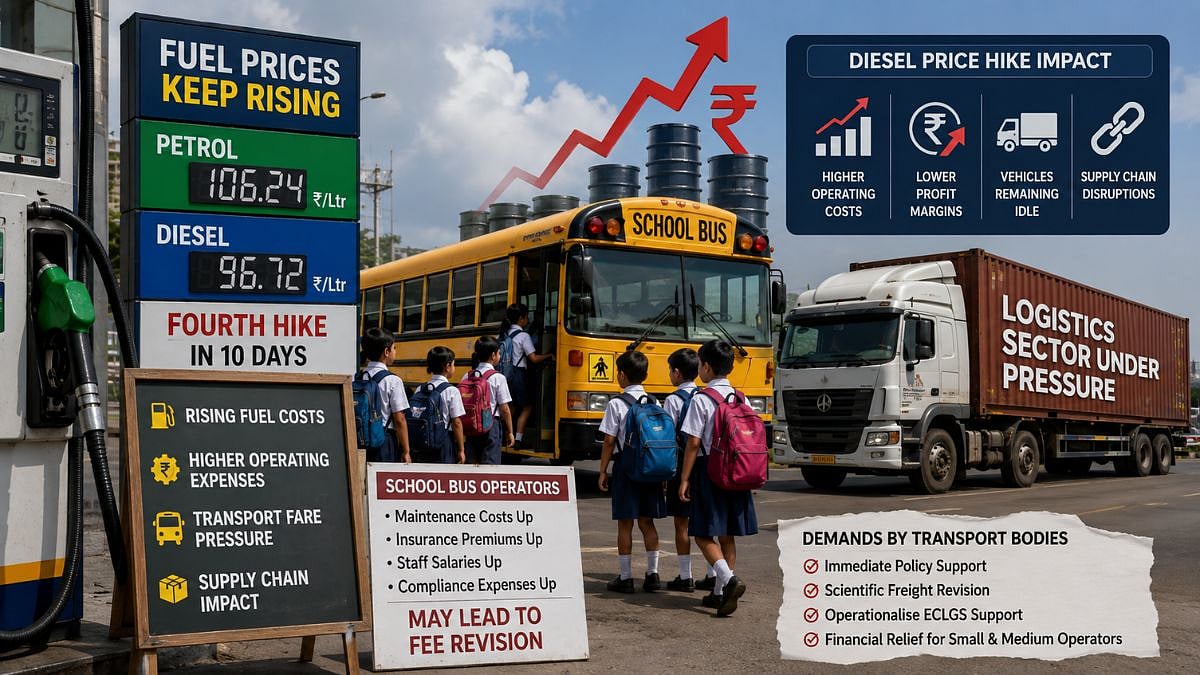
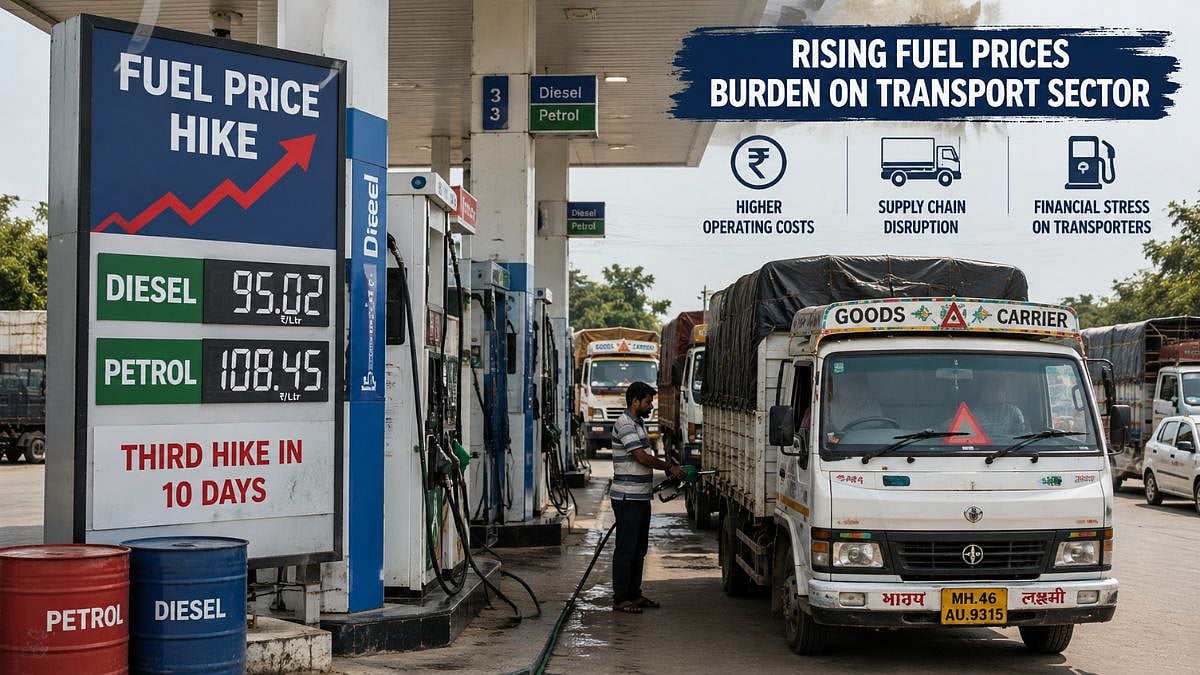
Mumbai, May 25: Continuous fuel price hikes are beginning to impact both school transportation services and the country’s logistics sector, with operators warning that rising diesel costs may soon lead to increased transportation charges, supply chain disruptions and financial stress across the transport industry. The concern comes after the fourth fuel price hike within the last 10 days, pushing diesel prices up by nearly Rs 8 per litre since May 15.
School bus operators flag rising costs
Ahead of the reopening of schools for the new academic year, Anil Garg, President of the School Bus Owners Association Maharashtra (SBOA Maharashtra), said school bus operators are already struggling with increasing maintenance costs, insurance premiums, permits, staff salaries and compliance expenses.
The association said continued fuel hikes are placing additional financial pressure on operators, though they are trying to avoid burdening parents and educational institutions with higher transport fees.
Suggestions to reduce operational burden
To reduce operational costs without increasing fares, SBOA Maharashtra has suggested practical alternatives, including a hybrid school model with three days of physical classes and two days of online learning.
It also proposed a common pickup and drop timing system for schools operating in multiple shifts to reduce fuel consumption and unnecessary bus trips.
The association has appealed to the government for relief measures and subsidies to support school transport operators.
Logistics sector warns of survival crisis
Meanwhile, the All India Motor Transport Congress (AIMTC) has warned that the continuous increase in diesel prices is turning into a “survival crisis” for the transport and logistics sector.
AIMTC Advisor and former president Bal Malkit Singh said fuel accounts for nearly 55 per cent of truck operating costs and repeated hikes are severely affecting business viability.
Commercial vehicles reportedly going idle
He said reports from several regions indicate that many commercial vehicles are remaining idle due to rising operational expenses, resulting in estimated losses of around Rs 3,500 per vehicle per day in certain sectors.
Singh also warned that the impact is now extending beyond transporters and affecting supply chains, manufacturing activity and movement of essential goods.
Also Watch:
Industry seeks government intervention
The transport body has demanded immediate policy support, scientific freight revision mechanisms, operationalisation of ECLGS support measures and financial relief for small and medium transport operators.
To get details on exclusive and budget-friendly property deals in Mumbai & surrounding regions, do visit: https://budgetproperties.in/

