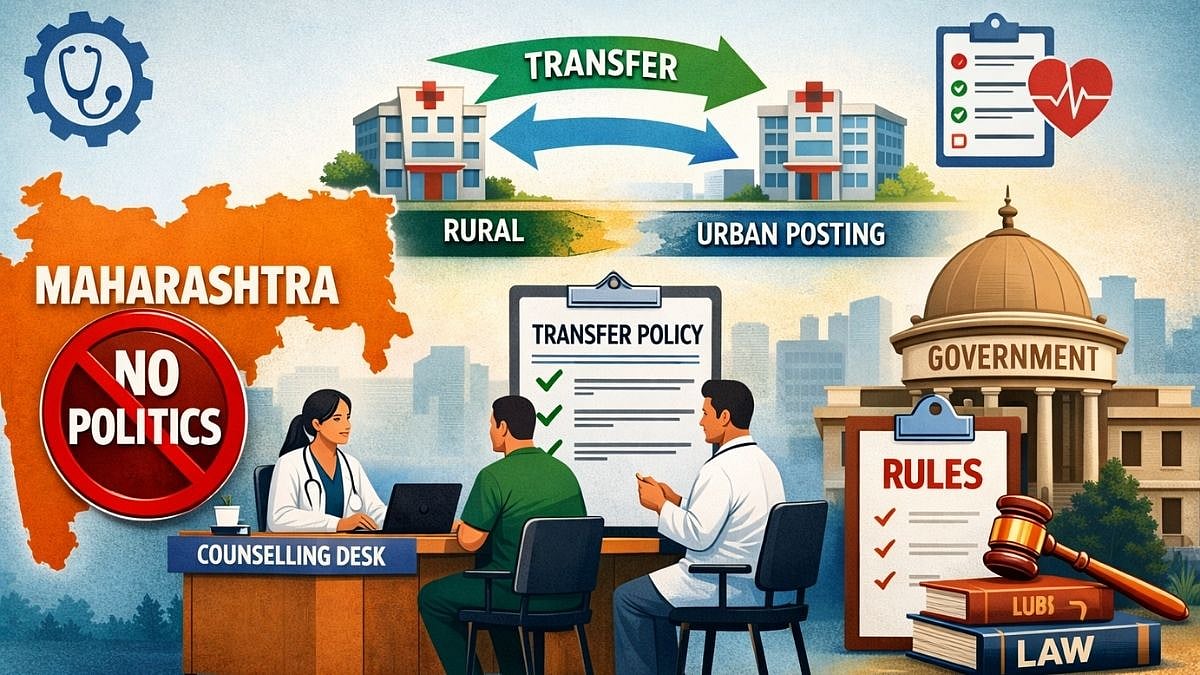
Mumbai, April 18, 2026: In a significant administrative overhaul, the Maharashtra government has introduced a new transfer policy for Public Health Department employees, placing a strong emphasis on a counselling-based system to ensure transparent, fair, and need-based postings.
The government has made it clear that since transfers are purely administrative matters, any use of political pressure to secure a posting will be treated as misconduct and may invite disciplinary action, signalling a firm stance against interference.
Policy covers wide range of health department staff
The policy covers Group-B officers (all cadres), Group-C, and Group-D employees, including administrative officials, medical officers, staff nurses, laboratory technicians, and support staff such as peons and attendants working across all institutions and offices under the department.
Strict rules to prevent irregular transfers
The government has enforced strict provisions, stating that transfers made without available vacancies will be treated as irregular, with responsibility fixed on concerned officials.
Transfer limits and timelines defined
Under the policy, the “transfer year” is defined as the calendar year up to May 31, and transfers will be based on service completed till that date. To prevent administrative disruption, transfers in any office will be capped at 30 per cent of total staff annually, in line with existing legal provisions.
Counselling system for general and request transfers
General transfers will be conducted during April and May through the counselling process. Request transfers, however, will be considered only twice a year—in September and December—and will not carry any allowances or joining time benefits.
Mid-term and premature transfers will be allowed after completion of at least one year of service, primarily based on administrative necessity or specific employee requests, subject to availability of vacancies.
Priority categories outlined for transfer requests
The policy also outlines priority categories for request transfers, including employees suffering from serious illnesses such as paralysis, cancer, or kidney-related conditions, as well as disabled employees or those with dependent family members facing critical health issues.
Preference will also be given to widows, unmarried and divorced women employees, those seeking spouse unification, employees above 53 years of age, and those with children appearing for Class 10 or 12 examinations.
Also Watch:

Focus on staffing remote areas
It further emphasizes filling vacancies in remote and difficult areas, while providing relief to employees who have served in such regions for extended periods.
Transfer decisions will be handled by designated authorities such as the Health Minister, Director of Health Services, regional officers, and district-level officials, depending on the category.
To get details on exclusive and budget-friendly property deals in Mumbai & surrounding regions, do visit: https://budgetproperties.in/
