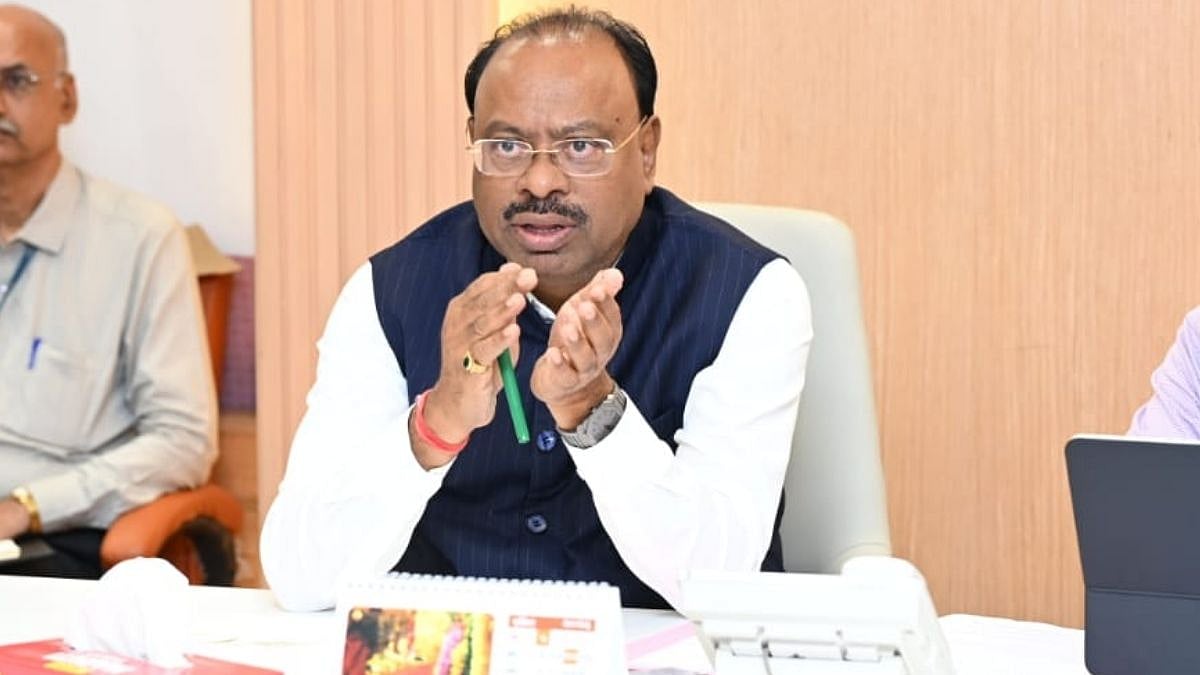
The Maharashtra government will treat water tankers as the last resort in tackling the drought situation and has directed district administrations to revive defunct piped water supply schemes within 15 days. It will also prepare special standard operating procedures (SOPs) for drinking water management and fodder availability to prevent shortages in drought-hit areas.
Bawankule Chairs High-Level Meeting
The directives were issued by Revenue Minister Chandrashekhar Bawankule, chairman of the Cabinet subcommittee on drought mitigation, at a high-level meeting held at Sahyadri State Guest House in Mumbai on Wednesday.
Reviewing the state's water supply situation, Bawankule said district collectors must ensure that completed but non-functional water supply schemes are restarted and projects left incomplete due to a lack of funds are expedited. Of the schemes reviewed, 75 have been completed, while several others remain around 25% incomplete due to funding constraints.
The government will issue a fresh Government Resolution (GR) under the Jal Jeevan Mission to facilitate the revival of stalled and defunct schemes. Officials have also been asked to restore uninterrupted electricity supply to these projects.
Around Rs 3,000 crore in dues relating to water supply schemes is pending across the state. The meeting discussed a one-time settlement scheme under which penalties and interest could be waived, allowing the principal amount to be paid in instalments. District administrations have also been directed to explore the use of funds under the 15th and 16th Finance Commissions to pay current electricity bills.
Fodder banks to prevent shortages
To ensure adequate fodder for livestock, district collectors have been instructed to prepare an SOP in coordination with the Agriculture and Animal Husbandry departments. Fodder banks will be established, and surplus fodder from districts with adequate supplies will be transported to neighbouring districts facing shortages.
The government will provide fodder seeds through a fund of Rs 62 crore, prioritising farmers with assured water availability to encourage fodder cultivation. Government agencies will also procure fodder from farmers at the assured support price, officials said.
The meeting further decided to encourage fodder cultivation on land exposed in reservoirs and to make barren land under the Revenue Department available to women's self-help groups for fodder production.
70% of crop damage surveys completed
The administration informed the meeting that the third phase of drought mitigation measures is being implemented across 304 talukas. Around 70% of crop damage surveys have been completed, and the entire dataset is expected to be compiled by October 31. A clearer assessment of the drought situation across the state is expected the following week.

Representatives at the meeting also called for the use of corporate social responsibility (CSR) funds from major companies and District Planning and Development Committee (DPDC) funds for drought relief.
The departments of Revenue, Rural Development and Public Works will coordinate on water conservation and scarcity-related works. The government will also review water levels in major reservoirs and urgently restore around 450 distribution transformers (DPs) at locations where electricity bills have been paid.
Bawankule emphasised that administrations must first explore and restore existing water sources and supply schemes before resorting to tankers. The objective is to strengthen local water infrastructure and ensure timely drinking water and fodder supplies in drought-affected regions.
To get details on exclusive and budget-friendly property deals in Mumbai & surrounding regions, do visit: https://budgetproperties.in/

