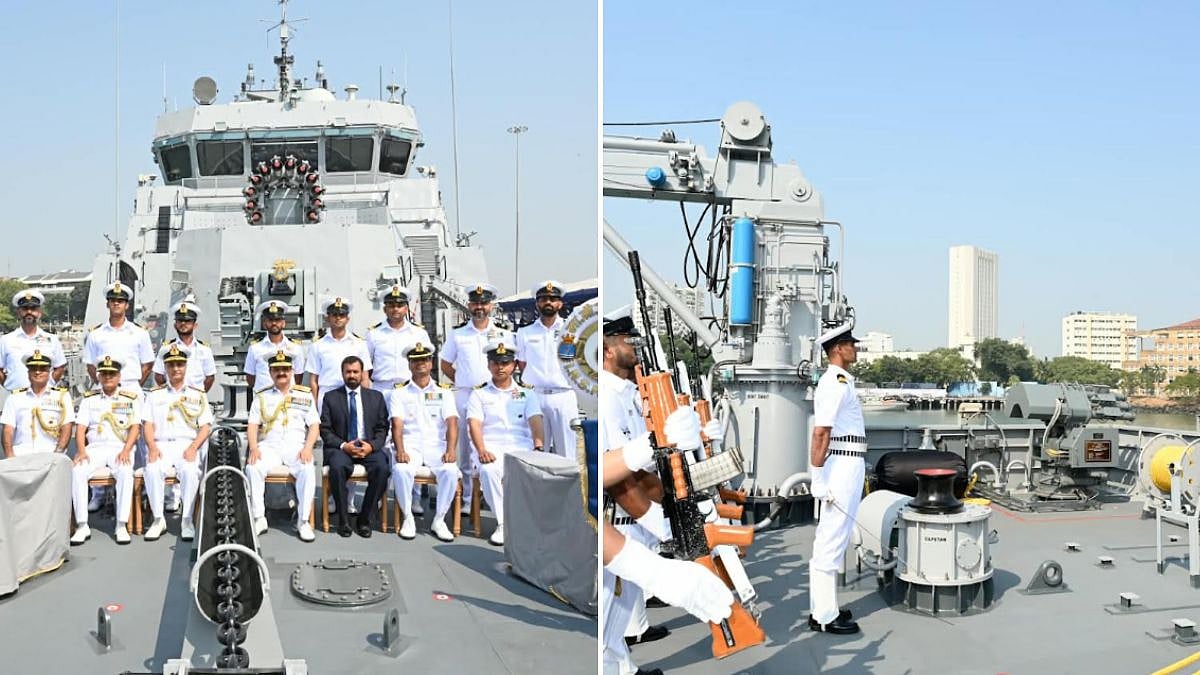
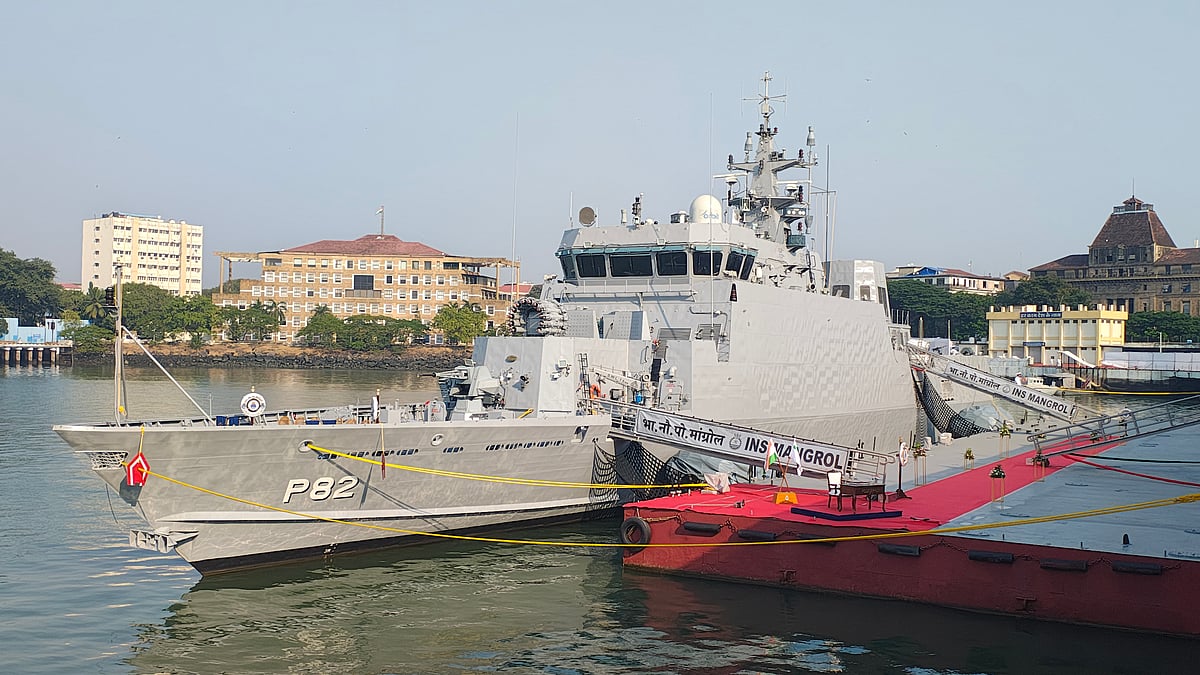
Mumbai: The Indian Navy commissioned the third anti-submarine warfare shallow water craft (ASW-SWC), INS Mangrol, at the Naval Dockyard, Mumbai, on Monday. The maritime armed force aims to strengthen its defence capability in littoral waters with the newest indigenous vessel.
Third Mahe-Class Vessel Commissioned
INS Mangrol is the third vessel of the Mahe-class, which can detect and counter underwater threats, including submarines, in coastal and shallow waters. It is equipped with modern weapons and sensors, including the Abhay Hull-Mounted Sonar to detect, track and counter enemy submarines. The 78.8m-long vessel can carry lightweight torpedoes and an indigenous anti-submarine rocket launcher, along with the Mareech Advanced Torpedo Decoy System to detect incoming torpedoes.
Over 80% Indigenous Content
The ship, built by Cochin Shipyard Limited (CSL) with over 80% indigenous content, is powered by three diesel engines with waterjet propulsion to offer high maneuverability for operations in shallow waters. It is also capable of undertaking underwater surveillance, low-intensity maritime operations and mine warfare-related tasks. Western Naval Command’s flag officer commanding-in-chief, Vice Adm. Sanjay Vatsayan, presided over the commissioning ceremony.
Mangrol is said to strengthen the Indian Navy's anti-submarine warfare capabilities, particularly in coastal waters where larger warships face operational limitations. The ship can operate alongside maritime patrol aircraft, helicopters and other warships to detect and counter submarine threats. Its induction will enhance the Navy's ability to protect ports, harbours and coastal approaches while supporting wider fleet operations.
Vice Admiral Highlights Maritime Challenges
Vice Adm Vatsayan said, “The commissioning assumes particular significance against the backdrop of rising geopolitical tensions and an increasingly contested maritime environment. The seas are also arenas of strategic competition, technological change and emerging security challenges. The underwater domain is one of the most demanding environments in naval warfare and success depends upon vigilance, professional competence, teamwork and the ability to detect, interpret and act before a threat becomes a danger.
Notably, Vatsayan was the principal director of naval plans during the acceptance of the necessity of the ship, its contract conclusion and naming were carried out under his watch as assistant chief of naval staff for policy and plans, and the commissioning was carried out on Monday under his leadership as the chief of the Western Naval Command.
The vessel has been named after a coastal town and prominent fishing harbour in Gujarat's Junagadh district and carries forward the legacy of the erstwhile INS Mangrol (M85), a minesweeper that served the Indian Navy until April 2004. The naming continues the Navy's tradition of preserving the legacy of its former warships.
Notably, the Indian Navy has commissioned 10 ships this year, with eight more likely to be commissioned by the end of this year. The force currently has 151 platforms, comprising 131 ships and 20 submarines. About 42 ships are under construction at Indian shipyards, with Acceptance of Necessity accorded to another 69 Ships, six submarines, and 120 fast interceptor craft. The Indian naval fleet is projected to grow to over 170 platforms in the next few years, with a new ship being commissioned every 40 to 50 days. By 2034, about 60% of the platforms are expected to have an average age of less than ten years.
To get details on exclusive and budget-friendly property deals in Mumbai & surrounding regions, do visit: https://budgetproperties.in/

