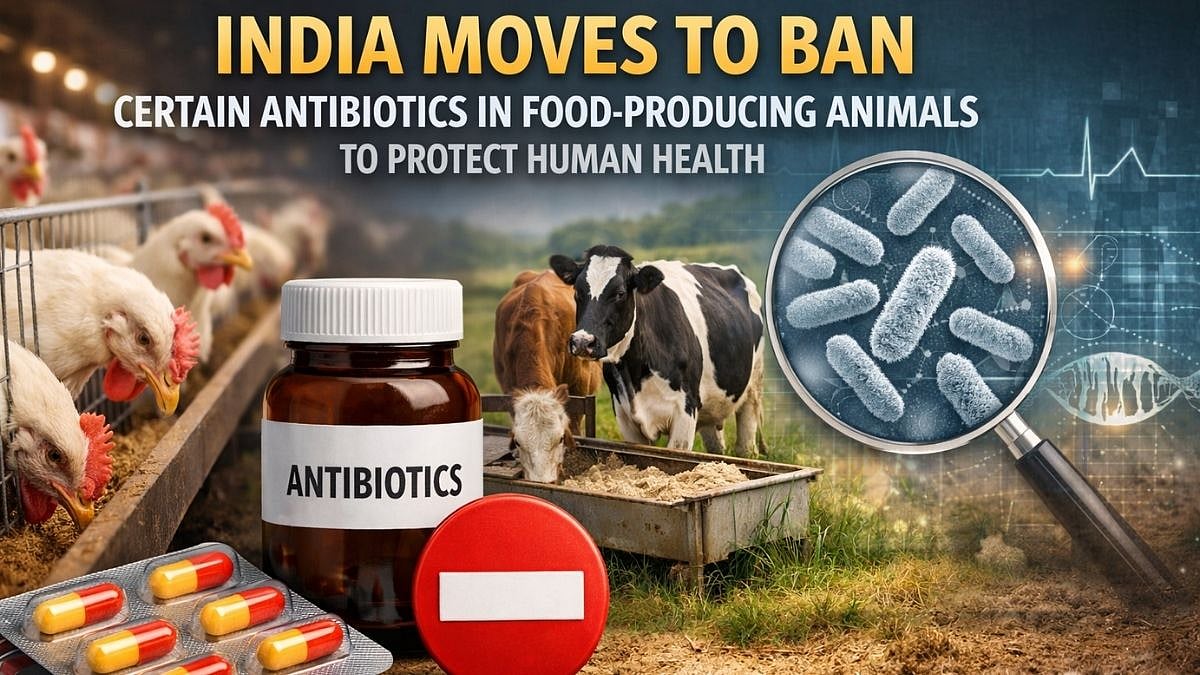
Mumbai, March 12: In a significant move aimed at safeguarding public health, India’s Drugs Technical Advisory Board (DTAB) has recommended prohibiting the manufacturing, import, sale, and distribution of certain antibiotics for growth promotion in food-producing animals. The decision follows recommendations from the Department of Animal Husbandry and Dairying (DAHD).
Antibiotics used for livestock growth under scrutiny
The proposal targets the use of specific antimicrobial drugs—including carboxypenicillins and phosphonic acid derivatives—that have been widely used in livestock and poultry to promote faster growth and increase production yields. These drugs were sometimes added to animal feed in low doses to improve weight gain and feed efficiency in animals raised for meat, milk, and eggs.
Concerns over antimicrobial resistance
Health experts have raised concerns that routine use of such antibiotics in animals can contribute to the development of antimicrobial resistance (AMR). When animals are exposed to low levels of antibiotics over long periods, bacteria in their bodies can gradually develop resistance to these medicines. These resistant bacteria may then spread to humans through contaminated meat, milk, eggs, or through the environment.
According to global health authorities such as the World Health Organization (WHO), antimicrobial resistance is one of the most serious threats to public health worldwide. If bacteria become resistant to key antibiotics, infections in humans—such as pneumonia, urinary tract infections, or bloodstream infections—can become much harder to treat.
Risk of antibiotic residues in food
Consumers may also be exposed to small antibiotic residues in food products if these medicines are used improperly in livestock. Continuous exposure to such residues has been linked to allergic reactions in sensitive individuals and may contribute to the broader problem of antibiotic resistance.
DTAB backs prohibition proposal
The DTAB, after reviewing the proposal, agreed with DAHD’s recommendations and supported prohibiting the use of carboxypenicillins and phosphonic acid derivatives for growth promotion in animals.
The move is expected to encourage farmers and producers to adopt safer alternatives such as improved farm hygiene, vaccination programmes, and better animal nutrition instead of routine antibiotic use.
Long-term benefits for public health
Public health specialists believe the decision could provide long-term benefits for consumers. Reduced antibiotic use in animal farming may lower the risk of drug-resistant bacteria entering the human food chain, helping preserve the effectiveness of life-saving antibiotics used in hospitals.
Also Watch:

The measure also aligns India with international efforts to regulate antibiotic use in agriculture and promote responsible antimicrobial practices. Experts say that such steps are essential to ensure safer food, protect the effectiveness of critical medicines, and reduce the global burden of antimicrobial resistance.
To get details on exclusive and budget-friendly property deals in Mumbai & surrounding regions, do visit: https://budgetproperties.in/
