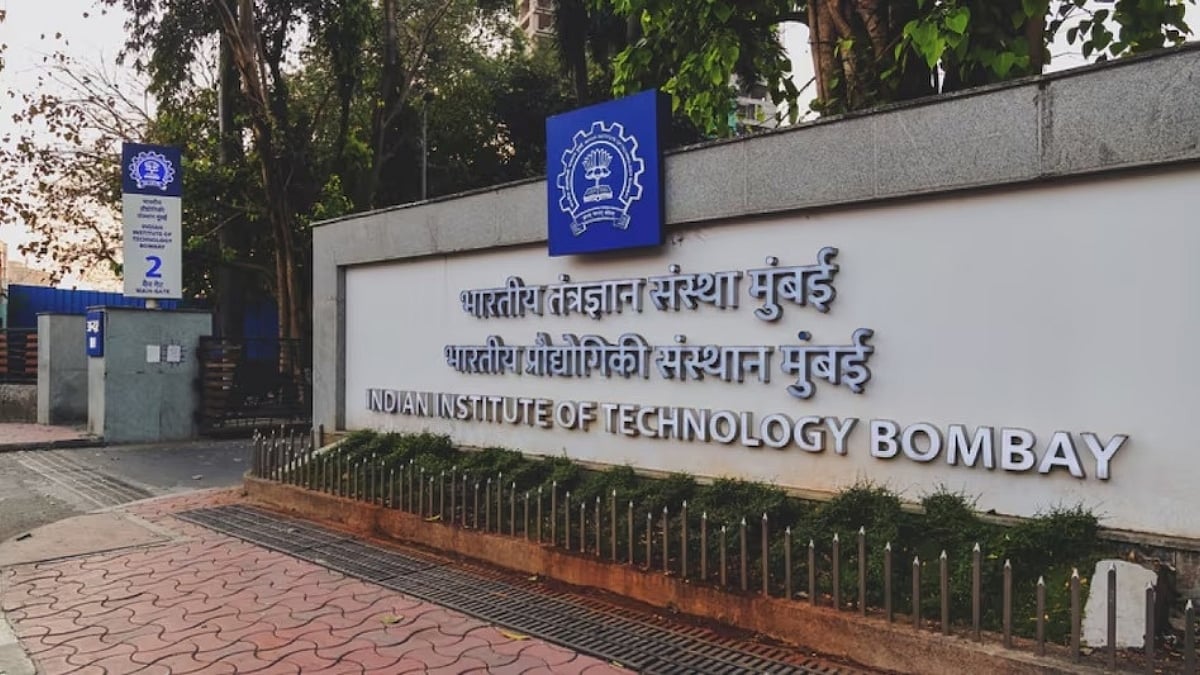
A tragic incident at the Indian Institute of Technology (IIT) Bombay on Friday night has brought the ongoing mental health crisis across elite technical institutions back into sharp focus.
Sahil Wakode, a second-year undergraduate BTech student in the Department of Energy Science and Engineering, died by suicide on campus on September 18, 2026. The incident occurred hours after he was reportedly confronted during an examination regarding the use of a mobile phone and an AI application.
While the institute administration said that officials had assured the student that his academic standing would remain unaffected, protesting students alleged that threats of academic suspension and severe disciplinary consequences contributed to extreme distress.
The tragedy sparked protests on the Powai campus, with students demanding administrative accountability, greater transparency, and structural changes to address mental health conditions.
Suicide cases rise in IIT Bombay
This death marks the fourth suicide recorded at IIT Bombay within seven months, highlighting a broader institutional pattern.
Earlier incidents at the Powai campus include the death of Naman Agarwal, a BTech Civil Engineering student from Rajasthan, who died after a fall on February 4, 2026, and Sohil Rajkumar Sangwan, a BTech Material Engineering student also from Rajasthan, who died by hanging on July 28, 2026.
These follow earlier recorded incidents on campus, including Rohit Sinha, a BTech Material Engineering student from Delhi, who died following a fall on August 2, 2025; Darshan Solanki, a BTech Chemical Engineering student from Gujarat, who died by a fall on February 12, 2023; and Darshan Malviya, an MTech Design student from Madhya Pradesh, who died following a fall on January 17, 2022.
Five-year national trend and campus-wise distribution
Sadly, IIT Bombay is not the only institution on the tragic list.
According to a dataset compiled by the Global IIT Alumni Support Group, led by its founder and lead mentor, Dheeraj Singh, an alumnus of both IIT Kanpur and IIM Calcutta, through systemic compilations drawing from Right to Information (RTI) disclosures and verified media reports, a total of 74 student suicides and unnatural deaths across 15 IIT campuses between September 2021 and September 18, 2026 were documented.
National figures demonstrate a consistent baseline of 14 to 16 recorded deaths per year from 2022 through 2025. Specifically, records indicate three deaths during the final four months of 2021 (September to December), 14 deaths in 2022, 14 deaths in 2023, 14 deaths in 2024, 16 deaths in 2025 and 13 deaths in 2026 up to September 18 alone.
The institutional breakdown over this five-year window shows a high concentration of cases among older, first-generation campuses:
• IIT Kharagpur: 13 deaths
• IIT Kanpur: 9 deaths
• IIT Delhi: 9 deaths
• IIT Madras: 7 deaths
• IIT Guwahati: 6 deaths
• IIT Bombay: 6 deaths
• IIT BHU Varanasi: 5 deaths
• IIT Roorkee: 4 deaths
• IIT Hyderabad: 4 deaths
• IIT Patna: 3 deaths
• IIT (ISM) Dhanbad: 3 deaths
• IIT Bhubaneswar: 2 deaths
• IIT Goa: 1 death
• IIT Ropar: 1 death
• IIT Indore: 1 death
Together, the top four first-generation campuses—IIT Kharagpur, IIT Kanpur, IIT Delhi and IIT Madras—account for 38 out of the 74 total documented deaths, representing over 51 per cent of all recorded cases across the network during this five-year period.
Analysing the five-year trajectory, Singh highlighted the broader systemic implications of the numbers.
“The five-year trend showing an increasing number of suicides/unnatural deaths by IIT students clearly indicates the rapidly declining mental health of IIT students and points to an emerging suicide epidemic in IITs. The data also suggests that the current systems are ineffective in preventing the rapid deterioration of IIT students’ mental health and wellness post Covid,” Singh told The Free Press Journal.
Highlighting the latest tragedy at IIT Bombay, Singh said: “The latest death at IIT Bombay, 4th in 7 months, should not be treated as an isolated incident.”
Calling for urgent steps, he said: “The scale and frequent recurrence demand institutional scrutiny, not a knee jerk reaction. We cannot ignore the unequal academic, social and institutional environment that students may come from and encounter within IITs. Every death should lead to transparent review and institutional accountability. The question is no longer whether IITs have counselling systems. The question is whether they are systematically learning from student deaths and changing the institutional conditions that students experience.”
'Avoid speculation'
Offering a clinical evaluation of student distress and campus mental health interventions, Dr Anshu Kulkarni, a psychiatrist in Mumbai with 28 years of experience practicing at SL Raheja Hospital – A Fortis Associate and Kasturmahal Polyclinic, emphasised the necessity of avoiding unverified speculation while establishing structured institutional support systems.
“This child happened to harm himself and committed suicide, but without knowing what he had been going through, one cannot really say whether this was an impulsive act, or if he was already going through something—whether he was dealing with some personality issues already and felt a lot of shame because of this that pushed him over the edge,” said Dr Kulkarni. “One can't say without knowing much about the case, nor is it good to investigate and do a post-mortem assessment without sufficient data.”
Nonetheless, she stressed that there has to be a lot of conversation around mental health issues.
“There have to be regular checkups done for children who are doing fine. There has to be a peer support programme on campus where people talk about their problems and their difficult experiences, how it was affecting their lives and how they have been able to deal with them, because peer support programmes really help,” she said.
“It gives support by showing that mental health issues can manifest in these ways and that there are ways to deal with the problems, whether psychotherapeutically or pharmacologically,” said Dr Kulkarni.

