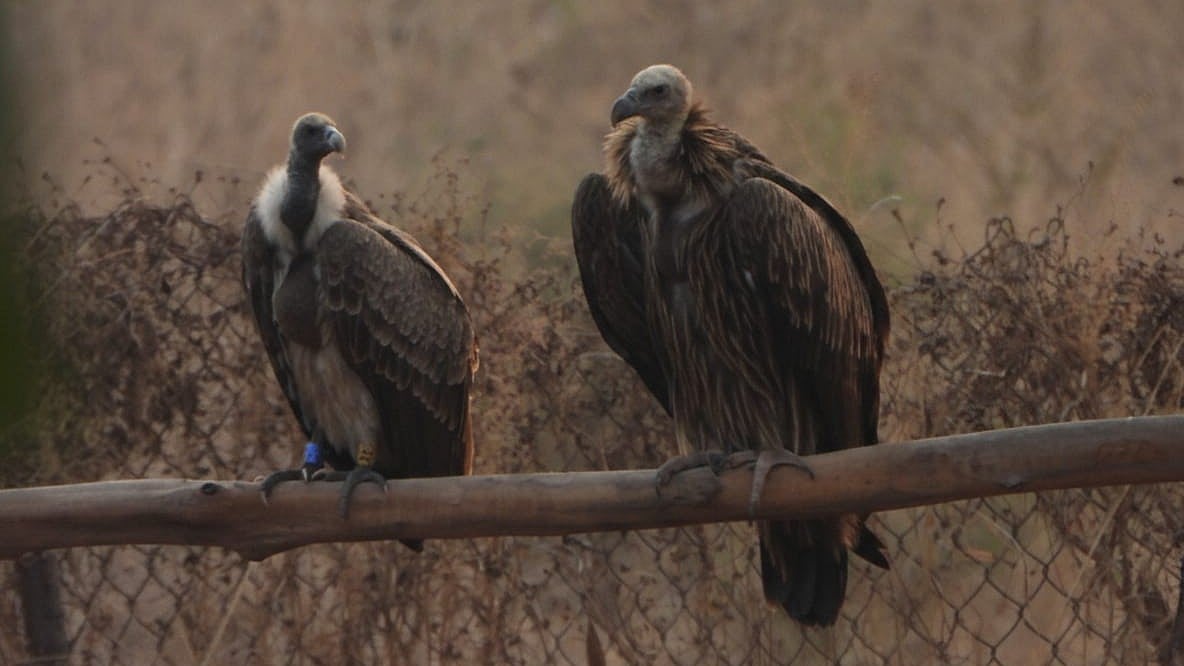
Mumbai: In an announcement that will be met with excitement by wildlife enthusiasts worried about the near-extinction of Indian vultures, the Bombay Natural History Society (BNHS) has announced that the country's vulture conservation programme reached an important milestone in Maharashtra. The Himalayan Griffon Vulture, which is usually found in high-altitude regions and migrates to Indian states, was spotted in the Melghat Tiger Reserve (MTR) due to the presence of released vultures.
Special Achievement After Local Extinction
BNHS said that this was a special achievement in the vulture conservation programme, as vultures were locally extinct from Melghat and Tadoba and a sighting has happened after nearly a decade. Recently, after a Himalayan Griffon was spotted in Melghat, an Eurasian Griffon Vulture was also spotted in Tadoba-Andhari Tiger Reserve, said BNHS.
By 2004, the population of vultures in Maharashtra had declined drastically. This happened due to certain Non-steroidal anti-inflammatory drugs (NSAIDs) such as Diclofenac, Aceclofenac, Ketoprofen and Nimesulide used to treat cattle. Vulture populations that feed on the carcasses of these cattle gradually died off after the toxins affected their kidneys. According to one estimate, some species lost nearly 99% of their flock by 2000. India hosts nine vulture species; one is endangered and three are critically endangered.
From that time onwards, the Maharashtra Forest Department joined hands with the BNHS to revive the nearly extinct vultures.
Translocation and Acclimatization of Captive-Bred Vultures
As part of the ongoing efforts, 15 critically endangered long-billed vultures were shifted from the Vulture Conservation Breeding Centre, Pinjore, to the Somthana range in Melghat Tiger Reserve on April 23. The birds were kept in an aviary for acclimatisation before their release.
On December 19, 2025, vultures were fitted with GSM and satellite transmitters to understand their movement, behaviour and survival. The birds were released from the aviary on January 2, 2026. BNHS started feeding them outside of the aviary naturally.

BNHS Director Hopes Birds Relearn to Thrive
Director of BNHS, Kishor Rithe, said that Melghat has historically been a stronghold for vultures. "We hope the birds relearn to thrive here. Their continued presence and exploration of the MTR area over the last month shows positive signs. On top of it, their socialising with wild Himalayan Griffon since last almost a week is remarkable news,” said Rithe.
“The fact that vultures released in Melghat are attracting wild vultures is a major achievement. The Himalayan Griffon mixing with captive-released vultures and feeding alongside them indicates growing ecological acceptance of the MTR area,” said Bhaskar Das, a conservation biologist at BNHS.
A pioneer in vulture conservation, BNHS runs Vulture Breeding Centres and several release sites, currently caring for around 700 vultures. So far, 34 vultures have been soft-released in Melghat, Pench, and Tadoba Tiger Reserves in Maharashtra in FY 2025-26.
To get details on exclusive and budget-friendly property deals in Mumbai & surrounding regions, do visit: https://budgetproperties.in/

