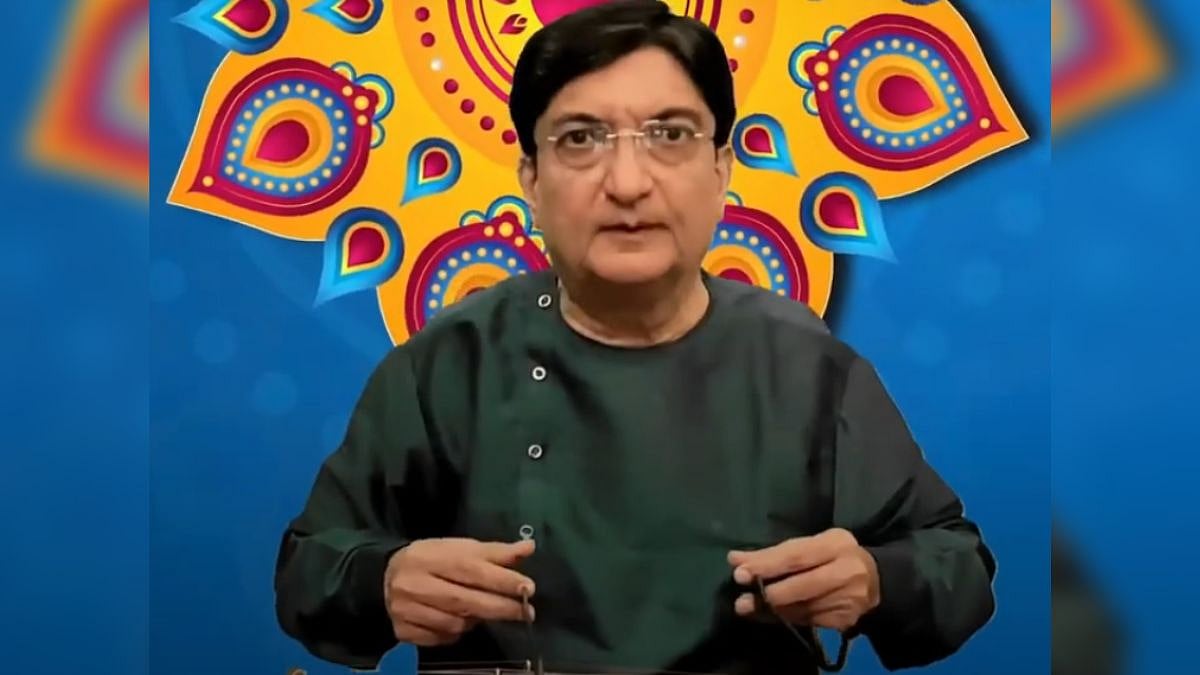
Snehal Mazoomdar (67) is a multi-talented Mumbaikar. He is an ace tax consultant, an accomplished santoor player and a promoter of all that is best in Gujarati arts and literature. Recently, he was appointed chairman of the Maharashtra Gujarati Sahitya Academy in recognition of his contribution towards the promotion of Gujarati culture. A familiar face in Mumbai’s social life, Mazoomdar is toiling hard to promote Gujarati literature. S Balakrishnan met him recently for a tête-à-tête. Excerpts:
The general perception is that Gujaratis are more into business, stockbroking, etc, and not oriented much towards literature.
That perception is there unfortunately. But it is anything but the truth. Gujaratis have a very rich tradition of arts, theatre, music and literature on a par with any other state. It is because of their generous patronage of the arts that many classical singers and instrumentalists have prospered. In fact, the first book in Marathi was published by a Gujarati in 1190. Gujaratis can justly be proud of a rich tradition of theatre, sugam sangeet and more. I may also mention that when the famous saint-poet Narsi Bhagat wanted to raise funds for the marriage of his daughter, he went to a Gujarati money lender, who gladly lent him the money and in turn asked him to mortgage Raag Kedar!
How active is Gujarati theatre in Mumbai at present?
Over 100 years ago, Gujarati theatre was centred around Bhangwadi in Kalbadevi. Plays with singing actors were extremely popular. They used to start at 9pm and go on till 5am. Gujarati men and women dressed in their best used to make a point to watch these plays with elaborate art direction. In fact, people from Surat and other cities in Gujarat used to come in special trains all the way to Mumbai to watch and enjoy these plays. The songs were sung to the accompaniment of the foot harmonium. Incidentally, I myself have a foot pedalled harmonium. Dramas of Pravin Solanki, Kanti Madia, Rajendra Butala, etc, were first staged in Mumbai and later in Ahmedabad and other cities in Gujarat.
What are your plans as chairman of the Gujarat Sahitya Academy?
I have chalked out a three stage proposal. In the first stage, I am trying to have Gujarati plays staged in places like Mira Road, Bhayander, Dombivli, etc, which have a sizeable Gujarati population. These people find it difficult to travel all the way to Bhavan’s and other auditoriums in south Mumbai to watch Gujarati plays. Now I am planning to take these plays to far off districts like Amravati and even Chandrapur. Phase I is already being implemented and the response is tremendous. In the second phase I plan to get the young generation in schools and colleges interested in Gujarati literature and drama. And in the third phase I propose to give opening in Gujarati plays to youngsters as actors so that it has a ripple effect among their families and friends.
What is the budget of the academy?
The Maharashtra government gives about Rs50 lakh. But we tie up with other organisations like the Bharatiya Vidya Bhavan, etc, so that the cost of staging cultural events is shared. I am sure that with the support of the public and other patrons we will be able to do much more. Gujarat is not all about Lakshmi, it is also about Saraswati.

