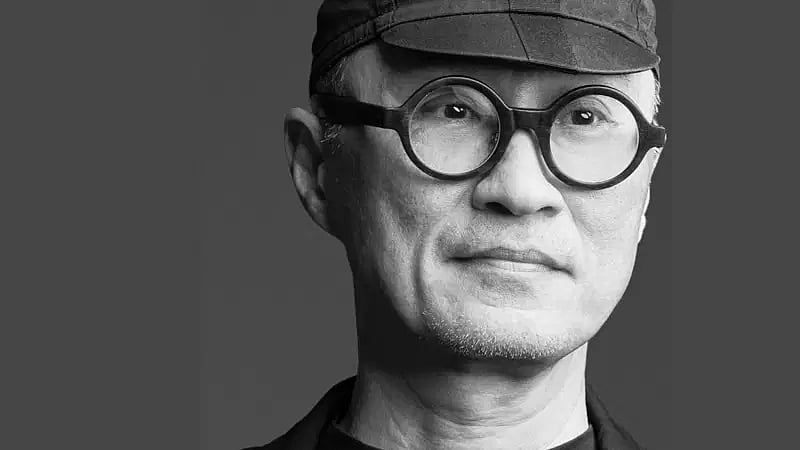
Eugene Cheong’s Wake-Up Call for Advertising
For decades, agencies were built on a simple equation: a small share of breakthrough creative work, a layer of culturally impactful campaigns—and a large volume of execution-heavy business that kept the lights on. At Goafest 2026, Eugene Cheong argued that this model is breaking down. With AI, automation and in-housing rapidly eliminating the traditional 70% of repetitive agency work, he delivered a stark message: the future will reward only those who can create the work machines cannot.
By Team BrandSutra
At Goafest 2026, Day 3 opened with a keynote that challenged one of the biggest assumptions shaping modern advertising: that growth comes from efficiency, scale and optimisation. Delivering the session “Resetting for Growth: Why Bravery Is the Only Real Strategy,” Eugene Cheong, Creative Director and Partner at Euge Publishing, argued instead that the future of the industry belongs to those willing to reclaim courage, creativity and instinct.
Cheong’s message was not about inventing a new playbook for agencies. It was about returning to the values that originally made advertising powerful.
He began by recognising how far Indian advertising has come. Once viewed primarily as an emerging market, India has evolved into one of the world’s strongest creative forces, with agencies increasingly competing for and winning international recognition. But success, he warned, can create its own problems. Industries that grow rapidly often become vulnerable to complacency.
According to Cheong, advertising’s greatest periods of growth have never come from playing safe. They have emerged from conviction, experimentation and the willingness to take risks. The campaigns remembered for changing brands and culture were rarely the safest decisions in the room.
Yet many agencies today are moving in the opposite direction.
Cheong described a growing dependence on systems, approvals, procurement layers and operational structures that have slowly weakened creative ambition. Agencies that once thrived on bold ideas now spend increasing amounts of energy managing processes and reducing risk.
His critique was not aimed at scale itself but at what scale often produces: bureaucracy.
As organisations become larger, decision-making becomes slower and creative thinking becomes more diluted. Multiple approval layers can transform original ideas into predictable outputs designed to satisfy everyone and excite no one.
One of the strongest themes of the keynote was the role of artificial intelligence in reshaping this landscape.
Cheong pushed back against the popular narrative that AI threatens creativity. In his view, AI is not replacing imagination—it is removing the repetitive, low-value work agencies historically relied on.
He explained that the traditional agency business model was effectively divided into three layers: around 10 percent breakthrough global work, 20 percent culturally impactful local work, and 70 percent production-heavy execution that generated operational stability.
That 70 percent, he argued, is disappearing.
Automation, AI tools and in-house capabilities are rapidly absorbing routine production work. What remains—and what clients will increasingly pay premium value for—is the top 30 percent: work that requires originality, strategic imagination and creative courage.
This shift creates an uncomfortable reality for agencies.
The future, according to Cheong, belongs either to highly talented organisations or highly cost-efficient operators. The space in the middle—the comfortable average—is shrinking.
That means agencies can no longer depend on scale alone. They must compete through excellence.
Cheong argued that human creativity still holds a decisive advantage because it is built on qualities machines cannot reproduce. AI may process information, but it cannot generate instinct, conviction or idealism in the way people can.
He identified eight habits that define enduring creative excellence: courage, idealism, curiosity, playfulness, free-spiritedness, intuition, authenticity and persistence.

Importantly, he framed these not as personality traits but as behaviours that can be practised and reinforced over time.
Creativity, he suggested, is less about occasional inspiration and more about repeated habits.
Cheong also delivered a candid assessment of large agency networks. Many, he said, increasingly operate as “asset delivery businesses” rather than true creative companies. In some systems, only a small fraction of employees are dedicated to generating ideas.
For creativity to survive inside large organisations, leadership must actively protect it.
He emphasised the importance of strong partnerships between CEOs, COOs and CCOs that place creative excellence at the centre of business strategy rather than treating it as a by-product of operational efficiency.
Large agencies, he argued, can still produce extraordinary work—but only if creative leaders are empowered to lead.
His solution was the concept of becoming a “big little agency”: organisations that maintain the hunger, speed and entrepreneurial spirit of smaller creative teams regardless of their size.
The keynote ended with a simple but powerful idea: the industry does not need more complexity. It needs simplicity, instinct and belief in ideas again.
For an industry entering an AI-driven era, Cheong’s message was clear—technology may transform execution, but growth will still belong to the brave.
