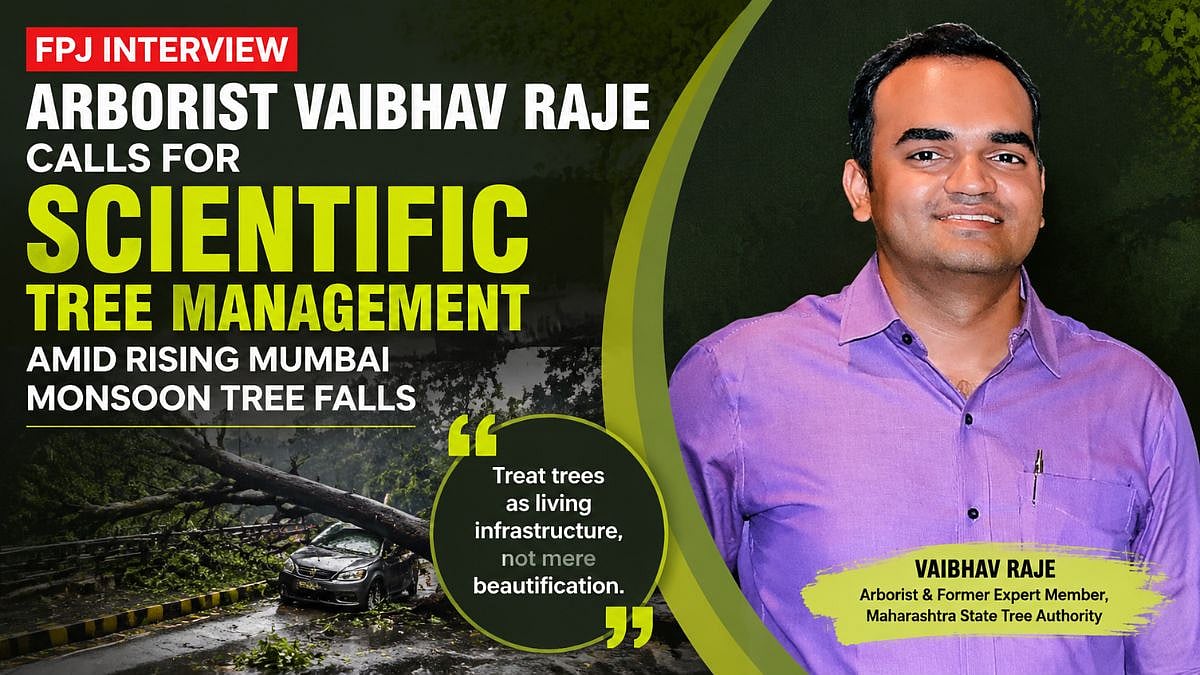
Mumbai, July 8, 2026: In a week in Mumbai, three people have lost their lives after trees fell on them. Since heavy rains lashed the city, hundreds of trees have collapsed, raising serious questions over tree health, haphazard pruning, cement concretisation around tree bases weakening and killing their roots, and the lack of administrative enthusiasm to manage tree health and the environment overall.
In this backdrop, The Free Press Journal spoke with arborist Vaibhav Raje, a former expert member of the Maharashtra State Tree Authority, on the management of urban trees and his pilot project with the BMC.
Q1. You are working on a pilot project with the BMC on tree assessment. What is the project actually?
The pilot project with the BMC is a first-of-its-kind scientific tree assessment initiative using LiDAR and AI technology in India. The pilot project covers approximately 5,000 trees in the Bandra West area. Initial LiDAR scanning and field data collection have been completed, and the data is now undergoing further processing and review. In the coming months, depending on weather conditions, ground-truthing and arboricultural diagnosis will be carried out to validate the findings. The objective is to create digital health records for trees, identify potential risks, and establish a proactive model for urban tree management.
Q2. With the arrival of the monsoon, we are seeing hundreds of 'externally healthy' trees collapsing across Mumbai. What do you think is the reason for these incessant tree falls?
Tree collapses during the monsoon are usually due to hidden stresses not visible externally. Roots may be suffocated under concretised soil, weakened by decay, or damaged during construction. Poor pruning or an imbalanced canopy sometimes increases structural stress on the root plate, which may compromise its stability when the monsoon comes. Heavy rains saturate the soil, reducing anchorage, while strong winds add pressure to already stressed trees. These combined factors can cause sudden failures even when the canopy appears green and healthy.
Q3. Is cement concretisation around tree bases increasing in Mumbai, leading to their roots being killed? What has been your observation regarding the mandatory open space around tree bases?
Cement concretisation around tree bases does impact root health. When soil is sealed, roots lose access to air and water, and in some cases, roots are cut during construction or road works. The mandatory one-metre basin rule is helpful for smaller trees, but larger, older trees generally require more open space—ideally two to three metres or more—to remain stable and healthy. Without adequate breathing space, roots may weaken over time, increasing the risk of collapse.
Q4. The BMC prunes tree branches every year as a pre-monsoon activity to prevent falls. Many times, it is observed that the pruning is haphazard or unscientific. Does it damage tree health?
Pruning is necessary before the monsoon, but if done haphazardly or unscientifically, it can harm trees. Poor cuts may leave wounds that invite decay or create imbalance in the canopy by leaving heavy end-weight. Proper arboricultural pruning focuses on reducing risk while maintaining tree health, using internationally accepted standards of structural pruning.
Q5. Do you see bureaucratic lethargy in maintaining tree health in Mumbai or in India overall?
Tree health management in Indian cities is often affected by institutional gaps and a lack of awareness rather than deliberate neglect. Responsibilities are fragmented across departments, technical arboriculture expertise is limited, and interventions tend to be reactive after incidents rather than preventive. Treating trees as living infrastructure, with clear protocols and professional arboriculture expertise, can help bridge these gaps and improve long-term urban tree care.
Q6. What steps can be taken by government authorities and citizens to preserve tree health?
Authorities can improve tree health by ensuring adequate rooting space, using permeable materials around tree bases, avoiding root cutting during construction, and commissioning regular arborist inspections and risk assessments. Citizens can help by reporting stressed or damaged trees, supporting careful planting of the right species in the right locations for the right reasons, and protecting open soil space around trunks.
Q7. The city is losing thousands of trees for infrastructure projects, and the government promises compensatory plantations far away. What do you have to say on this?
The loss of mature urban trees creates a serious ecological imbalance. Large trees provide shade, regulate the microclimate, reduce air pollution, and support biodiversity. Their removal contributes to the urban heat island effect, where cities become hotter due to reduced canopy cover and increased concrete surfaces. While Miyawaki plantations are a useful tool for creating dense green patches, they should not be seen as a silver bullet for replacing old-growth trees removed for construction. Miyawaki forests often consist of young, fast-growing species planted close together, which cannot immediately provide the cooling, shading, and ecological services of large tree canopies.
Also Watch:
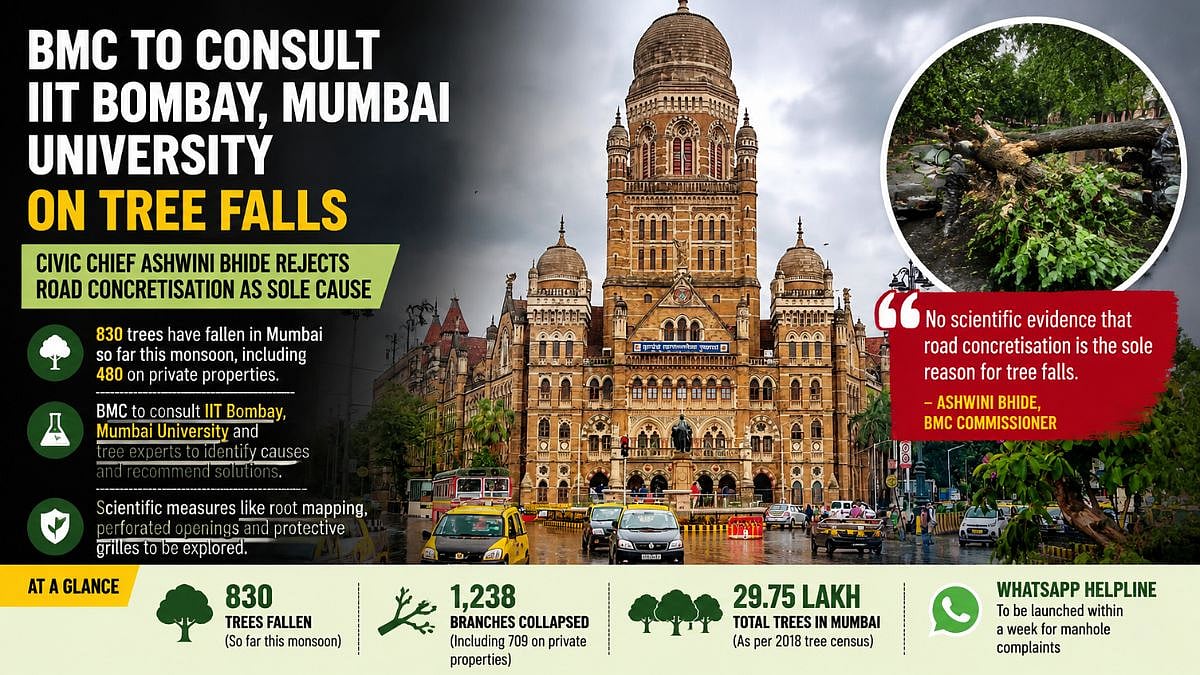
Relying solely on such plantations is short-sighted and does not compensate for the decades of growth and resilience lost when mature trees are cut. A balanced approach is needed: minimising removals through timely arboriculture impact assessments, retaining existing canopy wherever possible, and ensuring compensatory planting is done in suitable urban locations with long-term care and monitoring.
To get details on exclusive and budget-friendly property deals in Mumbai & surrounding regions, do visit: https://budgetproperties.in/

