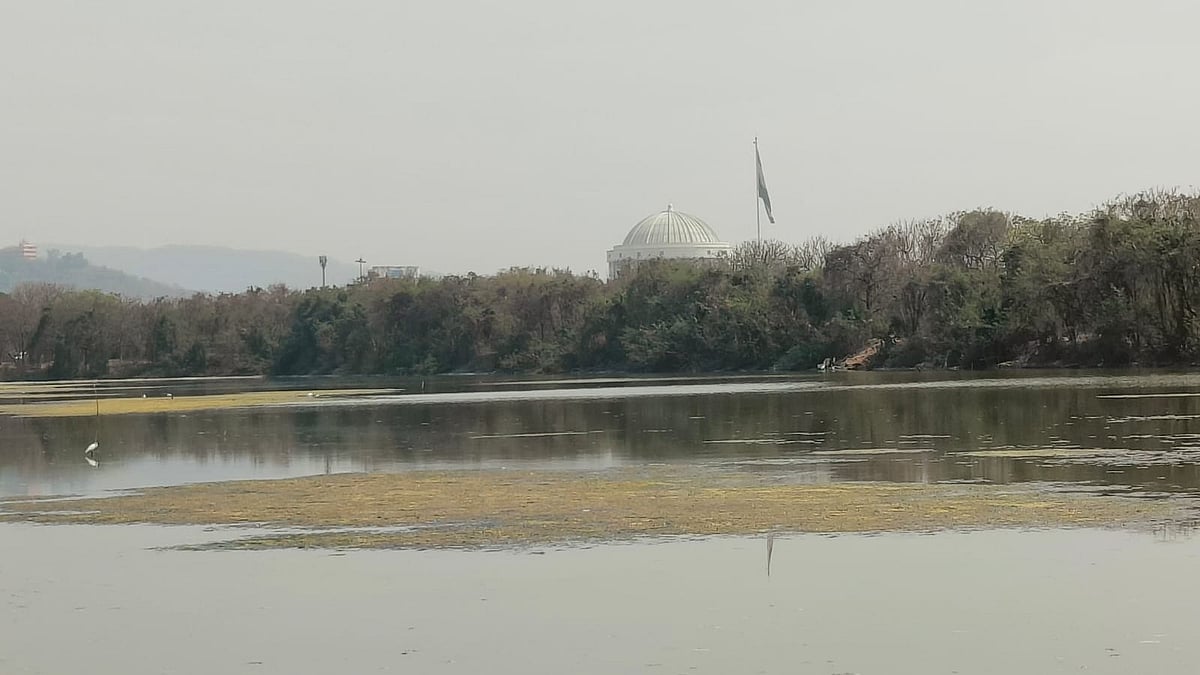
The seasonal arrival of flamingos once a reassuring sign of ecological health along the Thane Creek Flamingo Sanctuary is now according to activist telling a more troubling story.
This year, birders say flocks are circling but refusing to land at key Nerul wetlands, turning the birds into visible indicators of a deeper environmental crisis.
" At DPS, NRI and T.S. Chanakya lakes, satellite wetlands historically used as feeding grounds flamingos have been spotted flying overhead and moving on," said a birder.
Environmentalists say this behavioural shift reflects a collapse in habitat quality rather than a change in migratory patterns.
Data from water tests commissioned by the NatConnect Foundation underline the concern. Total Dissolved Solids (TDS) levels were recorded between 17,000 and 23,000 mg/L, far exceeding healthy thresholds. pH values above 9 point to alkaline stress, while elevated Biochemical Oxygen Demand (BOD) and Chemical Oxygen Demand (COD) indicate heavy organic and chemical pollution.
Experts say the problem lies not just in contamination, but in a breakdown of the wetlands’ natural flushing system. “These are intertidal ecosystems that depend on rhythmic tidal exchange. When that is disrupted, pollutants accumulate and the system begins to suffocate,” said NatConnect director B N Kumar.
Activists point to faulty urban infrastructure as a key factor. While high tide continues to bring seawater into the wetlands, the return flow is obstructed due to poorly designed or elevated drainage channels. The result is stagnation—fueling algal blooms and depleting oxygen levels critical for sustaining the micro-organisms flamingos feed on.
Authorities have initiated a clean-up under “Operation DPS Flamingo Lake,” removing hundreds of kilograms of algal sludge daily. However, environmental groups warn that such measures address only the symptoms.
“This is like treating a fever without diagnosing the infection,” said Rekha Sankhala of the Save Mangroves and Flamingos Forum. Along with Sandeep Sareen, she has called for structural interventions, including restoration of tidal pathways and stricter enforcement of wetland protection norms.

Also Watch:
The issue also raises questions about regulatory oversight. Activists allege that guidelines laid down by the National Green Tribunal on wetland conservation are not being adequately implemented, allowing unchecked urban pressures to degrade fragile ecosystems.
Beyond biodiversity, the stakes are high for the city itself. These wetlands act as natural sponges, aiding flood control, groundwater recharge and climate resilience. Their decline could amplify urban flooding risks and erode ecological balance.
For now, the absence of flamingos on the water despite their presence in the sky has become the most striking warning.
“The birds are not just visitors anymore; they are messengers,” an activist said. “And right now, they are telling us that these wetlands are in trouble.”
To get details on exclusive and budget-friendly property deals in Mumbai & surrounding regions, do visit: https://budgetproperties.in/
