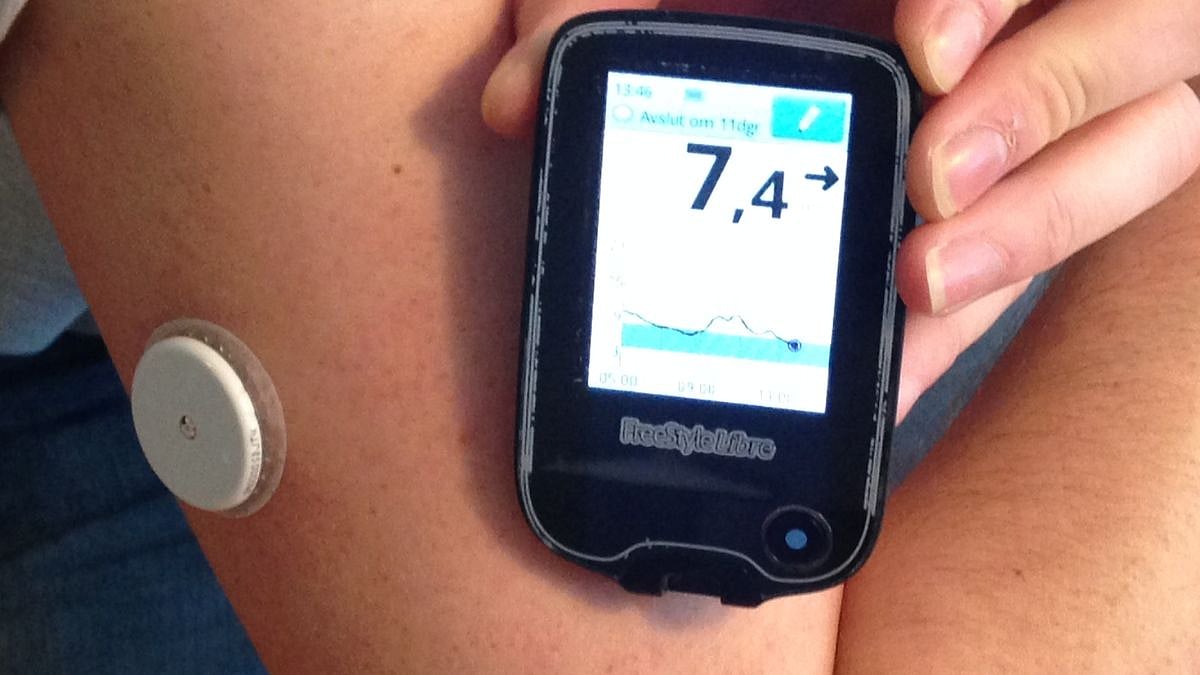
Mumbai, Dec 20: The U.S. Food and Drug Administration (FDA) has recently issued an urgent safety alert for certain Libre 3 and Libre 3 Plus continuous glucose monitoring (CGM) sensors, warning that the devices may display incorrectly low glucose readings.
According to the FDA, these faulty readings have been linked to seven deaths and more than 700 serious injuries worldwide, raising serious concerns as CGMs are increasingly relied upon for real-time glucose tracking, insulin dosing, and daily diabetes management.
Growing CGM use in India raises concerns
India, home to over 100 million people living with diabetes, has seen a sharp rise in the use of digital health tools such as CGMs. These devices offer real-time glucose data and trend analysis, helping patients monitor sugar levels more frequently and conveniently.
Inaccurate readings pose serious health risks
However, experts caution that CGMs are often being used without adequate medical supervision, increasing the risk of misinterpretation and inappropriate treatment decisions.
Inaccurate glucose readings can have serious consequences. Falsely low values may prompt patients to skip or reduce insulin doses, consume unnecessary carbohydrates, or delay medical intervention—potentially leading to severe hyperglycaemia, diabetic ketoacidosis, or even life-threatening hypoglycaemia.
Specialists warn that unsupervised use, reliance on unverified devices, or incorrect interpretation of CGM data can significantly disrupt diabetes management and result in avoidable complications.
Libre 3 not launched in India, says expert
Commenting on the FDA alert, Dr Rajiv Kovil, head of diabetology and weight-loss expert at Zandra Healthcare, said CGMs provide immediate glucose readings through mobile applications, and any error—whether high or low—can directly influence treatment decisions.
“The device under FDA scrutiny was falsely reporting low glucose levels in Libre 3 sensors. However, Libre 3 has not been launched in India,” he clarified, offering reassurance to Indian patients.
Concerns over unregulated devices in Indian market
Dr Kovil also cautioned against over-reliance on unverified technology. He noted that although nearly 20 glucometers are available in the Indian market, only four to five have proper regulatory approval.
“Many devices are sold freely in medical shops without adequate clearance. Patients should always consult their doctors before purchasing a glucometer or CGM,” he said, adding that medical decisions should be based only on devices approved by regulatory authorities such as the US FDA and India’s CDSCO.
CGM use recommended only for specific patients
Explaining appropriate usage, Dr Kovil said CGMs are primarily recommended for people on insulin therapy, those with type 1 diabetes, pregnant women with diabetes or those planning pregnancy, patients experiencing frequent low sugar episodes, and individuals with persistently high glucose levels despite medication.
Accuracy remains cornerstone of diabetes care
Emphasising the importance of accuracy, Dr Vijay Negalur, HOD – diabetology, KIMS Hospitals, Thane, said, “In my 45 years of practice, I have seen technology evolve dramatically, but accuracy has always been the foundation. A CGM that underreports glucose affects treatment in real time. Patients must check batch details and revert to traditional monitoring if required. If the reading doesn’t match how you feel, trust your symptoms.”
Experts reassure Indian patients on Libre models
Echoing similar concerns, Dr Pranav Ghody, consultant endocrinologist and diabetologist, Wockhardt Hospitals, Mumbai Central, said CGMs play a vital role in modern diabetes care, but faulty readings can disrupt insulin dosing, meals, exercise, and daily confidence.
“It is important to reassure Indian patients that Libre 3 is not available in India. Only Libre 2 and Libre 2+ are used here, and these models are not part of the FDA alert,” he said.
Also Watch:

Dr Ghody added that while technology has transformed diabetes care, it is not infallible. “Patients should verify their sensors, replace affected devices immediately, and rely on finger-prick testing if readings seem inconsistent. Safe diabetes management still requires awareness, regular follow-ups, and listening to one’s body,” he said.
To get details on exclusive and budget-friendly property deals in Mumbai & surrounding regions, do visit: https://budgetproperties.in/

