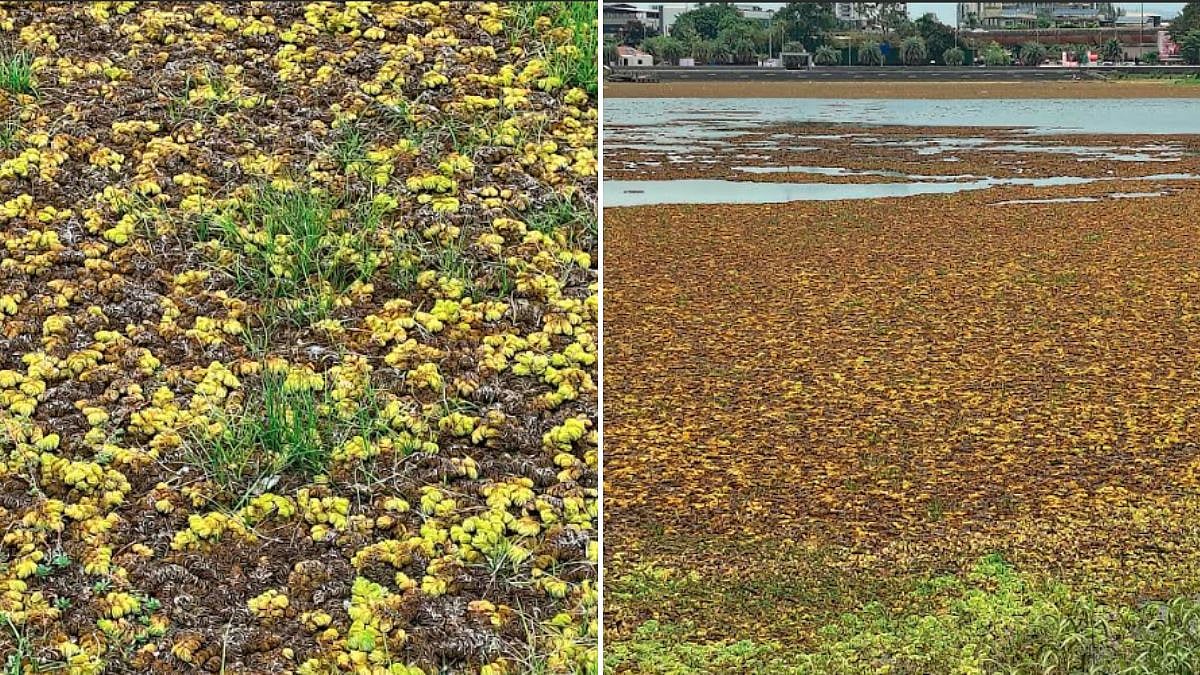
Environmentalists have called for a ban on the sale and distribution of the highly invasive aquatic weed Salvinia molesta, alleging that its availability through aquarium hobbyists and ornamental plant traders has contributed to its spread into natural water bodies.
Demand Comes 45 Days After Introduction of Biological Control Agent
The demand comes 45 days after scientists introduced Cyrtobagous salviniae—the only known biological control agent for the weed—into Vadale Lake in Panvel. Early observations indicate that the restoration effort is beginning to yield positive results after the lake was nearly engulfed by the invasive plant.
Commonly known as giant salvinia or Chinese lace, Salvinia molesta is considered one of the world's most destructive freshwater weeds. It spreads rapidly across water surfaces, forming dense mats that block sunlight, deplete dissolved oxygen and threaten aquatic biodiversity. The infestation had smothered large portions of Vadale Lake, endangering native vegetation such as lotus plants and disrupting habitats used by resident and migratory birds.
Infestation Had Smothered Vadale Lake
The weed remained unidentified for nearly two years until June 2025, when environmentalist Jyoti Nadkarni identified it with the assistance of biologist Dr. Suchandra Dutta.
Determined to find a scientific solution, Nadkarni approached the Indian Council of Agricultural Research – Directorate of Weed Research in December 2025. With support from Ranjana Sadolikar, chairperson of the Citizens United Forum, the team presented its findings to the Panvel Municipal Corporation, recommending biological control as the most sustainable and cost-effective alternative to repeated mechanical removal.
Weevils Released into Vadale Lake on May 7 as Biological Control Agent
On May 7, a team from ICAR-DWR comprising scientist Dr. Archana Anokhe, scientist Diksha and staff member Mahindra released Cyrtobagous salviniae weevils into the lake. The insect feeds exclusively on Salvinia molesta and is recognised globally as the only effective biological control agent against the invasive species.
Since the release, Nadkarni and volunteers Jyoti Dandekar and Madhav Athavale have been monitoring the lake to assess the impact of the weevils.
First Biological Control Initiative in Mumbai Metropolitan Region
"This is the first time within the Mumbai Metropolitan Region that a biological control technique has been used to eradicate this invasive weed instead of relying on harmful chemicals. The infestation had become impossible to control manually or mechanically," Nadkarni said.
The team has also surveyed nearby wetlands, streams, drains and rivers to detect invasive aquatic weeds and assess the ecological health of surrounding water bodies.
Longstanding Conservation Advocacy for Vadale Lake
Nadkarni and Sudeep Athavale of Anubhuti365, both members of the Raigad District Wetland Brief Documentation Committee since 2018, have been documenting the biodiversity of Vadale Lake and advocating for its conservation. Their efforts previously led to the discontinuation of decorative LED and laser lighting around the lake after concerns that the illumination was disturbing the breeding, nesting and roosting of birds.

Encouraged by the initial success of the biological control programme, Nadkarni and Sadolikar have urged the Panvel Municipal Corporation to install awareness boards explaining the restoration project and appealing to visitors not to litter. They have also submitted a report detailing the current ecological condition of the lake and its vegetation.
The activists reiterated their demand for restrictions on the sale and cultivation of Salvinia molesta, arguing that ornamental plant traders and aquarium enthusiasts may have inadvertently introduced the weed into natural ecosystems. They said regulating its availability is essential to prevent future infestations and protect wetlands across the region.
Environmentalists believe the success of the biological control programme at Vadale Lake could become a model for managing invasive aquatic weeds in lakes and wetlands across Maharashtra.
To get details on exclusive and budget-friendly property deals in Mumbai & surrounding regions, do visit: https://budgetproperties.in/

