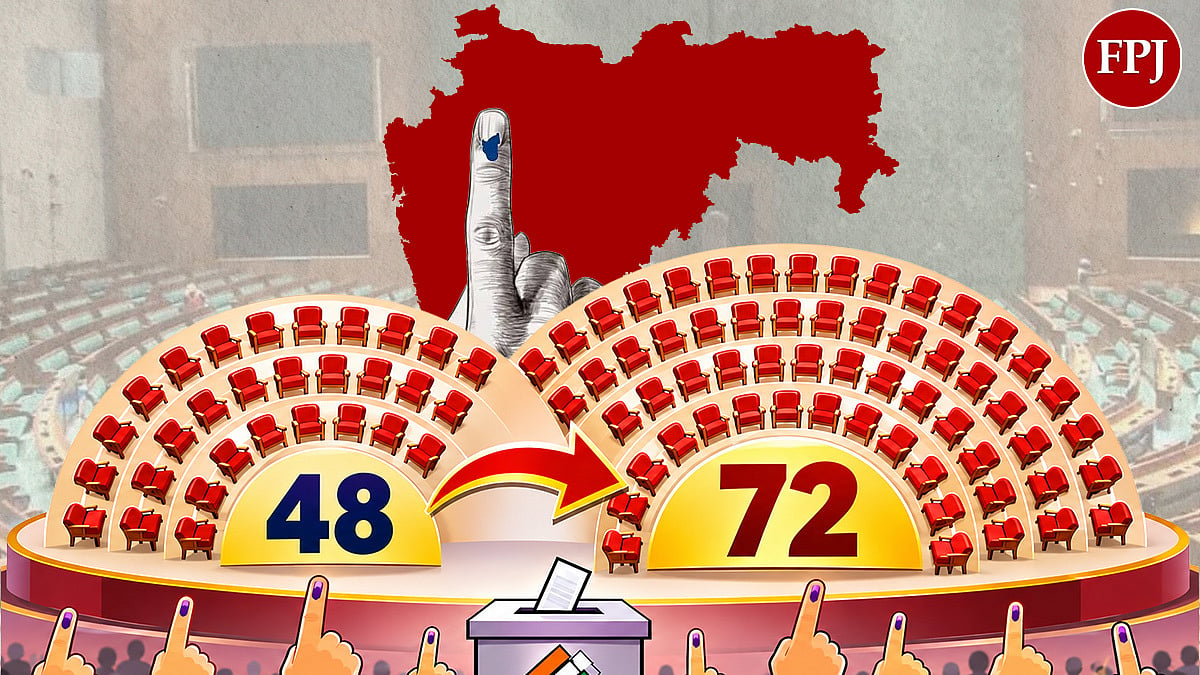
Maharashtra could see its Lok Sabha representation increase from the existing 48 seats to 72 following the proposed delimitation exercise, giving the state 24 additional parliamentary constituencies. The projection is based on the Centre's proposal to increase the number of Lok Sabha seats in every state by 50%.
However, the exact distribution of the additional constituencies has not yet been announced.
The Union Cabinet, chaired by Prime Minister Narendra Modi, approved the proposed delimitation-linked constitutional amendment bill on Friday (November 27). The decision comes ahead of a special session of Parliament beginning November 30, during which the government is expected to introduce legislation concerning delimitation and the implementation of 33% reservation for women in Parliament and state legislative assemblies.
Maharashtra's Lok Sabha strength could rise to 72
Maharashtra currently has 48 Lok Sabha constituencies. Under the proposed formula of a 50% increase, the state's representation would rise to 72, translating into 24 additional seats.
The proposal envisages a uniform increase in parliamentary representation across all states while retaining their existing proportion of seats relative to one another. This arrangement is expected to remain in place until 2051, addressing concerns that states with lower population growth could lose their share of representation.
Assembly seat increase and city-wise distribution unclear
While the proposed formula provides an indication of the increase in Maharashtra's Lok Sabha seats, there is currently no clarity on how many additional seats will be created in the Maharashtra Legislative Assembly. The number of new Assembly constituencies, if any, will become clear only after further details of the delimitation exercise emerge.
Similarly, no official information is available on how the 24 additional Lok Sabha constituencies will be distributed across Maharashtra's cities and districts.
What Is Delimitation?
Delimitation involves redrawing the boundaries of electoral constituencies and determining their representation based on population-related considerations.
The Centre’s proposed legislation is also linked to implementing 33% reservation for women in the Lok Sabha and state assemblies.

