
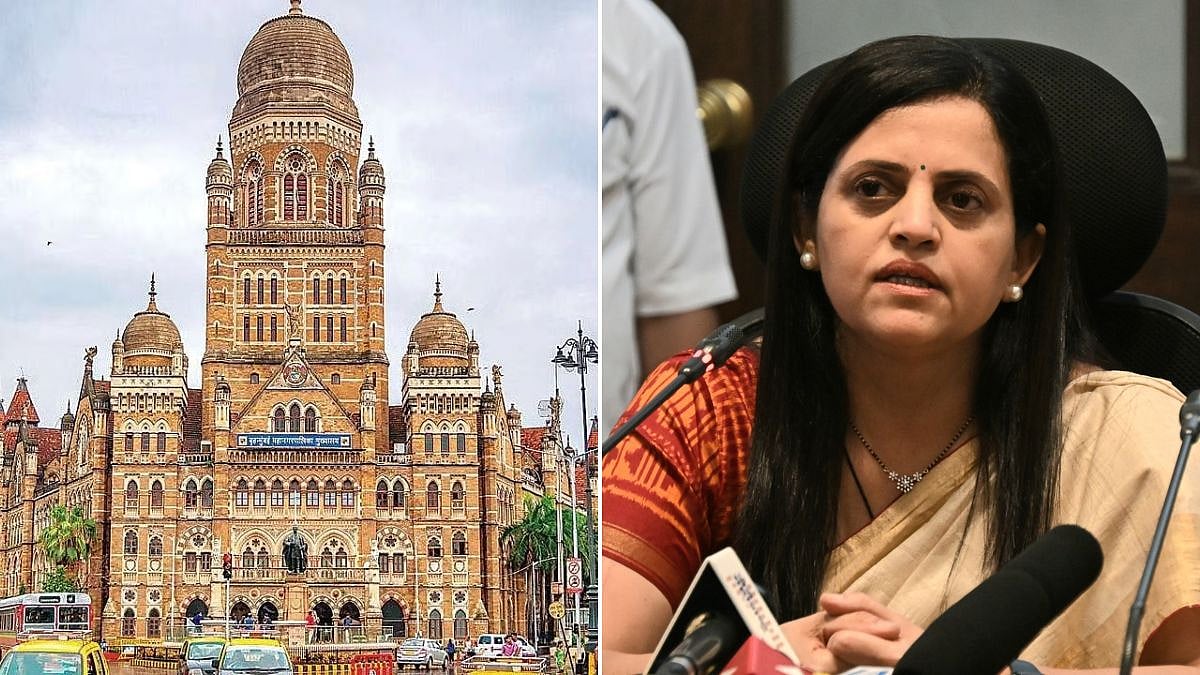
Mumbai: The real estate developers’ body CREDAI-MCHI is set to seek an early meeting with the newly appointed BMC Commissioner Ashwini Bhide to raise a host of long-pending issues impacting project viability and ease of doing business in the city.
CREDAI-MCHI Chuef Operating Officer Keval Valambhia said the meeting is likely to take place next week, where the industry will push for priority resolution of “burning issues” even as several reforms are already under consideration at the civic body level.
Among the most pressing concerns is the levy of pest control charges(PCO). Valambhia pointed out that developers are currently required to pay these charges annually from the start of construction till project completion, significantly increasing project costs. “The BMC charges around Rs 43 per sq metre. For a project for example of of 1 lakh sq ft, the cumulative burden becomes substantial. As per the Act, this should ideally be a one-time charge, but it is being levied every year and on area which is not constructed. This needs correction,” he said.
The body will also reiterate its demand for relief in premium payments — a long-standing issue for developers. While premiums are governed by the state government, Valambhia said the municipal commissioner’s recommendations hold weight in shaping policy decisions.
Valambhia said the industry remains hopeful that with a new administrative leadership, faster decision-making and policy clarity will help address bottlenecks. “We will be discussing all stakeholder concerns in detail and expect constructive outcomes,” he added.
The upcoming meeting is expected to build upon discussions held during the first steering committee meeting on February 26, where multiple Ease of Doing Business (EODB) reforms were taken up. The BMC has already agreed in principle to revise the decade-old EODB manual, aligning it with updated Development Control and Promotion Regulations (DCPR) and recent policy changes.
Key proposals under consideration include revising the deferment policy for premium payments, with suggestions to reduce interest rates and adopt a staggered 10:10:80 payment structure to ease upfront financial burden on developers. The civic body has also initiated steps toward standardising processes such as CFO NOCs through automation, aiming to reduce delays and human intervention.
Other issues flagged by developers include duplication concerns over fire service fees and scrutiny charges, challenges in obtaining tree NOCs due to space constraints in redevelopment projects, and delays arising from ward-level permissions. The BMC has indicated that several of these processes will be streamlined and moved to an online single-window system.
Policy uncertainties around DCPR provisions, including Regulation 33(12)(B), piped access norms, and redevelopment-related clauses, are also expected to be raised during the meeting.
Also Watch:
Key Issues Raised by CREDAI-MCHI to BMC
* EODB Manual Update Pending:
* 10-year-old manual needs revision to align with new DCPR & policies
* Update process to begin within 3–4 months
* Deferment Policy Reforms:
* Make policy permanent instead of 3-year cycle
* Reduce interest rate to ~8%
* Introduce 10:10:80 premium payment structure
* Fire NOC & CFO Process:
Push for standardised, auto-generated NOCs via AutoDCR
Concerns over duplication in fire fees & scrutiny charges
* Tree NOC Challenges:
Lack of space in redevelopment projects
Demand: BMC to plant trees or allow plantations in parks
* Pest Control Charges (PCO):
Currently charged multiple times during project lifecycle
Demand: One-time payment for entire project
* Regulation 33(7)(B) Relaxation:
* Ease land ownership norms for old societies
* Policy formulation expected soon
* Approval Process Delays:
* Need strict implementation of circulars
* Avoid delays in CC due to procedural issues
* Road Widening Delays:
* Slow progress in widening roads below 9m
* Demand for **time-bound, suo-moto action**
* LOS (Layout Open Space) Constraints:
Difficulty in small plots
Demand to allow flexibility in front/rear spaces
* Single-Window Clearance Demand
* Integrate ward-level charges into AutoDCR:
* Sewerage
* Dewatering
* Hoardings
* Carriage entrance
* Validity of NOCs:
Extend validity from 1 year to 5 years or project lifecycle
* Scrutiny Fees
* 10% annual hike termed excessive
* Demand for rationalised, proportionate charges
* Open Space Deficiency Rules
Calculation norms need rationalisation
* Digitisation of Records
Old files to be made available online
* Standardisation of NOCs
Remove officer-level discretion
* Bank Guarantee Process
Simplify submission directly to Accounts Office
To get details on exclusive and budget-friendly property deals in Mumbai & surrounding regions, do visit: https://budgetproperties.in/

