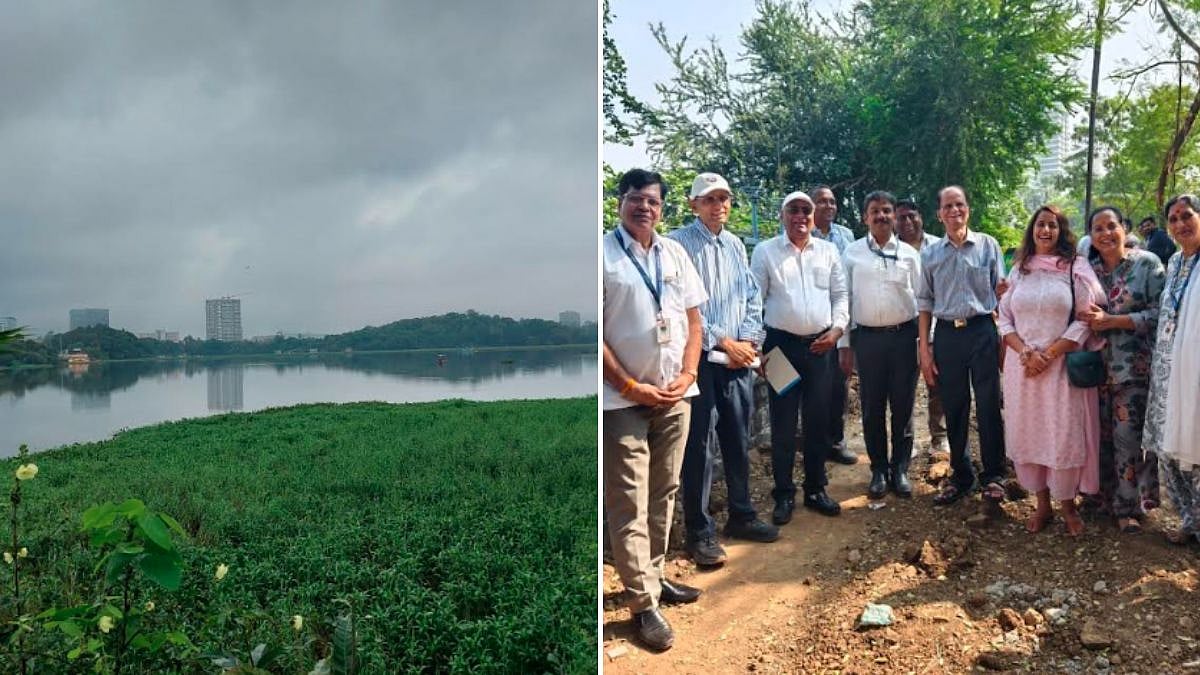
Mumbai: In a major success for sustained citizen and environmental activism, work on diverting sewage from the multiple weed-infested 210-hectare Powai Lake in north Mumbai has finally begun, with the Brihanmumbai Municipal Corporation (BMC) committing to a May 2026 deadline to completely stop the inflow of raw sewage into the lake.
Activists drive action
The long-delayed action follows decades of neglect and nearly a year of intensified pressure from citizen groups and environmentalists, who warned that unchecked pollution was pushing one of Mumbai’s largest and most ecologically significant wetlands towards irreversible damage. Environment watchdog NatConnect Foundation escalated the issue to the Prime Minister’s Office, the Maharashtra Chief Minister’s Office and the BMC Commissioner, turning Powai Lake into a test case for citizen-led environmental accountability.
By the civic body’s own admission, close to 18 million litres per day (MLD) of untreated sewage enters Powai Lake through multiple inlets. This nutrient-rich inflow has fuelled aggressive weed growth, choking large sections of the lake, depleting dissolved oxygen and threatening biodiversity, including legally protected marsh crocodiles and fish populations. Powai Lake is listed as a major wetland by the Union Ministry of Environment, Forest and Climate Change.
Details of the diversion plan were recently shared by BMC deputy municipal commissioner Shashank Bhore during a meeting with local stakeholders at the lake. Under the revised system, the entire sewage load is being redistributed to ensure zero direct discharge into the waterbody.
Partial rerouting done
A 2 MLD stream has already been intercepted and connected to a completed sewer line near Peru Baug, from where it is being conveyed to the Mithi River sewage treatment plant. The largest share—8.05 MLD from gates 1 to 14 along the lake’s periphery—will eventually be treated at a new sewage treatment plant planned near Suvarna Mandir in Powai. Until that facility is commissioned, this sewage will be diverted to the Bhandup Pumping Station.
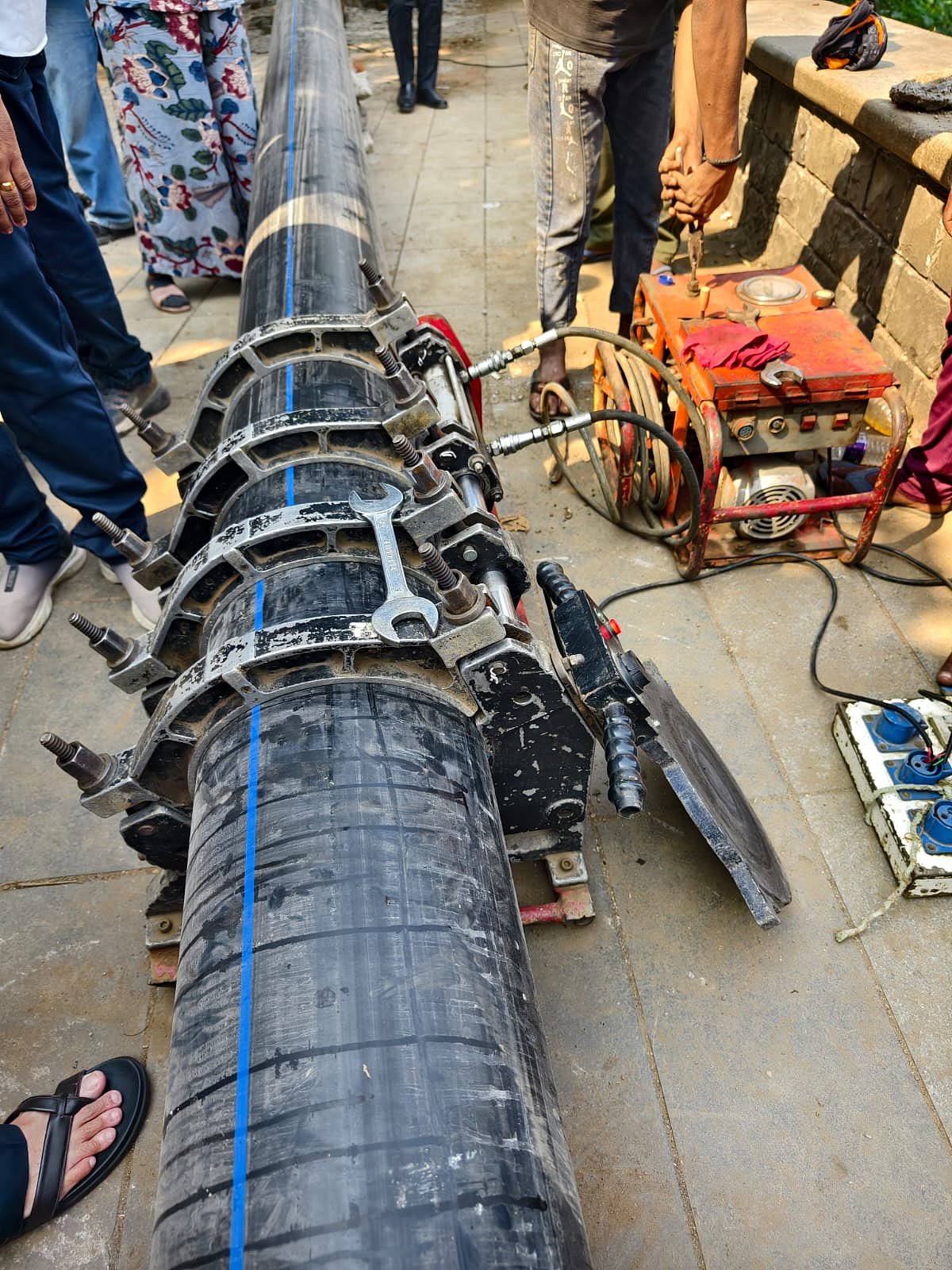
The remaining 7.8 MLD from gates 15 to 18, including the highest inflow points near Powai Plaza, is being redirected into an existing 800-mm sewer trunk line leading to the Bhandup facility. To handle the additional volumes, the Bhandup Pumping Station is undergoing capacity augmentation, with throughput being increased to 225 MLD, expected to be completed by April–May 2026.
Housing sewage concern
In parallel, 1.1 kilometres of new sewer infrastructure originating from the L&T stretch has already been laid. Once operational, the BMC expects all sewage ingress into Powai Lake to stop by May 2026. However, Pamela Cheema, chairperson of the BMC-mandated Advanced Local Management committee for Powai, flagged an unresolved concern: sewage from newly developed MHADA housing near the L&T complex. Officials were unable to clearly explain how waste from these buildings is being managed, she said, prompting demands for immediate clarification.
Environmentalists have consistently argued that stopping sewage is the single most critical intervention. NatConnect Foundation director B N Kumar said repeated mechanical weed removal failed because sewage continued to act as a fertiliser. “For years, crores were spent skimming weeds while 18 MLD of untreated sewage kept pouring in. That is not restoration—it is denial,” he said.

Seeking scientific validation, NatConnect shared photographs with the Indian Council of Agricultural Research, which identified a mixed invasion of aquatic weeds and agreed in principle to help develop biological control measures after detailed on-site studies. The issue is also under legal scrutiny, with an NGT-mandated committee warning of penalties if pollution continues. The tribunal’s Western Zonal Bench will review the matter on February 12, 2026.
Ramsar demand grows
Spread across 210 hectares with a 600-hectare catchment, Powai Lake is home to the Indian marsh crocodile and several IUCN-listed species. Citizen groups have urged the Centre to grant Ramsar site status to ensure stronger, science-backed protection.
Kumar, who initiated the Save Powai Lake and Environment campaign along with the ALM nearly a year ago, said the breakthrough underscored the power of sustained civic engagement. “This action came only after relentless public pressure. Powai Lake proves that informed citizens, when they persist, can force governance systems to respond,” Cheema said and appreciated NatConnect’s contribution.
To get details on exclusive and budget-friendly property deals in Mumbai & surrounding regions, do visit: https://budgetproperties.in/

