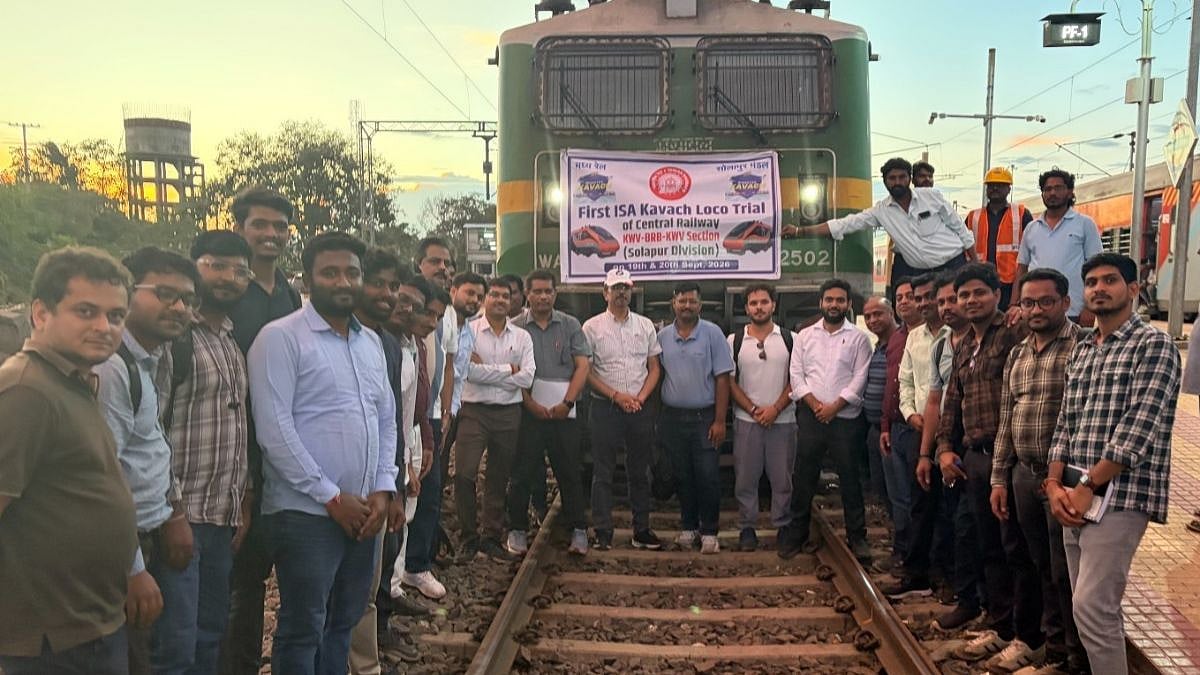
Solapur: The Solapur Division of Central Railway has achieved a major milestone in railway safety modernisation by successfully conducting the first Independent Safety Assessor (ISA) Audit Trial of KAVACH 4.0 in Central Railway.
The full-functionality ISA Audit Trial was conducted on the Kurduvadi–Boribial–Kurduvadi section on both Up and Down lines over a stretch of 104.7 Route Kilometres on September 19 and 20, 2026.
Also Watch:
Rigorous safety validation conducted under field conditions
As part of the audit, an Independent Safety Assessor team from Italy carried out and successfully validated multiple critical safety scenarios under actual operating conditions.
The trials included Signal Passing at Danger (SPAD) prevention, Permanent Speed Restriction (PSR) speed control and loop-line speed control. The team also tested the automatic generation of SOS alerts in the event of an unusual stoppage within a block section.
Other key tests included manual SOS generation by the Station Master through SMOCIP, manual SOS generation by the Loco Pilot through the onboard KAVACH system, SPAD prevention following a sudden signal put-back and roll-away protection on a down gradient.
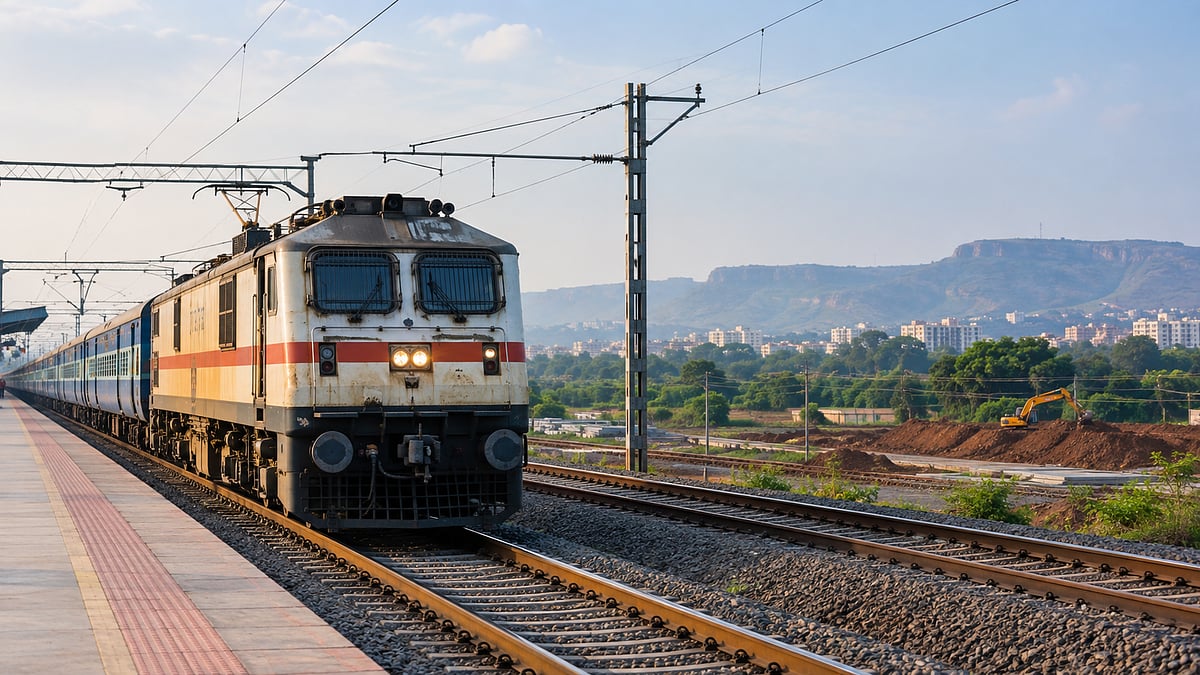
The audit also covered automatic whistling at level crossing gates and inspection of Station KAVACH installations.
1,430 RFID tags installed across the section
As part of the KAVACH 4.0 implementation, 1,430 RFID tags were installed and programmed across the Kurduvadi–Boribial section in accordance with the approved design.
Comprehensive validation and field trials were subsequently conducted in line with standards prescribed by the Research Designs and Standards Organisation (RDSO).
The trials covered several safety functions, including SPAD prevention, head-on collision prevention, rear-end collision prevention, side collision prevention, roll-back protection, PSR and loop-line speed control, along with SOS generation under different operating conditions.
KAVACH 4.0 strengthens train safety through indigenous technology
KAVACH is an indigenously developed Automatic Train Protection (ATP) system aimed at enhancing safety during train operations. Developed as part of India's push towards self-reliance in critical railway technology, the system is designed to assist in preventing situations such as SPAD and potential head-on and rear-end collisions.
The system also provides an Automatic SOS facility from locomotives in the event of unusual stoppages within block sections. In addition, SOS alerts can be generated manually by the Loco Pilot through the onboard KAVACH system and by the Station Master through SMOCIP when required.
The successful completion of the ISA Audit Trial marks an important step in the implementation and validation of KAVACH 4.0 on the Solapur Division. The audit involved detailed planning, installation, programming, testing and field-level validation by teams associated with the project.
The achievement highlights Central Railway's ongoing efforts to strengthen railway safety through advanced technology and modern safety systems. It also supports the broader objective of expanding indigenous technological solutions across India's railway network.
The Solapur Division has reaffirmed its commitment to adopting advanced safety technologies and strengthening operational systems to improve the safety, reliability and efficiency of railway operations.

