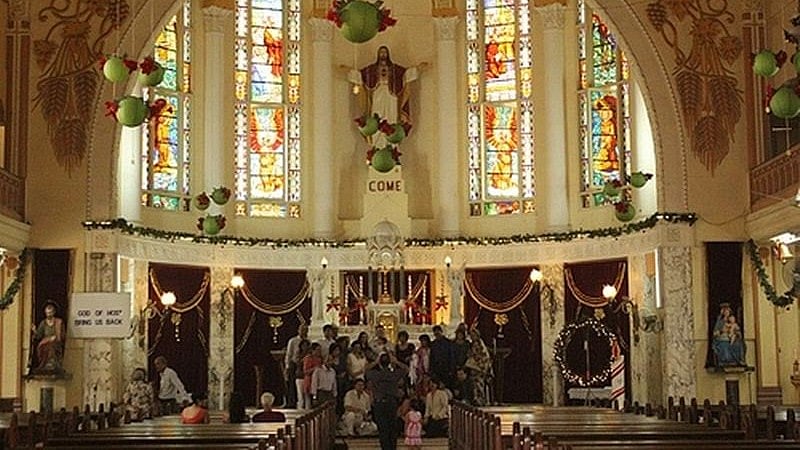
Mumbai: A letter published in the Mumbai-based Catholic newsweekly The Examiner on the ecological and economic cost of funeral rites has sparked a wider debate on end-of-life practices within the Catholic community.
Janet D'Souza Advocates Green Burials and Natural Shrouds
Churchgoers, clergy and funeral service professionals are discussing how society should approach death, balancing personal wishes, environmental responsibility and the role of funeral directors in what many perceive as increasingly elaborate farewells.
The discussion gained momentum following a letter by Mumbai resident Janet D'Souza, published under the title Planning the Final Farewell. D'Souza questions the need for elaborate funeral customs and advocates environmentally sustainable practices, including green burials, simple natural shrouds and the avoidance of non-biodegradable clothing.
Undertaker Defends Profession Against "Lavish" Stereotype
She urges families to embrace simplicity instead of what she describes as "avoidable grandeur". "Let's be honest; how many of us would truly wish to be 'viewed' at our own funeral?" D'Souza writes, suggesting that the term "viewing" be replaced with "paying last respects" to shift the emphasis from public display to the spiritual legacy of the deceased.
Responding to the debate, Sunil Colaco of Lonica Undertakers wrote to The Examiner to address what he believes are misconceptions about the funeral profession. He argued that portraying undertakers as promoters of lavish funerals overlooks the compassionate and demanding nature of their work, which often involves providing round-the-clock logistical and emotional support to grieving families.
Grave Shortage Forces Many Churches to Encourage Shroud Use
According to Colaco, modern funeral directors do not impose elaborate arrangements but instead offer families a range of options, including the green burials and simple ceremonies advocated by D'Souza.
However, he pointed out that shroud burials without coffins are not always practical in Mumbai, particularly during the monsoon.
"People talk about burying bodies in a shroud without a coffin. However, how do you bury bodies in a shroud when the grave is flooded?" asked Colaco, who operates funeral parlours in Bandra and Vile Parle.
The debate over coffinless burials is also shaped by Mumbai's chronic shortage of burial space. Many churches encourage, and in some cases require, shroud burials because bodies generally decompose faster without coffins, allowing graves to be reused sooner.
Father Nigel Barrett, spokesperson for the Archdiocese of Bombay, said the Archdiocese continues to educate the faithful about the benefits of shroud burials while leaving individual parishes free to frame policies suited to local circumstances.
RCC Vaults Also Slow Decomposition, Not Just Coffins
Colaco added that coffins alone should not be blamed for slower decomposition. He argued that the increasing use of reinforced cement concrete (RCC) burial vaults also contributes to the problem.
"Vaults are meant for permanent graves. They may look orderly, but they are of little help if burial spaces are intended to be reused," he said.
Despite approaching the issue from different perspectives, both D'Souza and Colaco agree that the final decision should rest with the family of the deceased.
Barrett said that the Archdiocese encourages shroud burials but respects the wishes of the deceased and their family. He noted that while some parishes have made shroud burials compulsory because of limited cemetery space, the objective is not to impose a practice but to address the practical realities of grave reuse.
Your voice matters. If you have a community story, issue, or inspiring local experience to share, send it to community@fpj.co.in and be a part of the conversation.
To get details on exclusive and budget-friendly property deals in Mumbai & surrounding regions, do visit: https://budgetproperties.in/
