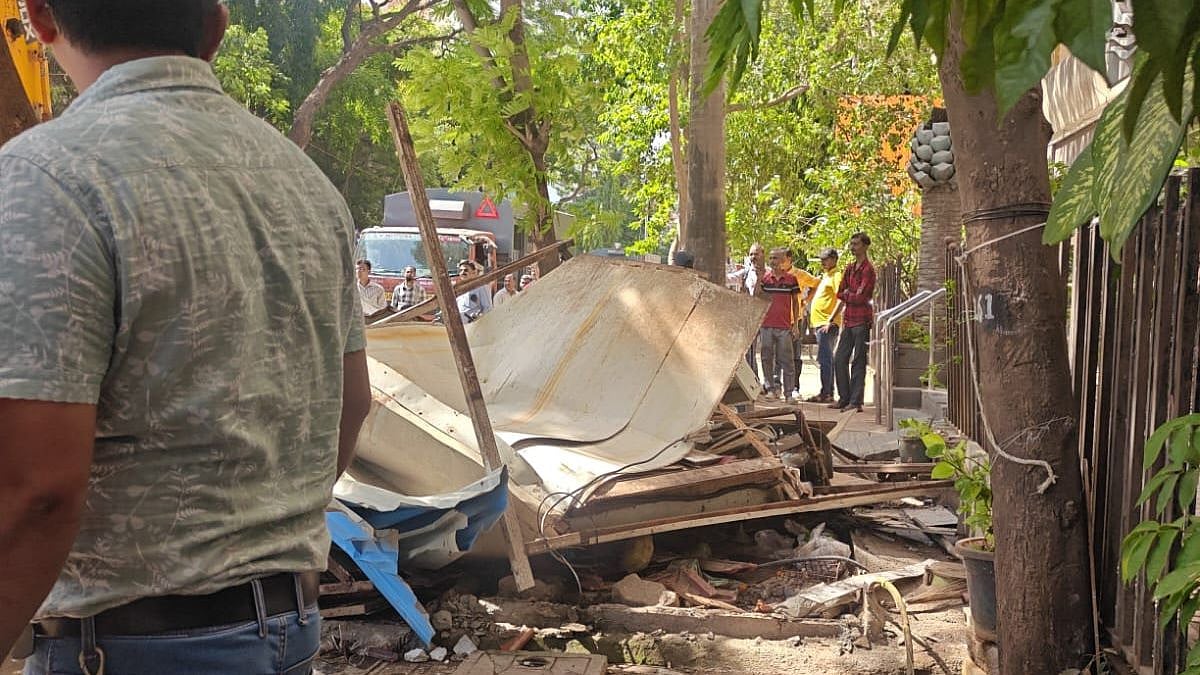
The Brihanmumbai Municipal Corporation's recent decision to suspend fresh water supply to construction sites across Mumbai has once again brought water management to the forefront of urban policy discussions.
While the immediate impact is being felt by the construction industry, the larger message is clear: water stress is no longer a seasonal challenge. It is a structural urban issue that will increasingly influence how our cities grow, function, and compete.
India's urban future will not be determined solely by how much water we can source, but by how intelligently we manage, conserve, and reuse the water already available to us.
As urban populations expand and economic activity accelerates, water must be treated not as an unlimited utility, but as a strategic resource—on par with energy, transportation, and digital infrastructure. The recent restrictions in Mumbai should therefore be viewed not merely as an emergency measure, but as a catalyst for rethinking urban water management.
Moving Beyond the Supply-First Model
Historically, water security has been pursued through additional supply—new dams, reservoirs, transmission systems, and groundwater extraction. While these investments remain important, they are becoming increasingly expensive, time-consuming, and vulnerable to climate variability.
The more important question today is not how much additional water can be sourced, but how efficiently existing resources can be utilised.
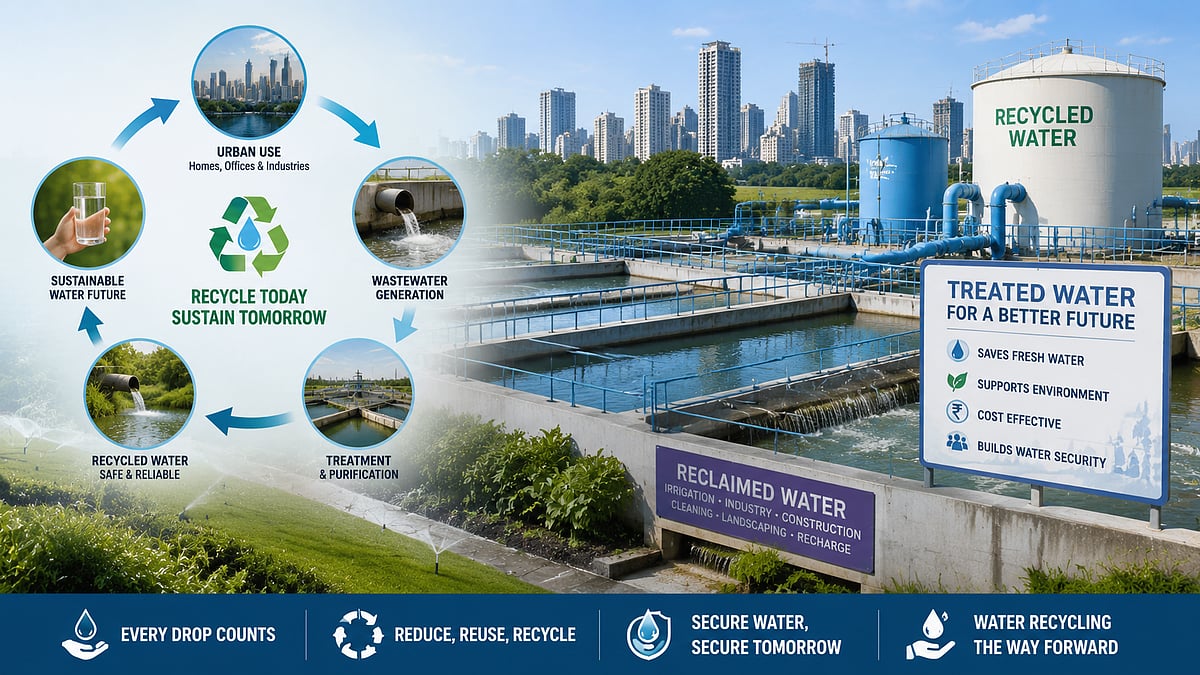
Recycled water represents an immediately available and dependable resource stream. It transforms wastewater from a disposal challenge into a productive asset capable of meeting a significant share of urban demand.
A substantial proportion of urban water consumption does not require potable-quality water. Yet premium freshwater continues to be used for applications where treated wastewater would be equally effective. Every litre of recycled water used productively creates additional capacity for drinking water and essential human needs.
Leading examples from Singapore, Israel, and Nagpur demonstrate that long-term water resilience depends as much on reuse as on supply. Water recycling is not merely good environmental policy—it is sound economics.
Turning Infrastructure into Outcomes
Encouragingly, Indian cities are investing heavily in sewage treatment and wastewater infrastructure. However, treatment capacity alone is not enough. The true measure of success lies in utilisation.
To unlock the full value of recycled water, cities must create enabling ecosystems through dedicated distribution networks, rational pricing mechanisms, regulatory mandates, adoption incentives, and measurable reuse targets.
Without these supporting frameworks, cities risk building treatment capacity without fully realising its benefits. Water recycling should therefore be viewed not as a standalone engineering solution, but as a core urban utility.
Lessons from Integrated Urban Development
The experience of integrated townships demonstrates that large-scale recycling is both practical and economically viable.
At Hiranandani Gardens, Powai, approximately four million litres of water are recycled daily and reused for landscaping, horticulture, and common-area maintenance, reducing freshwater dependence by nearly 30 percent.
Such examples highlight an important shift in thinking. Recycling infrastructure should no longer be viewed as a compliance requirement or optional sustainability initiative. It should be treated as an essential component of urban planning and can be replicated across commercial districts, industrial clusters, educational campuses, hospitals, and residential developments nationwide.
Building a Circular Water Economy
India's next phase of urbanisation demands a transition from a linear water economy to a circular one.
For decades, cities have largely followed a simple pattern: extract, consume, and discharge. This model is becoming increasingly unsustainable.
A circular approach recognises wastewater as a valuable resource that can be recovered, treated, reused, and reintegrated into the urban ecosystem. Achieving this transformation will require collaboration among governments, municipal bodies, developers, industries, and citizens, supported by long-term planning and enabling regulations.
Most importantly, it requires a change in mindset.
Wastewater should no longer be viewed as waste.
It should be viewed as water in transition.
A National Imperative
Water recycling represents one of the largest untapped opportunities in India's urban infrastructure landscape. It offers a practical pathway to enhance water security, reduce environmental stress, improve municipal finances, support economic growth, and build climate resilience.
The technology exists. The expertise exists. The need is undeniable. What is required now is the collective will to scale these solutions.
The future of India's cities will depend not only on how much water they can access, but on how efficiently and responsibly they can reuse the water they already possess.
Water recycling is no longer an environmental option. It is an economic necessity, an urban imperative, and a national opportunity.
To get details on exclusive and budget-friendly property deals in Mumbai & surrounding regions, do visit: https://budgetproperties.in/

