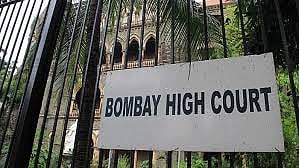
Mumbai: Legal experts have weighed in on a recent order of the Bombay High Court quashing a voyeurism case, largely backing the ruling while cautioning against a broad reading of criminal law in workplace disputes.
The High Court recently clarified the scope of voyeurism under Section 354C IPC, holding that the offence is confined to intrusion into a woman’s privacy during a “private act,” such as watching, recording, or disseminating such images. It ruled that allegations of inappropriate staring at a workplace, even if offensive, do not meet this threshold and cannot be stretched to fit the provision.
The case stemmed from a complaint against a senior insurance executive accused of staring at a colleague’s breasts during office meetings. Finding no essential ingredients of voyeurism, the court quashed the FIR and all related proceedings.
Advocate Siddh Vidya described the judgment as a precise application of statutory law rather than a value judgment on the allegations. “This is not a matter of opinion, but a straightforward application of the statutory ingredients of Section 354-C IPC to the facts of the case,” she said. Emphasising the limited scope of the ruling, Vidya added, “The Court has found that the FIR, even if accepted in its entirety, does not satisfy the essential requirements of the section, as there is no allegation… of a ‘private act’ or any capturing or dissemination thereof.”
She stressed that the decision should not be seen as laying down a broad precedent. “The applicability of such provisions will invariably depend on the facts and evidence of each case… the ruling serves as a reminder that criminal law must be invoked with due caution and strictly in line with the ingredients prescribed by the statute,” she said, noting that the allegations, if proved, “may fall within the ambit of some other offence or misconduct.”
Echoing similar views, advocate Abha Singh said the court had correctly clarified the contours of voyeurism under criminal law. “Section 354C… is not a general provision that will cover every form of offensive gaze or bad behaviour towards a woman,” she said. Referring to the facts, she added, “If we see the definition of voyeurism, it very clearly says that any sexual act… done in privacy… that definition does not cover… what was alleged… in a public meeting.”
Singh underlined the distinction between inappropriate conduct and a criminal offence under voyeurism. “It may be bad, it can be a part of molestation… but not voyeurism,” she said, explaining that the law requires an element of privacy. “When she is in a meeting, she knows it is a public place… but when it is in private confines, that is voyeurism.” Calling the order significant, Singh said it would guide law enforcement to avoid invoking provisions where the legal ingredients are not met.

Also Watch:
Advocate Audrey D’Mello, director of NGO Majlis, highlighted the higher threshold required in criminal prosecutions. “Criminal cases are about taking away liberty. Therefore, credentials of a criminal trial are high,” she said, noting that Section 354C carries a punishment of up to three years and thus demands “solid proof.”
At the same time, D’Mello pointed to gaps in institutional mechanisms, suggesting that the complainant may have turned to criminal law after failing to secure relief internally. “The POSH committee failed her. It should have looked into her complaint holistically. Because they didn’t, she had to come to the police,” she said, adding that “the section applied was wrong” despite the possibility of a hostile work environment.
To get details on exclusive and budget-friendly property deals in Mumbai & surrounding regions, do visit: https://budgetproperties.in/

